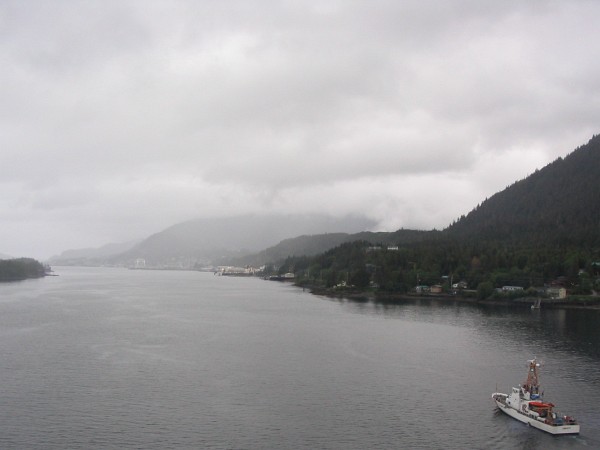
| The approach to Ketchikan. |
|
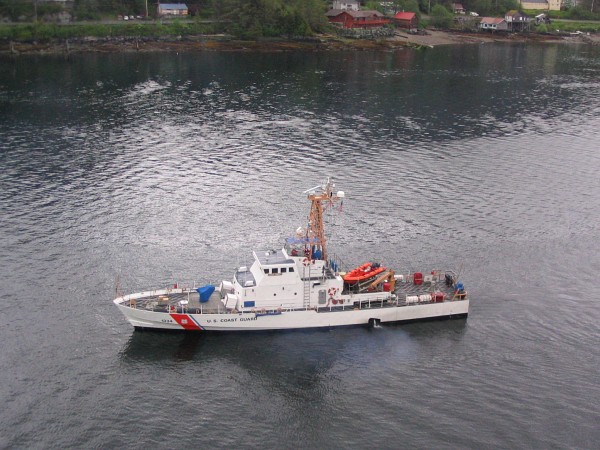
| Since we were coming from Canadian waters, we had to be escorted in by the U.S. Coast Guard. |
 |
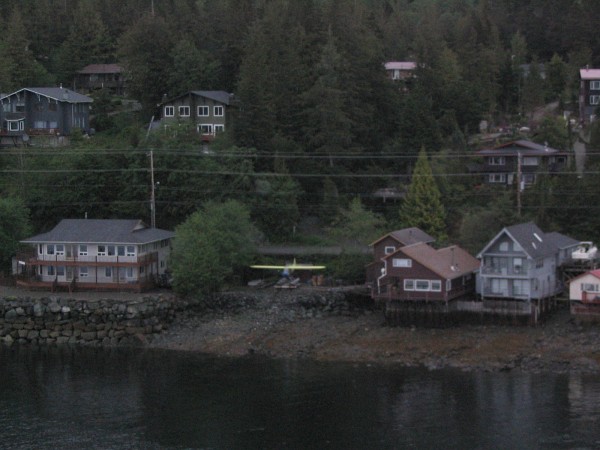
| Some Ketchikan homes. Note the seaplane parked on the shore. |
|
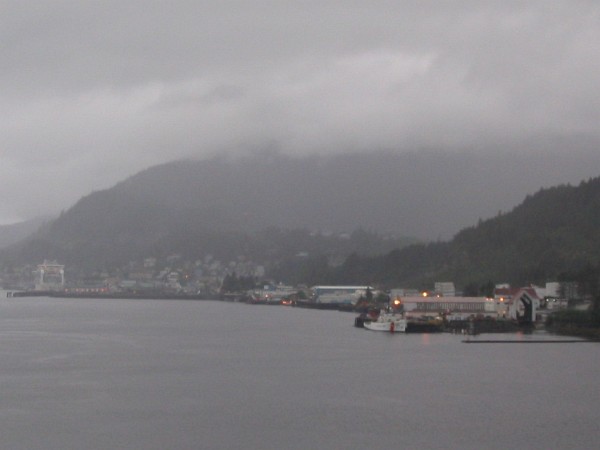
| A little closer to Ketchikan. |
 |
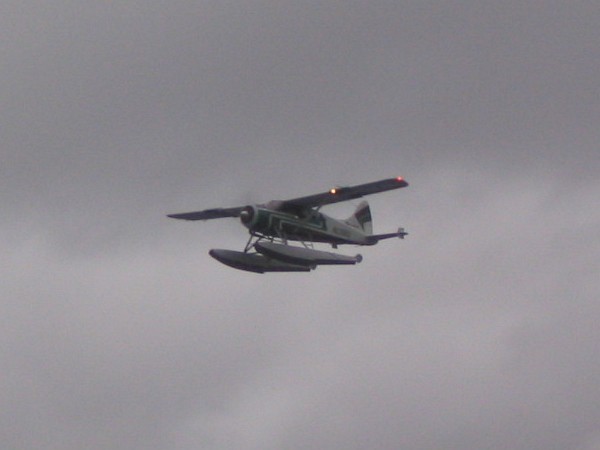
| A seaplane taking off. |
 |
| Considering there are few roads in Alaska that connect communities, some places are only accessible by boat or plane. Ketchikan is one of those places. |
 |
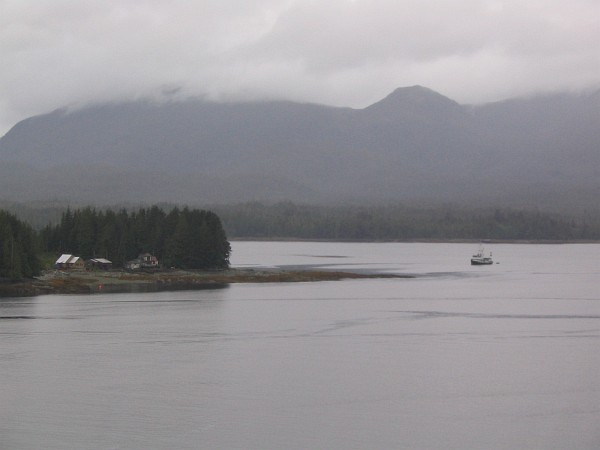
| There is an island in the middle of the Tongass Narrows with some houses and stuff. |
 |
|
|
|
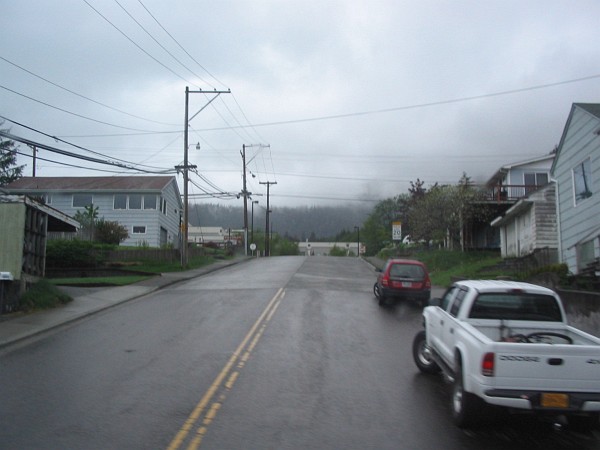
| This seems to be typical Alaska weather. |
 |
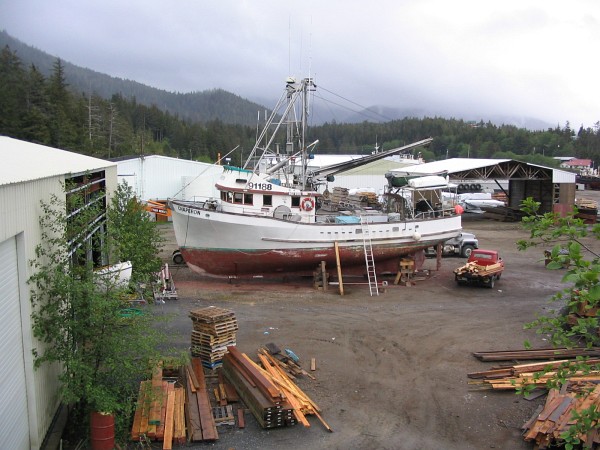
| In the south we have cars up on blocks. In Alaska they put up boats. |
 |
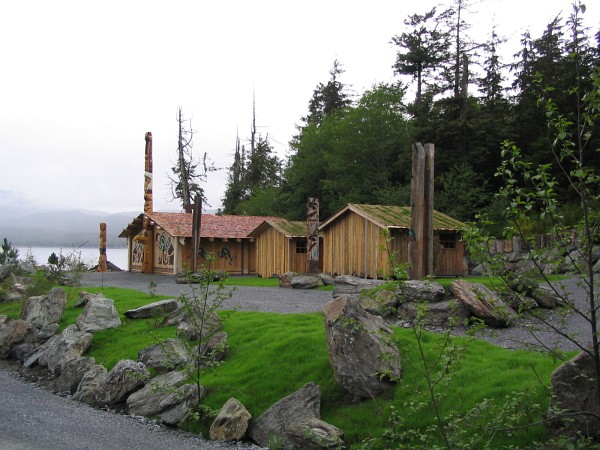
| I don't know what these structures were supposed to be. They look like fairly new recreations of old native structures. |
 |
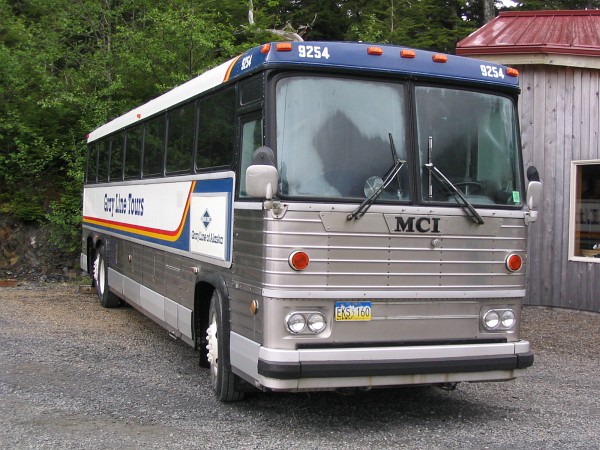
| Ooh, a tour bus. Our excursion in Ketchikan was to the Totem Bight State Historical Park. It's about ten miles northwest of town. |
 |
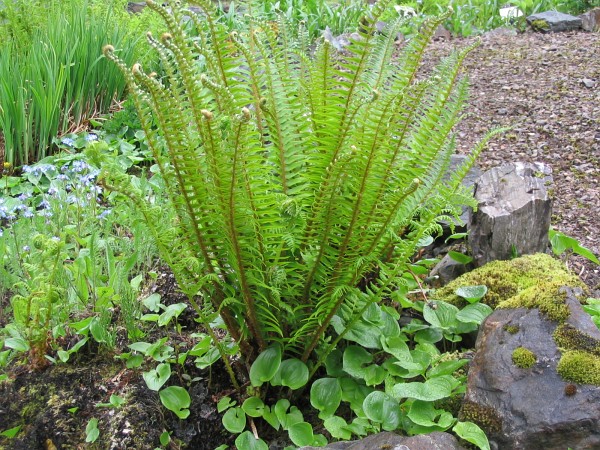
| A sword fern. |
 |
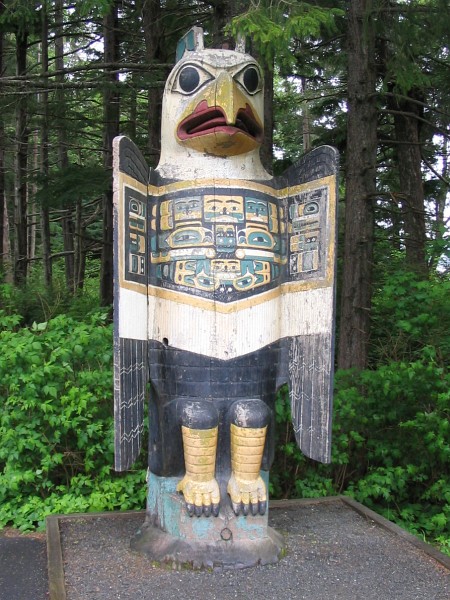
| This is a replica of a Haida mortuary pole originally from the old village of Klinkwan on Prince of Whales Island. The bird is a thunderbird atop a whale. |
 |
| A similar replica of an eagle grave marker. |
 |
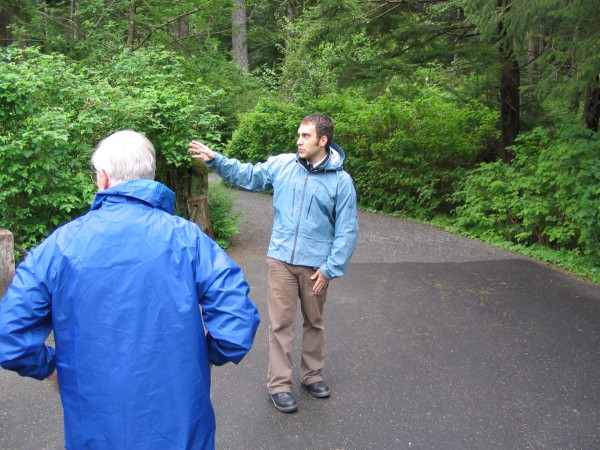
| This was our tour guide. He was a young guy, probably in college. |
 |
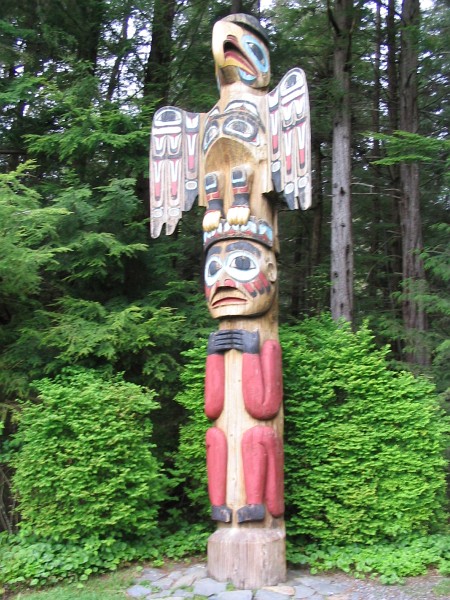
| None of these totems are original. They can't really be since they are made of wood and tend to decay over time. |
 |
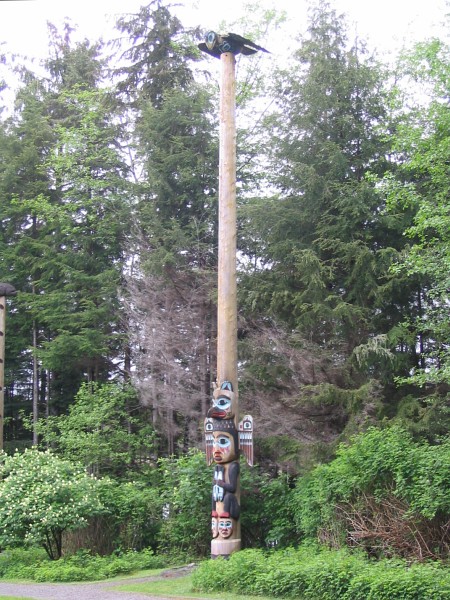
| This Tlingit pole was copied from Cat Island. A similar pole can also be found in Ketchikan. The fabled Kadjuk bird sits on the top of the pole. The undecorated portion of the pole symbolizes the lofty habitat of the bird and the high esteem in which the crest is held. Raven is the next figure, with his breast forming the headdress of his wife, Fog Woman, wearing the labret in her lower lip. In her hands she holds two salmon, which she produced, the first in the world. The two large faces at the base represent the two slaves of Raven. |
 |
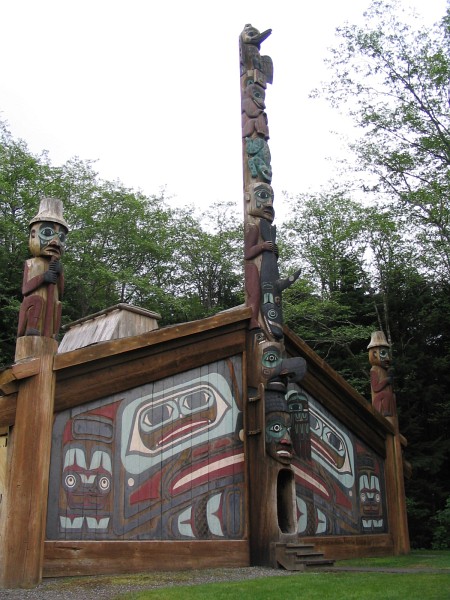
| This replica of a
clanhouse was constructed in the 1930's and is representative of the type in
many Indian villages built in the early 19th century. Clanhouses of this
size could have housed 30 to 50 people. The painting on the house front is a stylized Raven with each eye elaborated into a face. Designs on the house fronts were rare, and occurred only in cases of great wealth. On the front corner posts sits a man in a spruce root hat with the crest design on his face and cane in hand. He is ready for a dance or potlatch. |
 |
| Inside is one large room with a central fireplace surrounded by a planked platform. The dwelling served as living quarters for several families of a particular lineage. The members belonging to the house would be headed by a house chief of the same lineage. |
 |
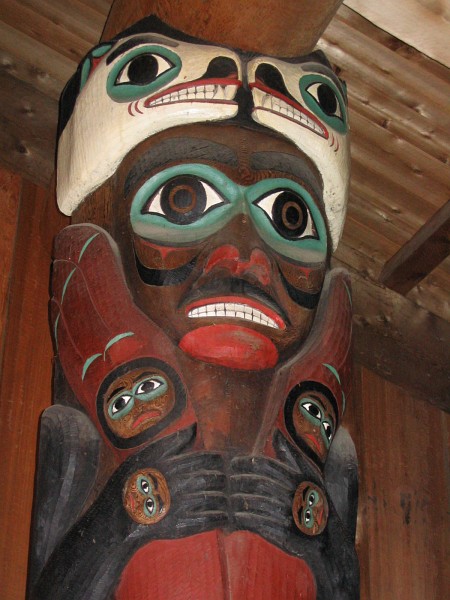
| The carved house posts supporting the beams inside symbolize the exploits of Duk-toothl. He is a member of the Raven clan wearing a weasel skin hat who showed his strength by tearing a sea lion in two. |
 |
| The ramp and door on the side was not a feature of a clanhouse. That was added for tourists. Real clanhouses just had the small low entrance in the front. |
 |
| A bunch of poles. |
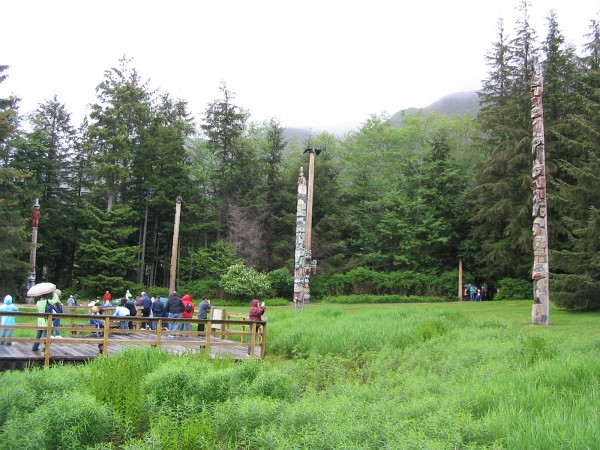 |
| Big pole and little pole. |
 |
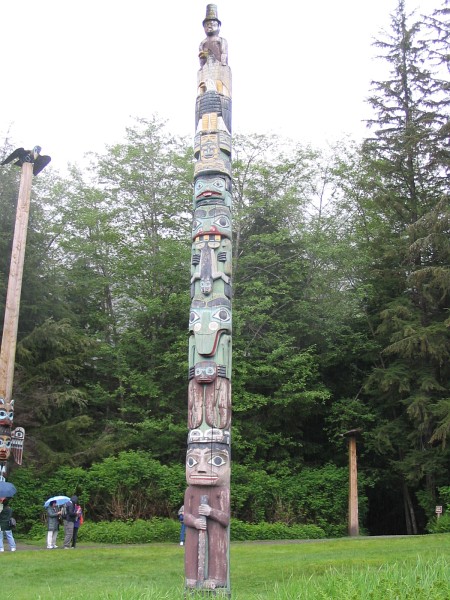
| I'm sure the carvings all represent something, but I'm too lazy to make up some story. But I think the guy on the top with the hat is a chief or something. |
 |
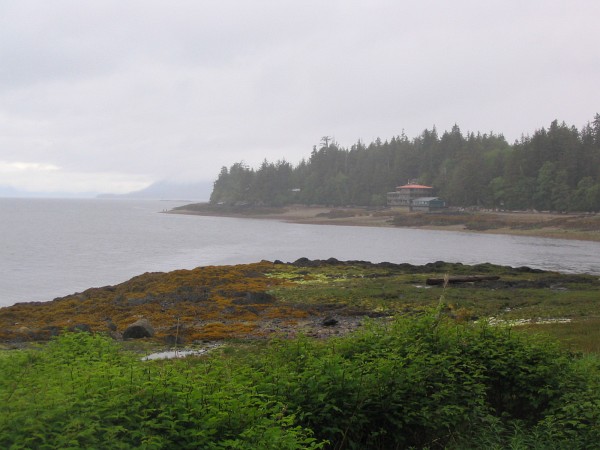
| A bight is a bend in a coastline. Like this one. |
 |
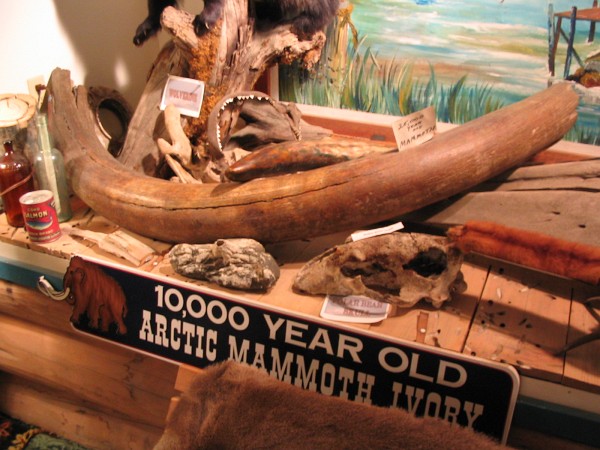
| Who am I to doubt a sign that says "10,000 year old Arctic mammoth ivory"? |
 |