TUESDAY - MACAU
MACAU
TUESDAY - MACAU
MACAU
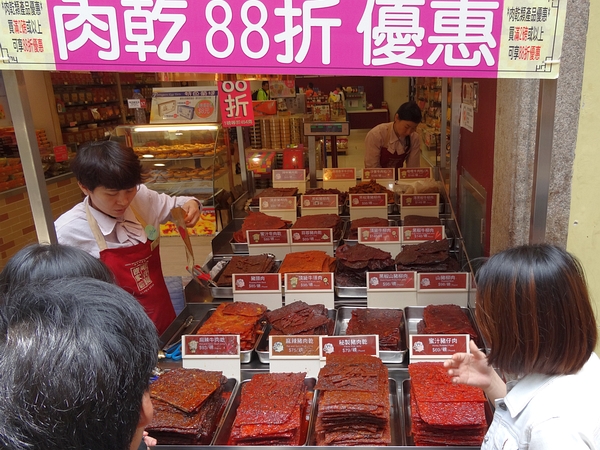
| There was one street that was full of little shops selling jerky out front. I had a little sample of one of the spicy beef. |
 |
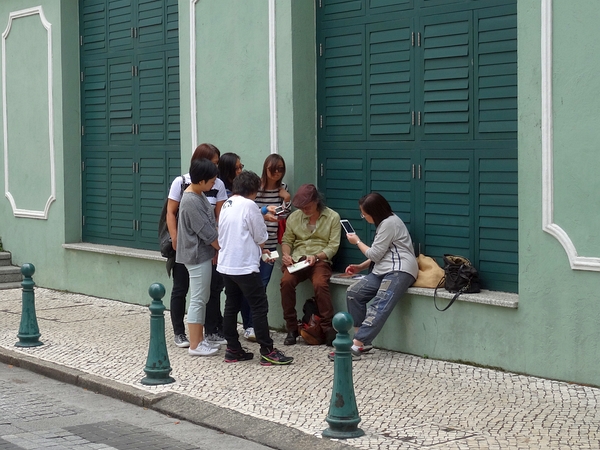
| I had a little tourist guide (a small book, not a Chinese midget) that had some walks in it so I did a couple. This one was called Crossroads of China and Portugal. From Senado Square I walked up a hill to St. Augustine's Square. A old guy was sketching some buildings and a crowd gathered around. |
 |
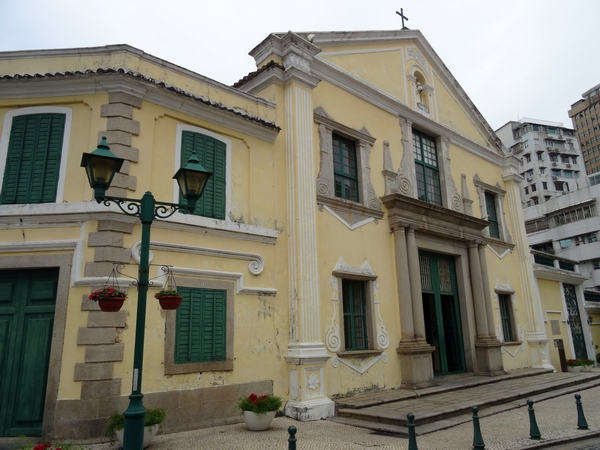
| St. Augustine's Church was the first church for English Mass in Macau. |
 |
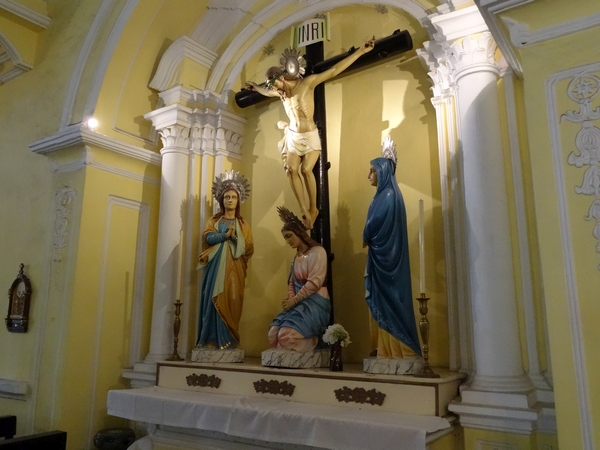
| "Hey! Hey, ladies! I'm up here! Can you get me down? Hey, I know you can hear me!". |
 |
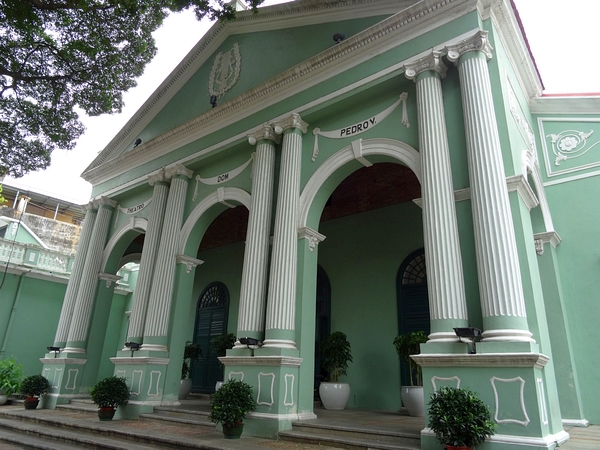
| I couldn't go into the Teatro Dom Pedro V because it was closed on Tuesdays. |
 |
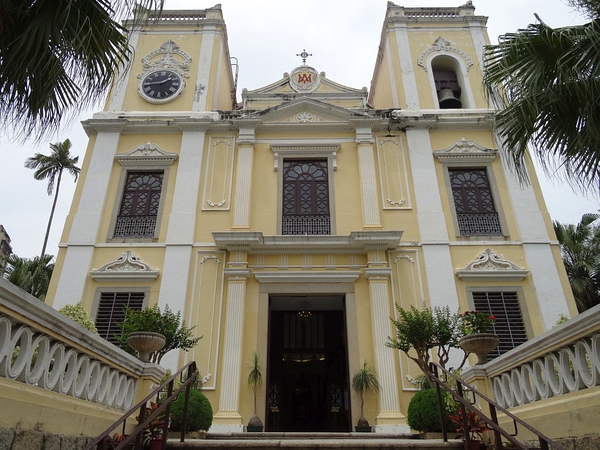
| Lots of saints, lots of churches named for them. This is St. Lawrence's Church, or in Chinese Feng Shun Tang (Hall of the Soothing Winds). It is called this because it was build overlooking the sea and was believed to protect fishermen, sailors and families living near the seashore from the storm. |
 |
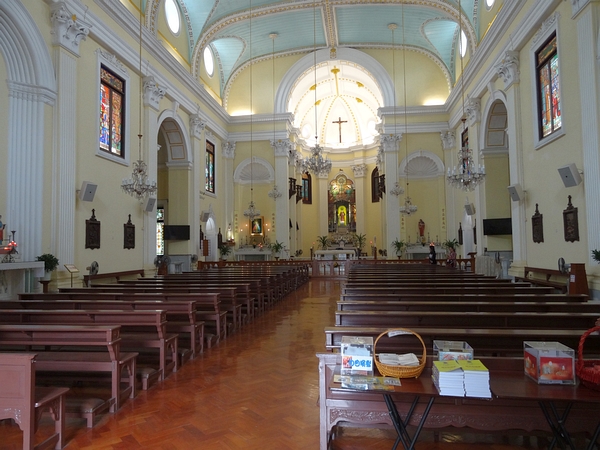
| Again, nothing on fire in here but some candles. |
 |
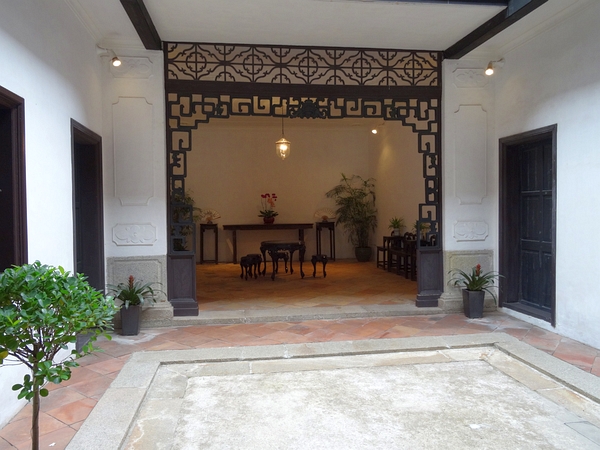
| This is called Mandarin's House. I'm not sure why. Maybe it was built in a certain style called Mandarin or something. |
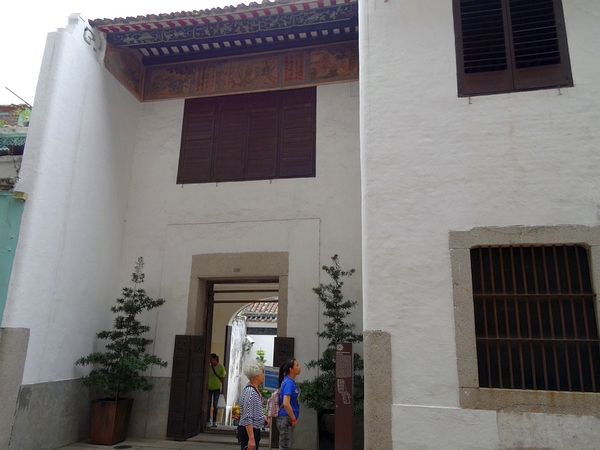 |
| It was the home of a guy called Zheng Guanying, who was a famous Chinese ideologist who wrote his masterpiece Shengshi Weiyan (Words of Warning in TImes of Prosperity) in this house. |
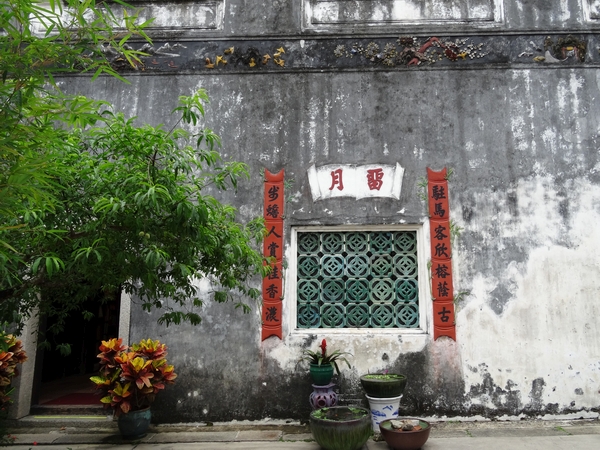 |
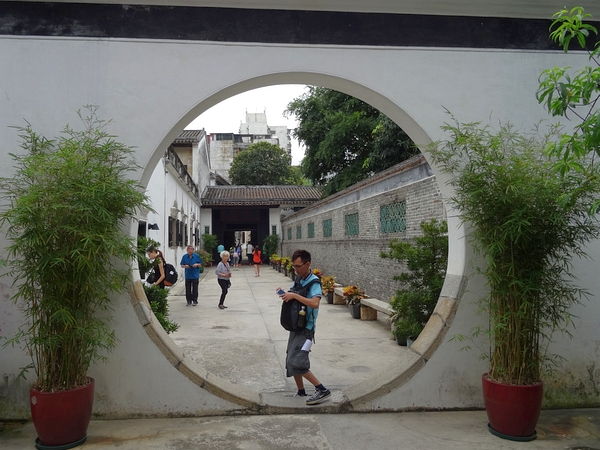
| This is a moon gate. I suppose it's called that because it is round, but lots of things are round. A cookie. A hula hoop. An areola. Why don't they call it an areola gate? |
 |
| Zheng Guanying's daddy, Zheng Wenrui, who initiated the construction of the residential complex some time before 1869. |
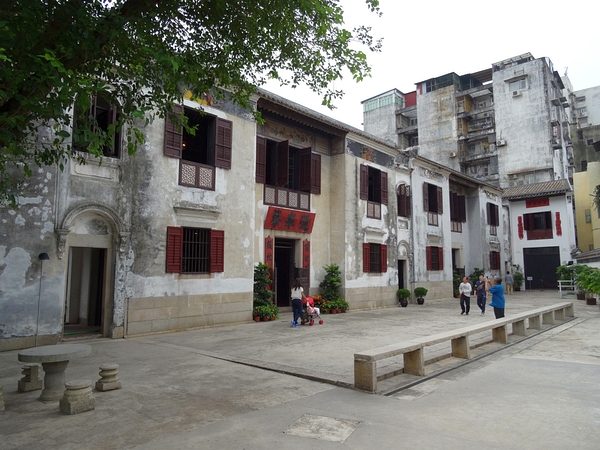 |
| The house covers an area of 4000 square meters and the complex is made up of various buildings. It is mostly in a Chinese style with subtle Western influences. |
 |
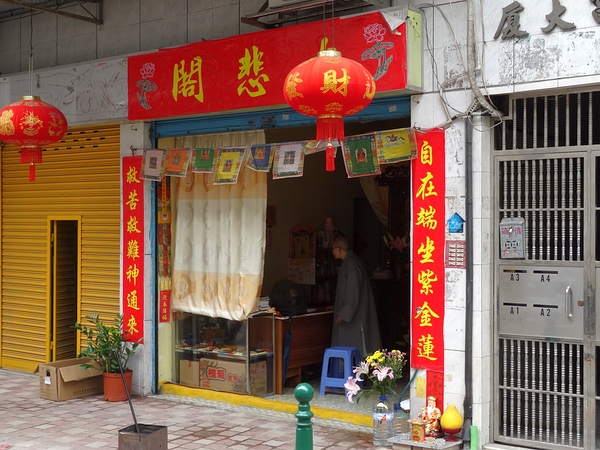
| There were a couple of monks, or people who looked monk-like, in this storefront across from the Mandarin's House. If I could read the Chinese I would know what this was. |
 |
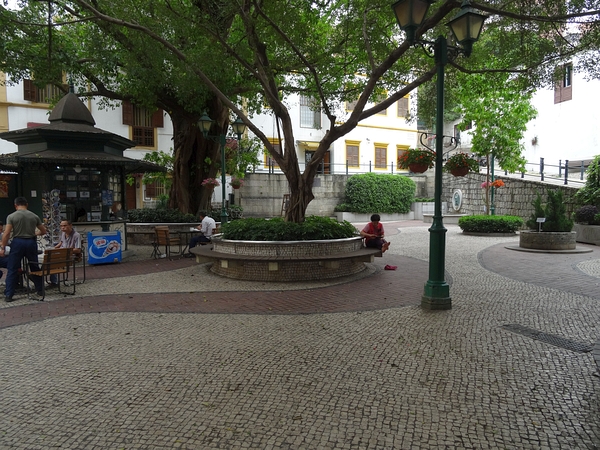
| This is Lilau Square. It was said that anyone who drinks from Lilau will never forget Macau. The ground water from Lilau, one of the first Portuguese residential quarters in Macau, used to be the main source of natural spring water in the colony. |
 |
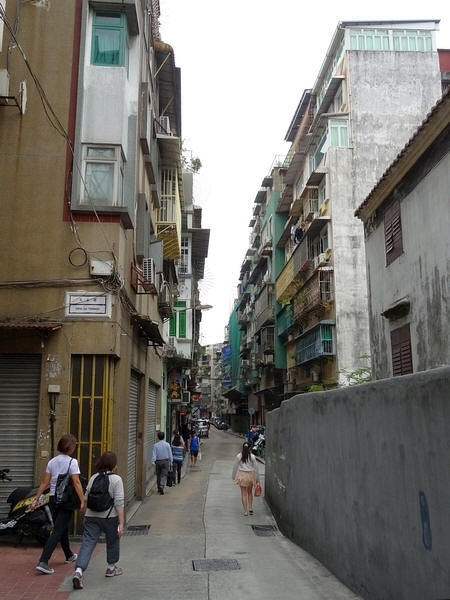
| A narrow Macanese street. |
 |
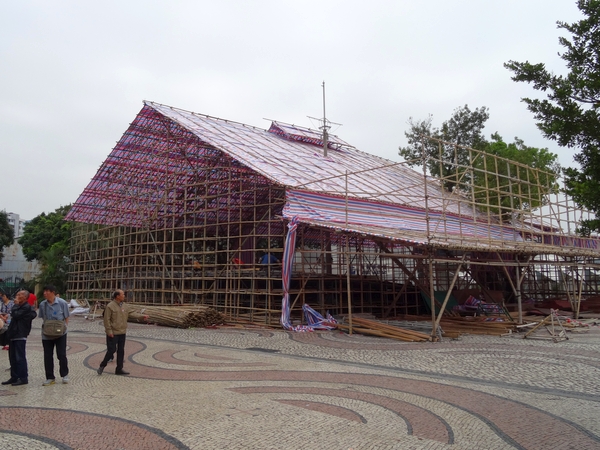
| Some construction going on. All of that structure is bamboo. I just thought that was interesting for some reason. |
 |
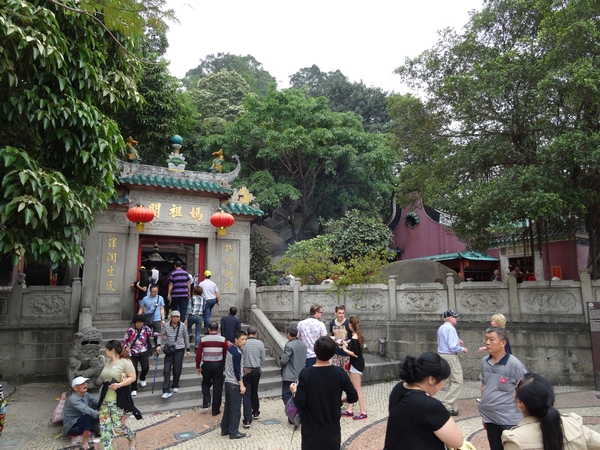
| The entrance to A-Ma Temple, one of the oldest and most famous Taoist temples in Macau. |
 |
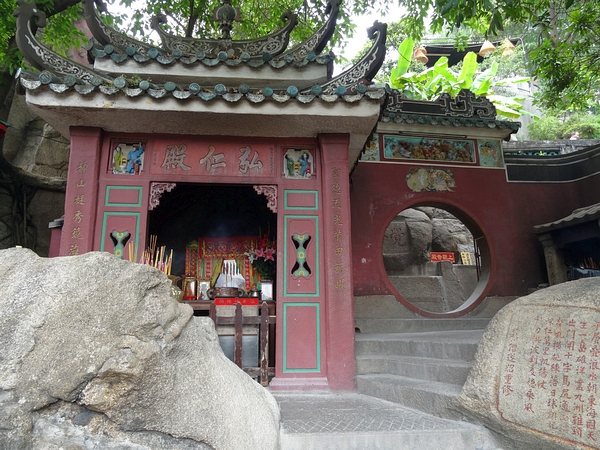
| It was built in 1488 and is dedicated to A-Ma, also known as Mazu, the goddess of seafarers. |
 |
|
|
|
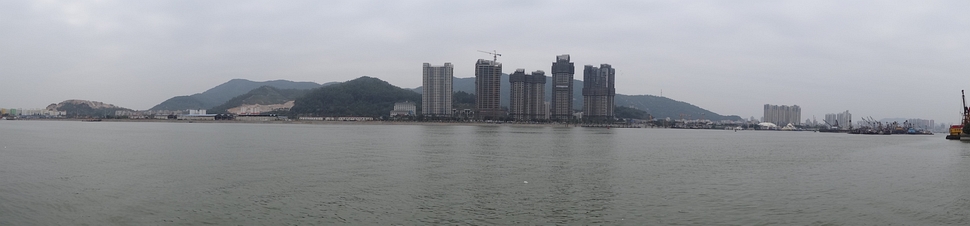
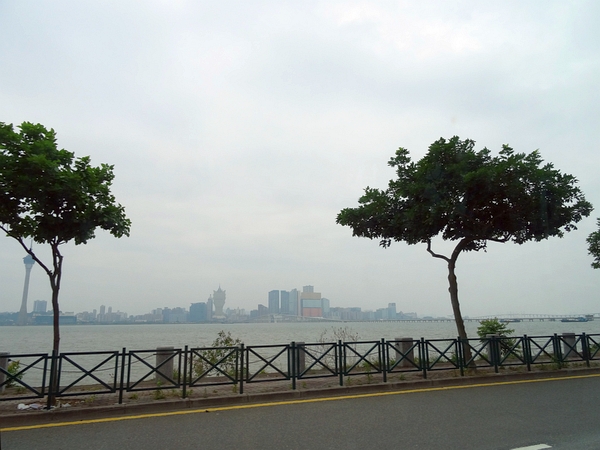
| Across the water is the skyline of Macau. The geography of Macau is kind of interesting. The territory is comprised of the Macau peninsula and the islands of Taipa and Coloane. The peninsula used to be an island but it eventually became a peninsula due to land reclamation. Taipa and Coloane are also no longer separate islands as they are now joined together by an area of reclaimed land called Cotai where a lot of casinos and resorts have been built. |
 |