DAY 1
DAY 1 
MONTMARTRE
DAY 1
MONTMARTRE
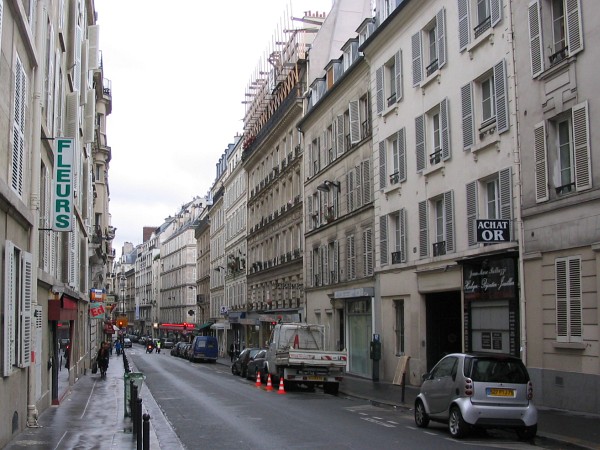
| Heading out from the hotel to the Montmartre section of town. Nothing seems to open before 10:00 a.m. |
 |
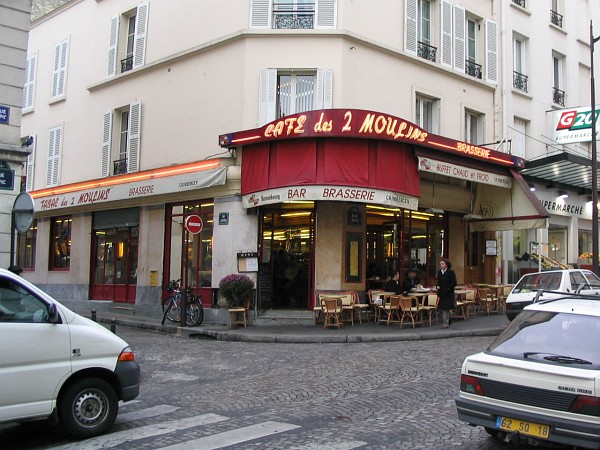
| Before climbing the hill, I made an effort to find the Cafe des 2 Moulins. This is the cafe where Amelie worked in the movie of the same name. |
 |
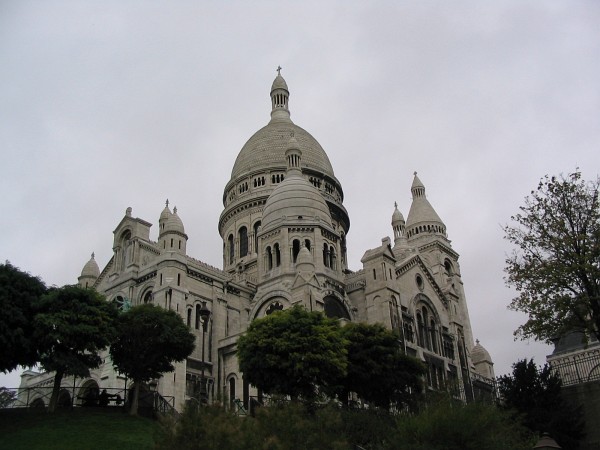
| The Sacré Cœur (Sacred Heart) Basilica. It's a fairly famous Paris landmark that you might recognize. Unfortunately they put it at the top of a big hill. |
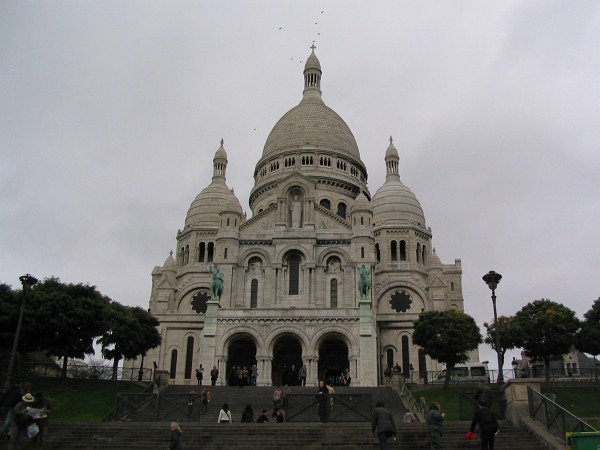 |
| It took 44 years to build, from 1875 to 1919. There were no photos allowed inside, so you cannot see the giant picture of Jesus that's in there. |
 |
|
|
|
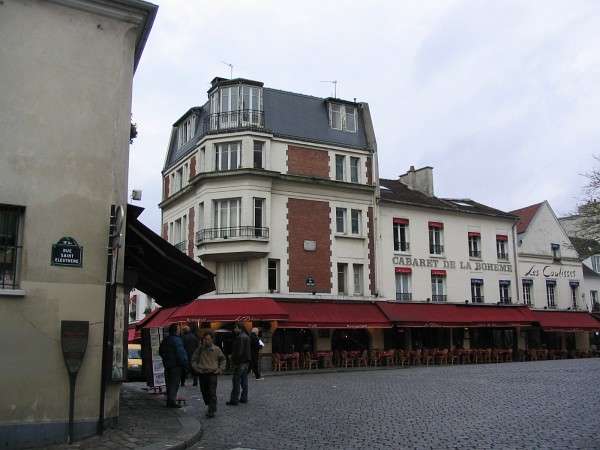
| This is the place du Tertre. A lot of cafes and artsy type places. On the square just up that road on the left were lots of artists begging people to let them draw them. |
 |
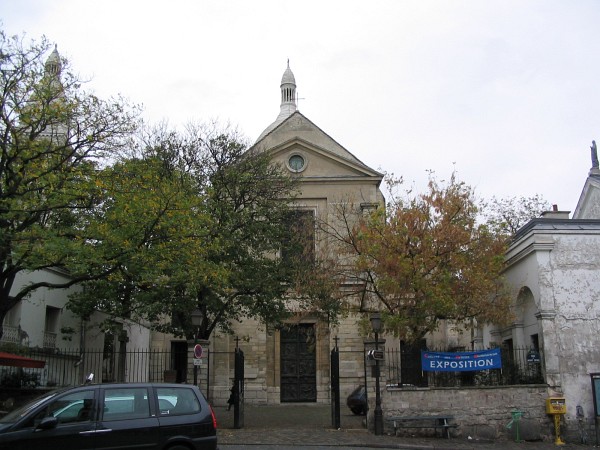
| The Church of St. Pierre-de-Montmartre. It was founded by King Louis VI in the 12th century. |
 |
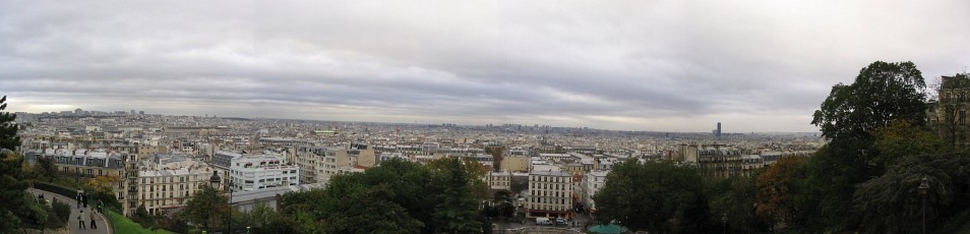
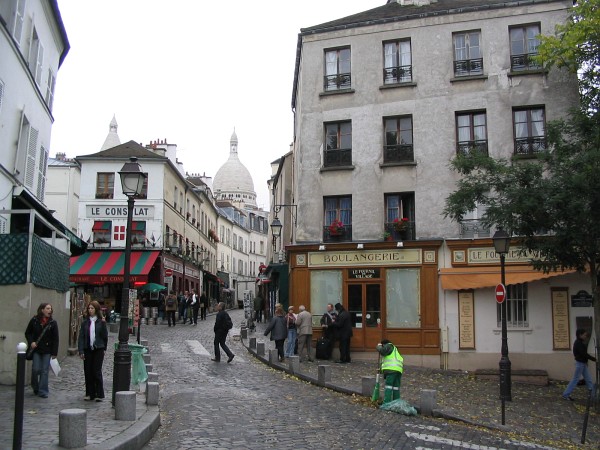
| As you can see, Montmartre is a hilly area. That is the dome of the Sacré Cœur in the distance. |
 |
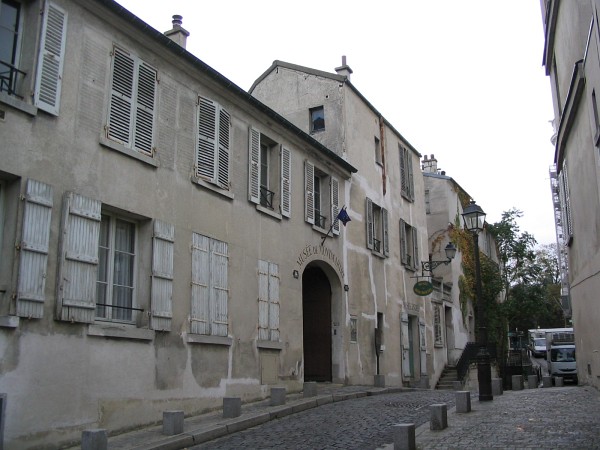
| The Museum of Montmartre. I didn't go in but I took the photo because it was where Renoir once lived. Before it was a museum that is. |
 |
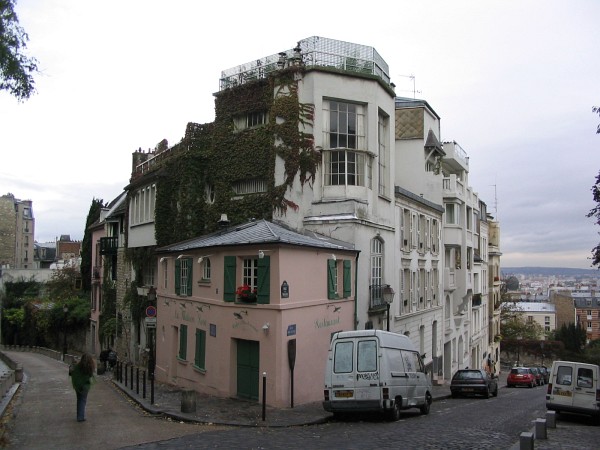
| La Maison Rose is a restaurant once frequented by folks like Pablo Picasso and Gertrude Stein. |
 |
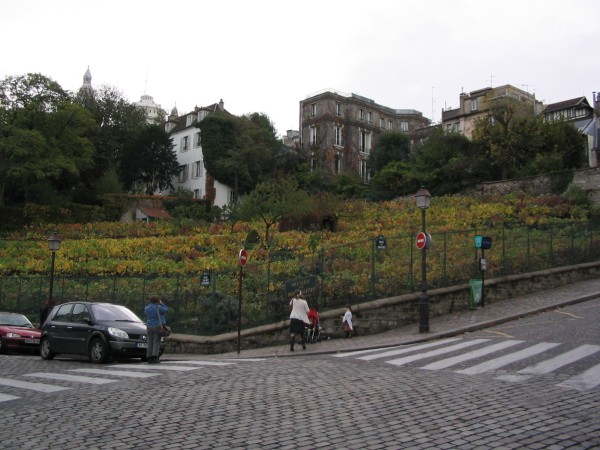
| The Clos Montmartre is Paris' last remaining vineyard. It's been around for around 800 years or so. |
 |
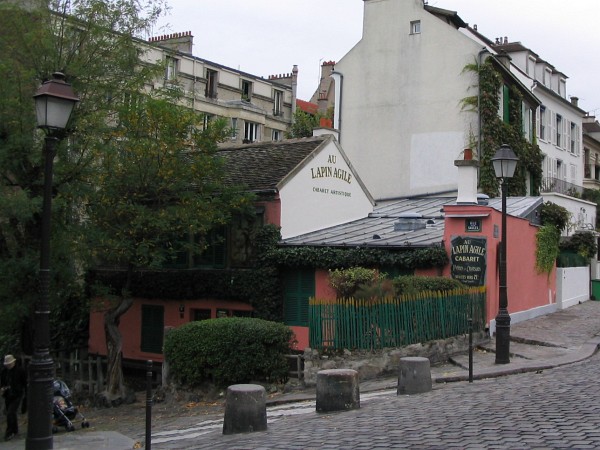
| The Lapin Agile Cabaret. The Paris artsy type used to gather here too. And with a name like The Nimble Rabbit, why wouldn't they? |
 |
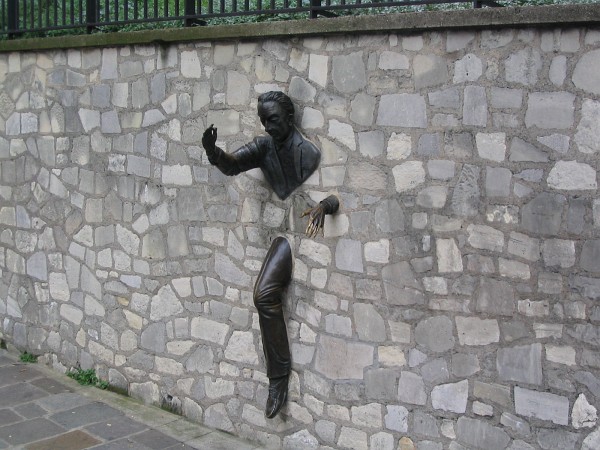
| Art. |
 |
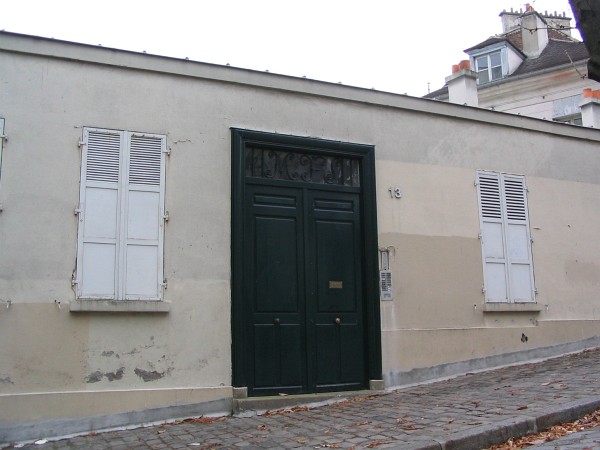
| This looks to be just another home now, but back in 1904 an unknown Spaniard moved in. In this former piano factory that was converted into inexpensive residences, the new tenant revolutionized the world of art by painting things that sort of looked like things but not really. The Spaniard was Pablo Picasso and it was here that he moved from his Blue Period to his Rose Period and eventually invented the cubism movement. |
 |
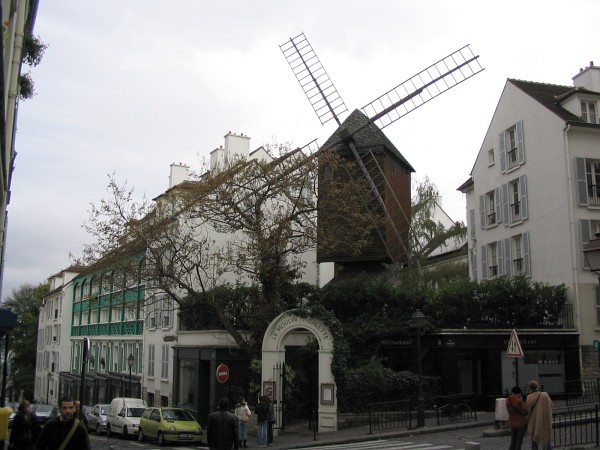
| There used to be windmills all over this hill. Now there are only two. (Hey, I guess that's where they got the name for the Cafe des 2 Moulins.) Anyway this is the Moulin de la Galette. |
 |
| Behind the trees is the other moulin. |
 |
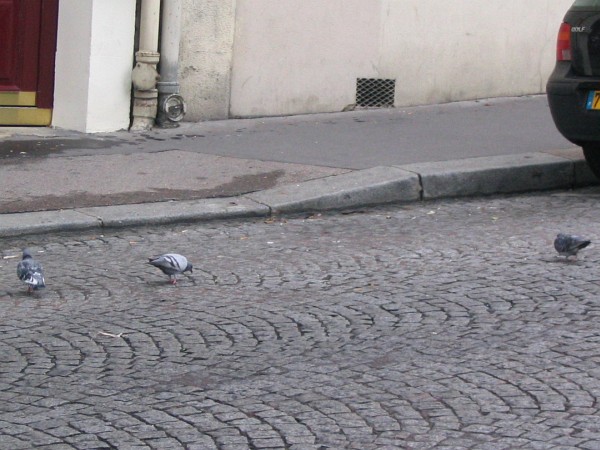
| I'd swear I heard these pigeons wheezing. Maybe they have the bird flu. |
 |
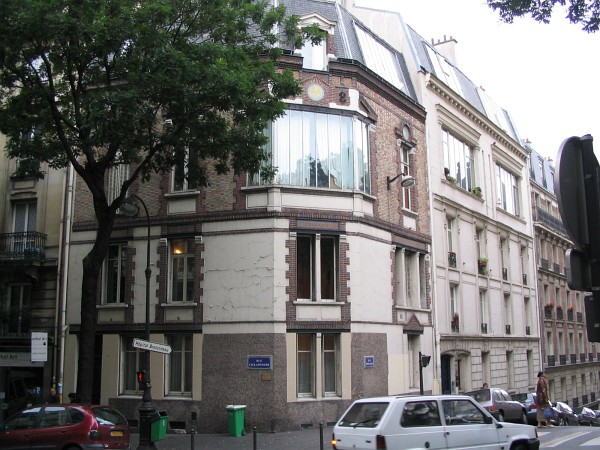
| You know that little short artist? No, not Danny DeVito, Henri de Toulouse-Lautrec. Anyway, this was his house. |
 |
| While we are on the tour of artists homes, let's take a look at this one which is currently undergoing some renovation. It was once the residence of... |
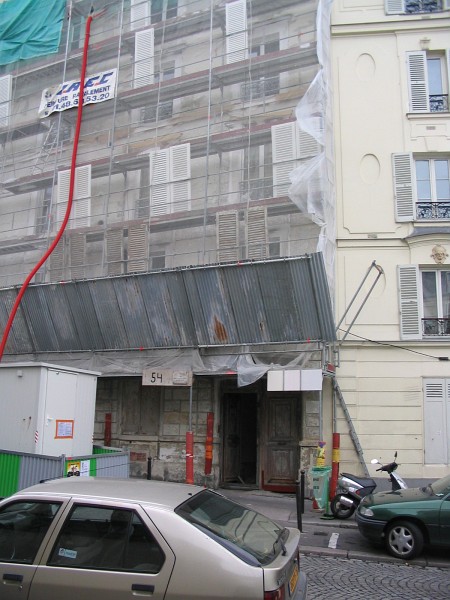 |
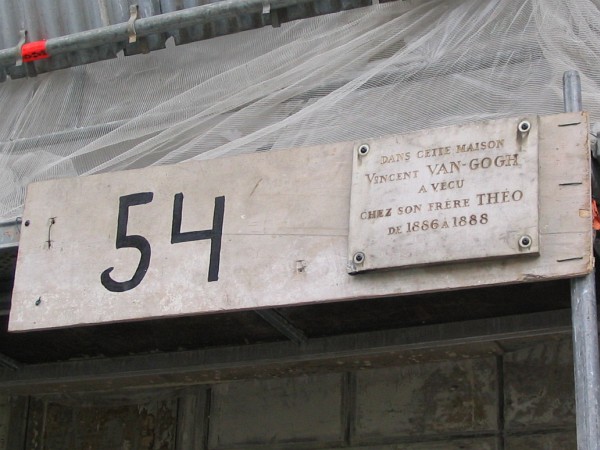
| Vincent van Gogh and his brother Theo. According to the plaque on the scaffolding, he lived here from 1886-1888. |
 |
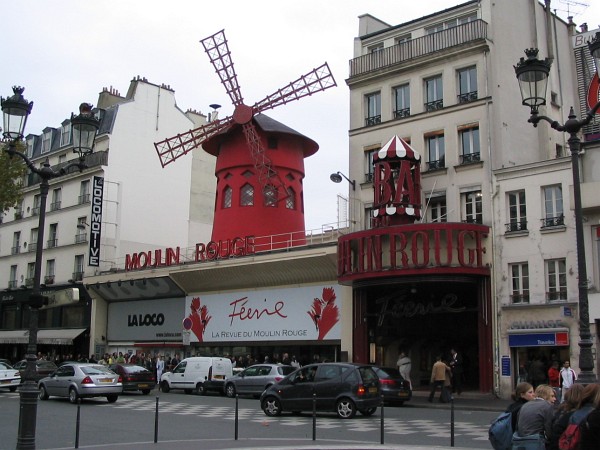
| The Moulin Rouge opened in 1889 and has gone from hosting cancan shows to being a stage for such acts as Yves Montand, Elvis Presley, Frank Sinatra and Ray Charles. Toulouse-Lautrec made the cabaret and its cancan girls famous in his paintings. |
 |
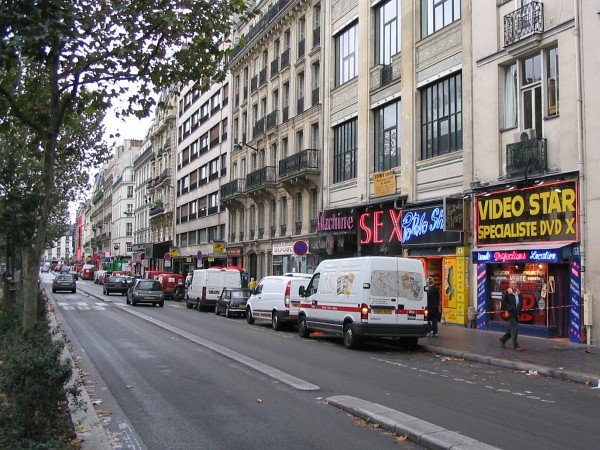
| The area of town in which the Moulin Rouge is located is called Pigalle. It got the nickname Pig Alley by the allied soldiers in World War II. It's always been a fairly seedy area. It is lined with sex shops and adult theatres. |
 |
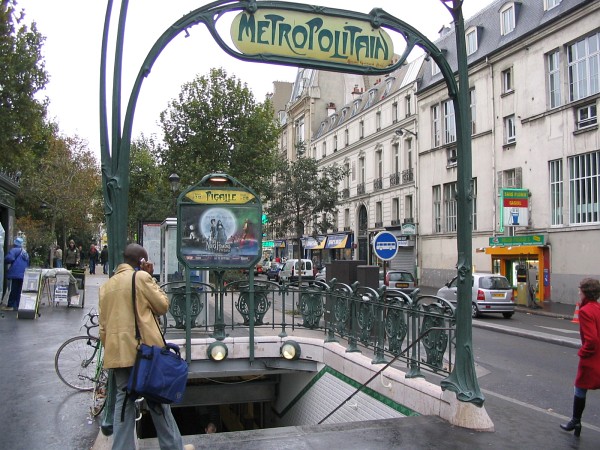
| The Metro stations usually have unique signs and architecture. This is one. |
 |
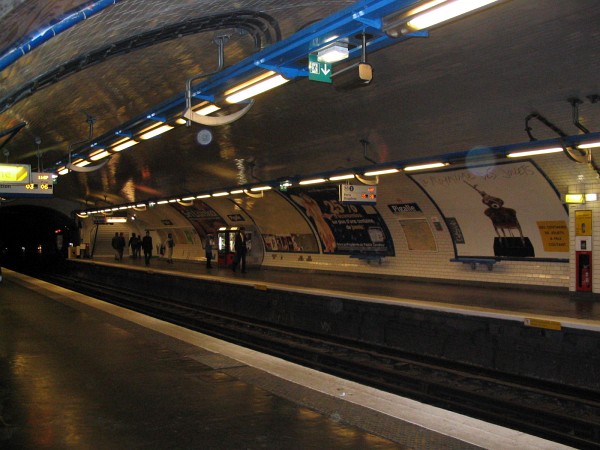
| Inside the station waiting for a train. |
 |