| Up in the morning and back on the last
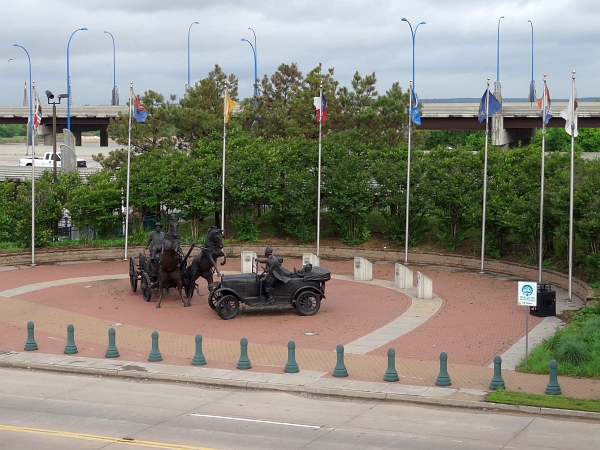
piece of Route 66 on the trip, The Cyrus Avery Centennial Plaza has
the East Meets West: Symbolic Route 66 Midpoint sculptures and flags
of all the states that the Mother Road traverses. |
 |
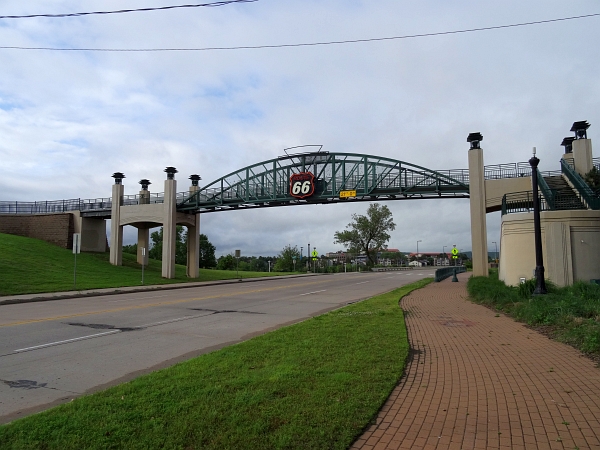
| Just in case you didn't know what road
you are on. |
 |
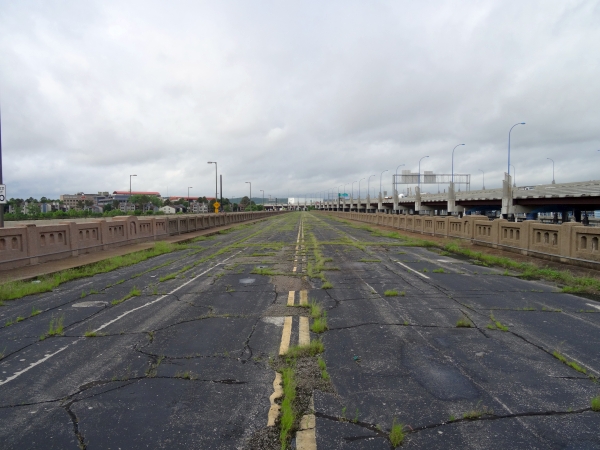
| The old bridge over the Arkansas River
is fenced off. The new bridge next to it has a pedestrian path
beneath the road. |
 |
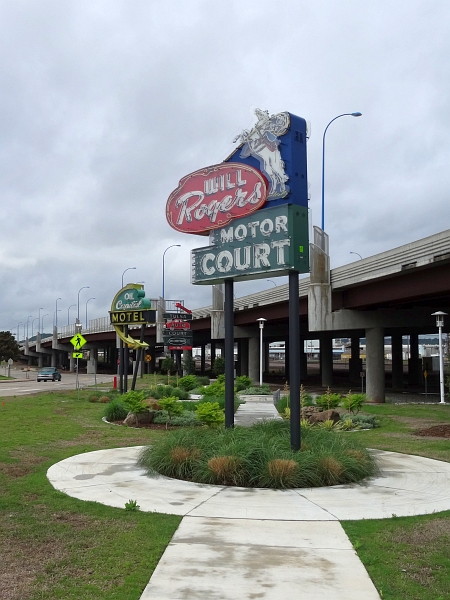
| On the other side of the river are
these motel signs. They are the Will Rogers Motor Court, Oil Capital
Motel and Tulsa Auto Court. They are replicas of the old classic
signs. |
 |
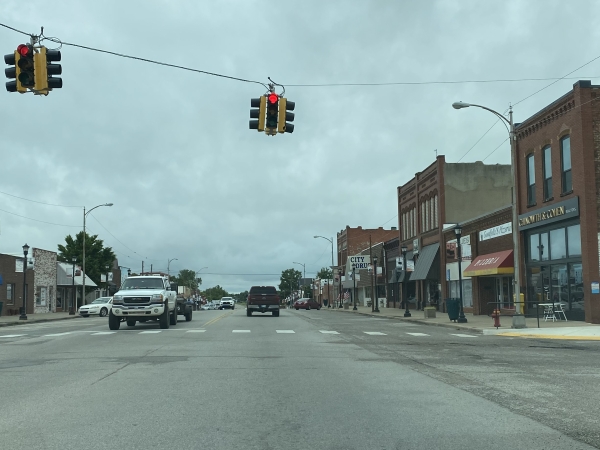
| Beautiful downtown Coweta. |
 |
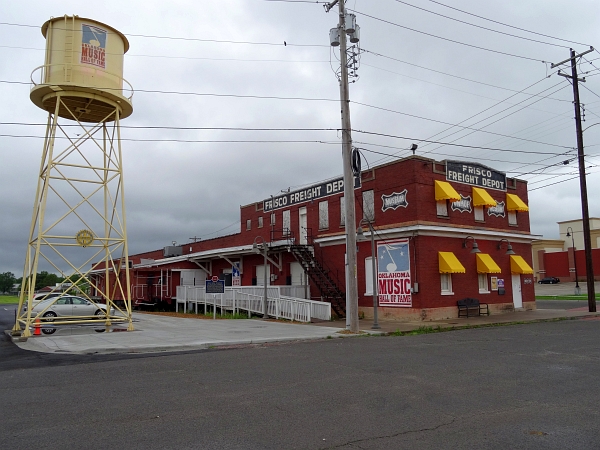
| Another town, another local museum.
This time it is the Oklahoma Music Hall of Fame in Muskogee. With a
name like that I expected something nice. |
 |
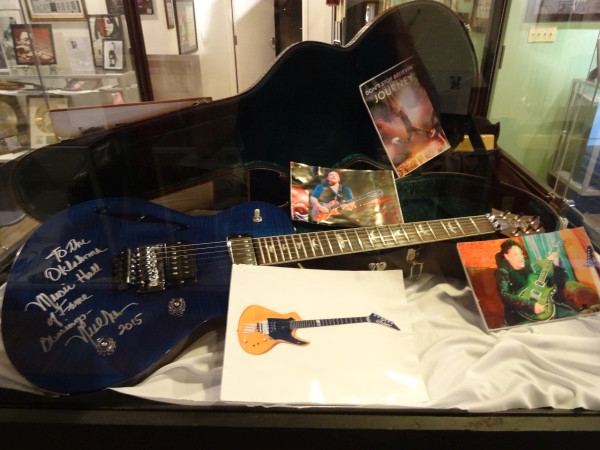
| But it was another one of those small
museums. I learned that Neal Schon, formerly of Santana and founding
member of Journey, was from Oklahoma. |
 |
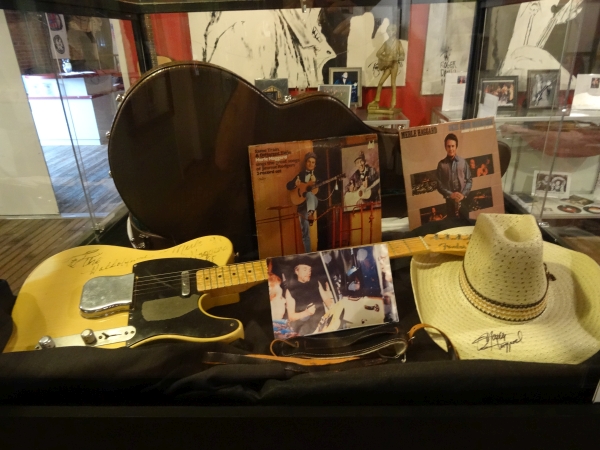
| I knew Merle Haggard was an Oklahoman.
He did have that song "Okie from Muskogee" after all. |
 |
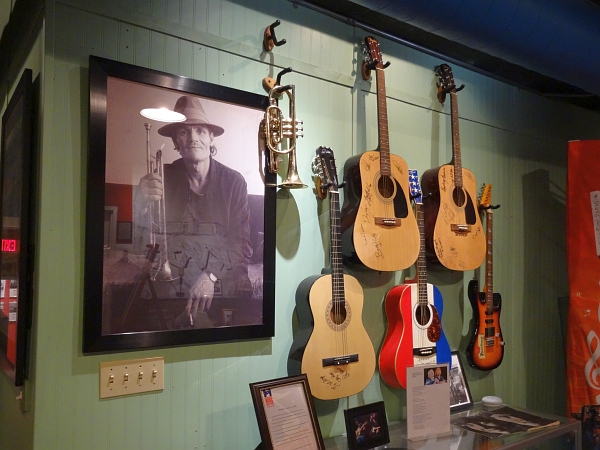
| A bunch of guitars and Chet Baker. |
 |
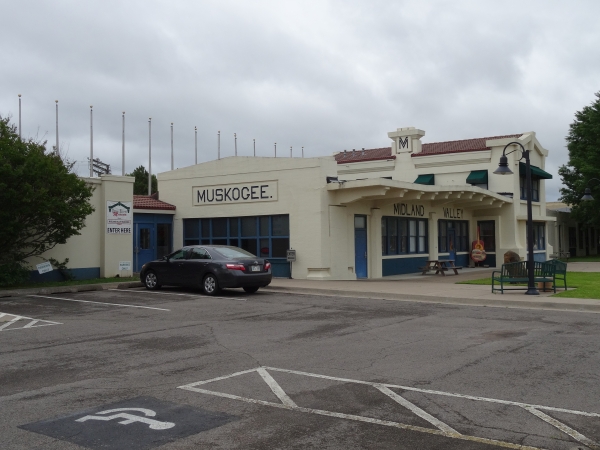
| There was another museum across the
street, the Three Rivers Museum, in what looks to have been another
old railroad depot. I did not visit. I was getting burned out on
local museums and had a long drive ahead of me. |
 |
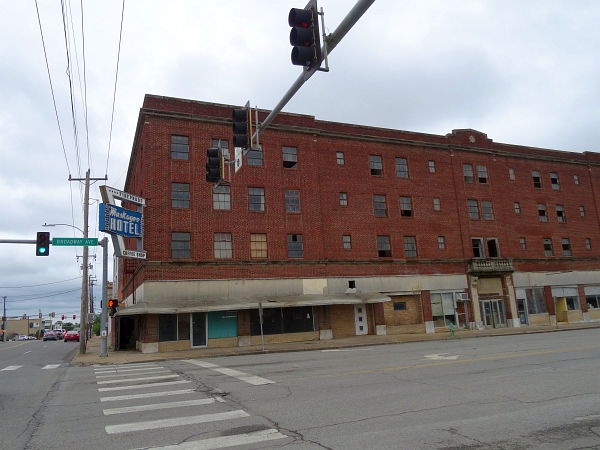
| The old Muskogee Hotel was fireproof
and had a coffee shop. |
 |
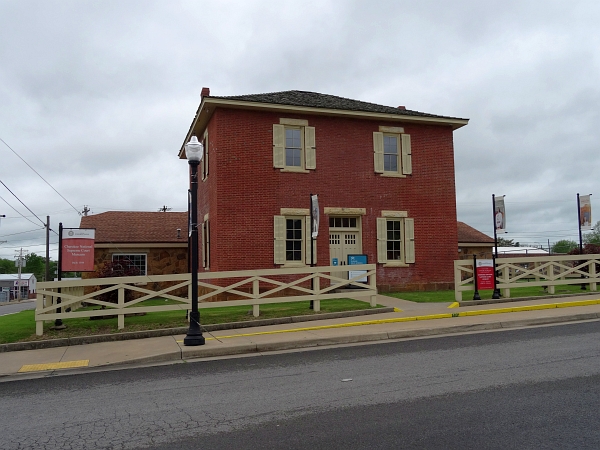
| The last stop on the trip before the
long drive home was Tahlequah, Oklahoma. It is the capital of the
Cherokee Nation. They have some good museums. |
 |
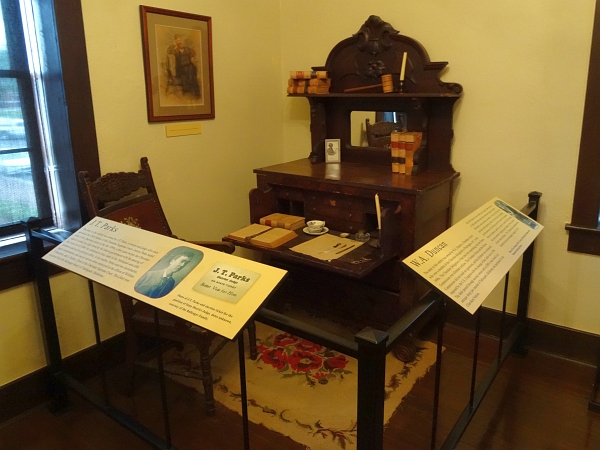
| This is the Cherokee National Supreme
Court Museum. The desk was owned by W.A. Duncan, a Cherokee citizen
who was a member of the Cherokee delegation to Washington, D.C. in
the 1890's. The chair was owned by Chief Justice of the Cherokee
Supreme Court J.T. Parks. |
 |
| The street signs are in both the
English and the Cherokee language. |
 |
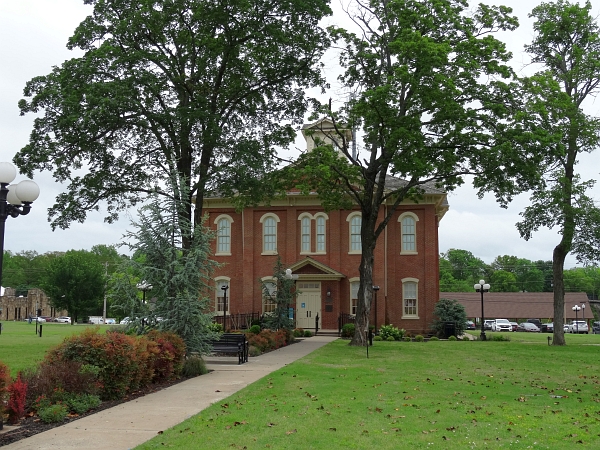
| The Cherokee National History Museum is
located in the old Cherokee National Capitol Building. The Cherokee
museums were free and very well run and presented. |
 |
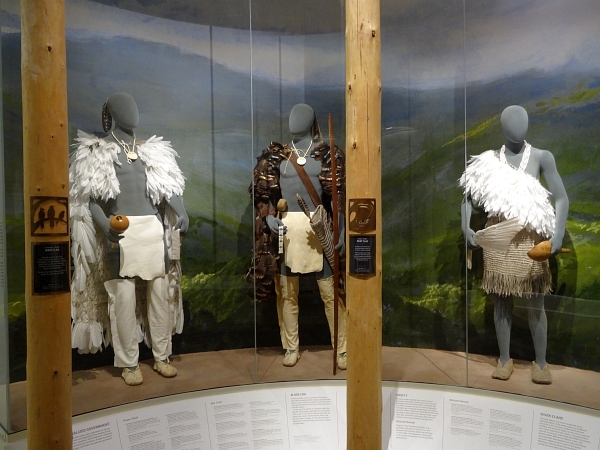
| Outfits of various clans. |
 |
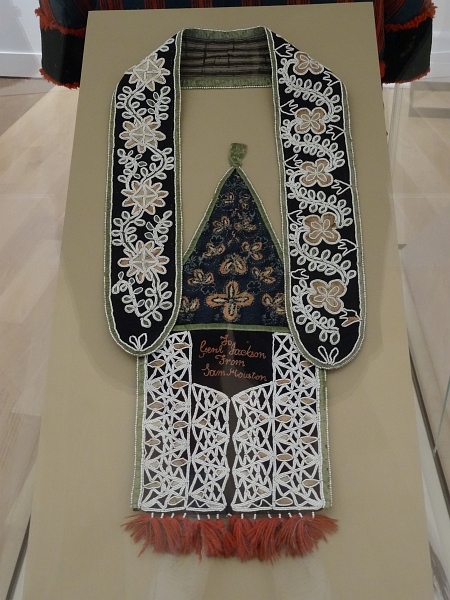
| Cherokees often gave bandolier bags as
diplomatic peacekeeping gifts. This one has stitching that says "To
Genl Jackson From Sam Houston. |
 |
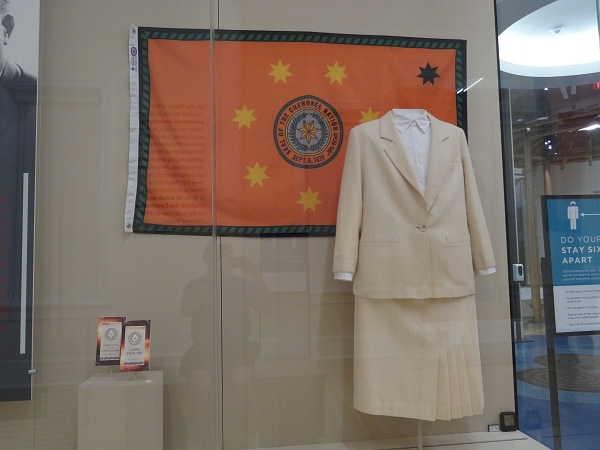
| A lot of the museum focuses on the
removal and relocation of the Cherokee. At the end are exhibits from
more modern times. Don't ask to whom this outfit belongs. I didn't
make note. |
 |
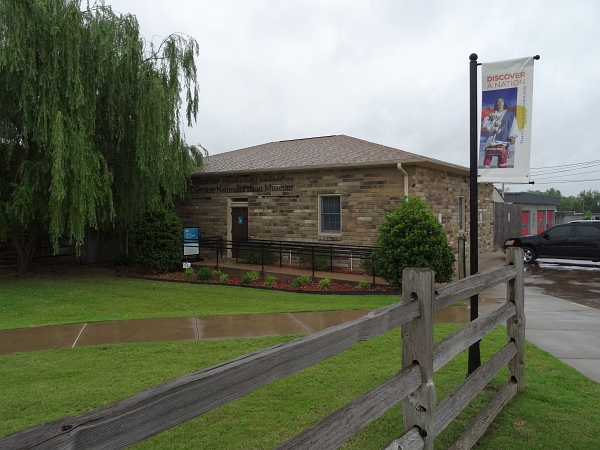
| The last of the museums for the rainy
day was the Cherokee National Prison Museum. |
 |
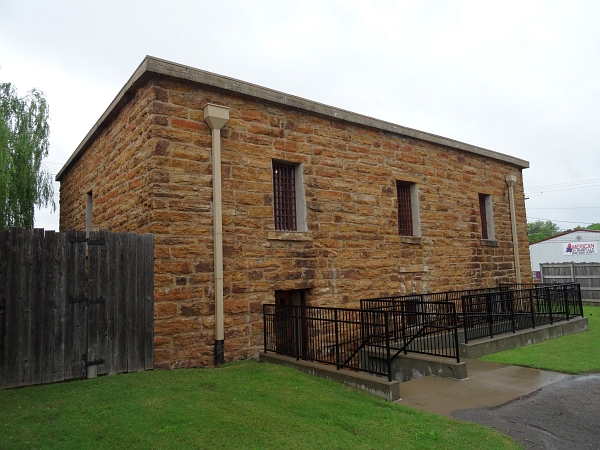
| The old prison was built in 1875 to
hold the most hardened criminals in the Indian Territory. |
 |
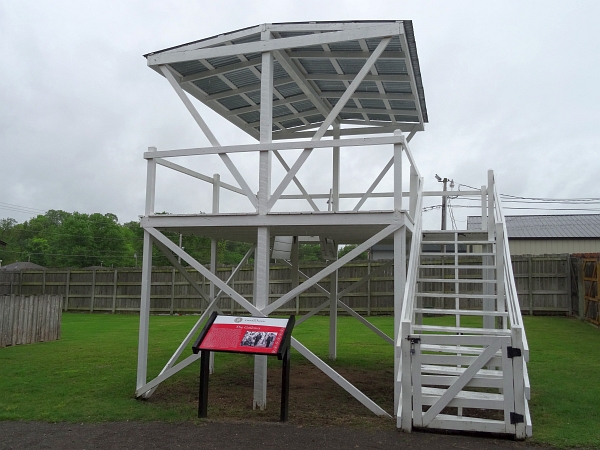
| The scaffold is not original, but this
is where the hangings happened. |
 |
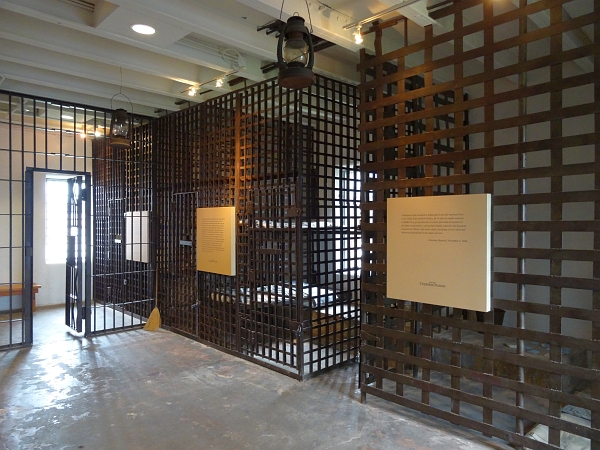
| A couple of jail cells. |
 |
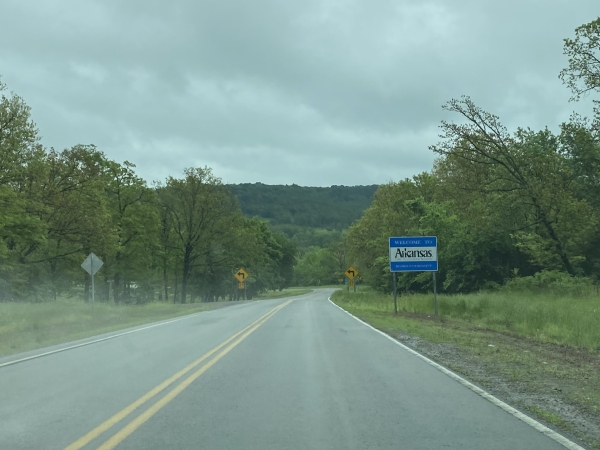
| Back into The Natural State. |
 |
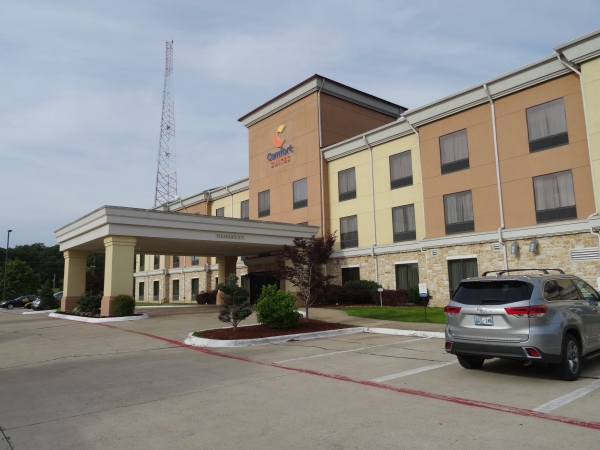
| I didn't want to stay in Little Rock
again and preferred something closer to home, so I spent the night
in Forrest City, about an hour west of Memphis. |
 |
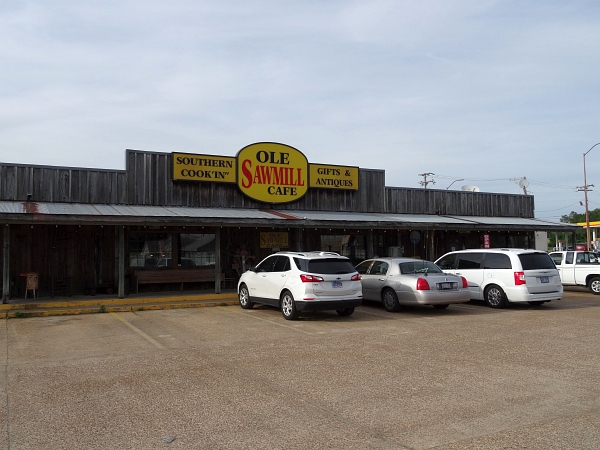
| I ate dinner at a local establishment,
the Ole Sawmill Cafe enjoying a mushroom Swiss burger and more fried
pickles. |
 |
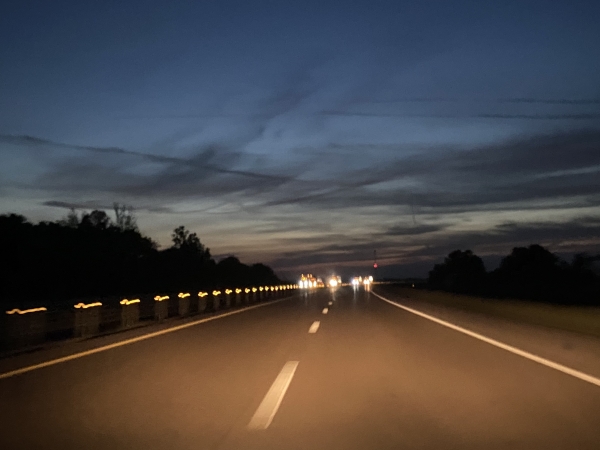
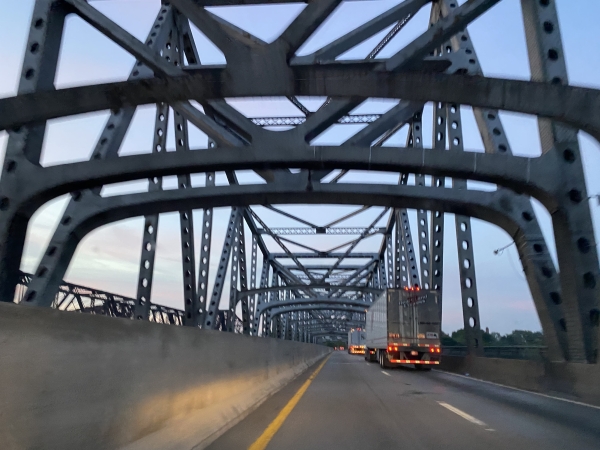
| Since the backup on the Arkansas side
of the only remaining bridge over the Mississippi River always
seemed much worse than the Tennessee side when I looked at Google
Maps, I decided to leave at 5:00 a.m. to beat any potential
traffic. It was a Sunday morning, so I figured there would not be
much trouble at around 6:00. |
 |
| And there wasn't. |
 |
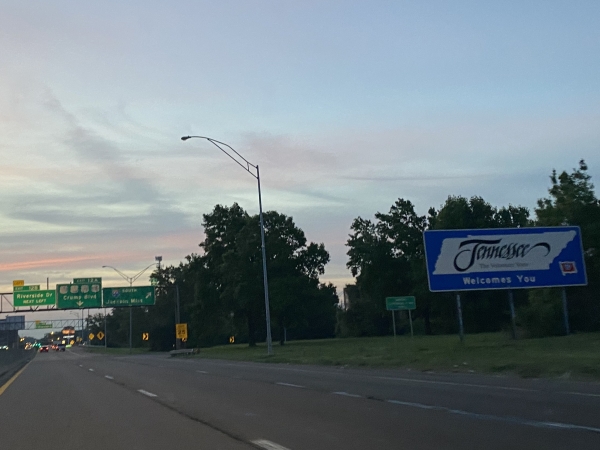
| Back to the Volunteer State and another
three hours until I got back home. |
 |