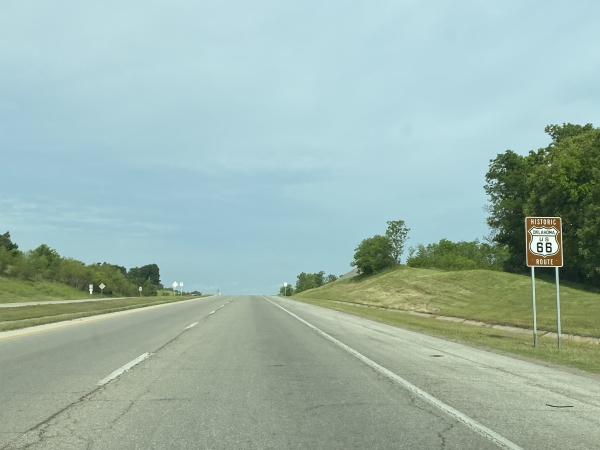
| On a little bit of Route 66. I will do much more of it later in the trip. |
 |
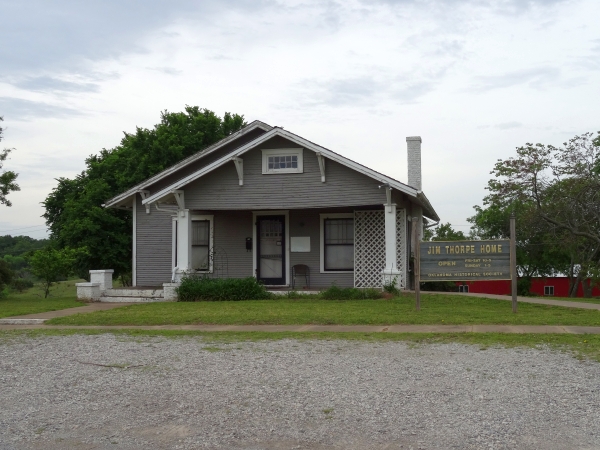
| One thing about driving is that is when
you see a sign for something you can pull off the highway and see
things. This is the Jim Thorpe home. He lived here from 1917 to
1923. Again, it was early in the morning, so all I did was take a
picture. Another famous person from Yale was jazz trumpeter Chet Baker, who was born there in 1929. I have now been in the town where he was born and seen the place where he died in Amsterdam. |
 |
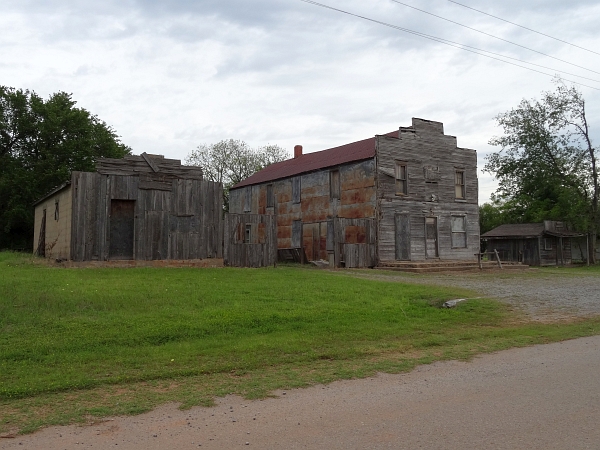
| I have visited many ghost towns of
various stages of ghostiness. The ones farther west are more of what
you would picture a ghost town would be. Towns that were built to
support mining operations that when they went bust were eventually
abandoned. I looked on Oklahoma and Kansas websites for ghost towns
to visit. Turns out there really aren't any, despite being called
ghost towns. This was in Ingalls. There are about a hundred people living there and just a couple of old abandoned buildings. Here are some that I found. |
 |
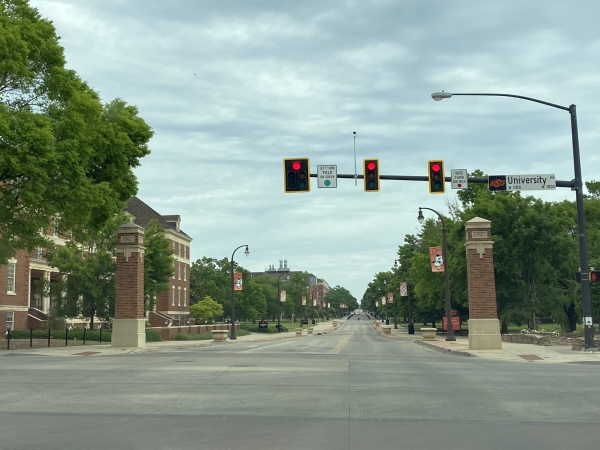
| It was not on my agenda for the day, but since there wasn't much in Ingalls I decided to go through Stillwater, home of the Oklahoma State University. It is a nice looking campus. Much of campus looks like newer construction, with lots of brick. |
 |
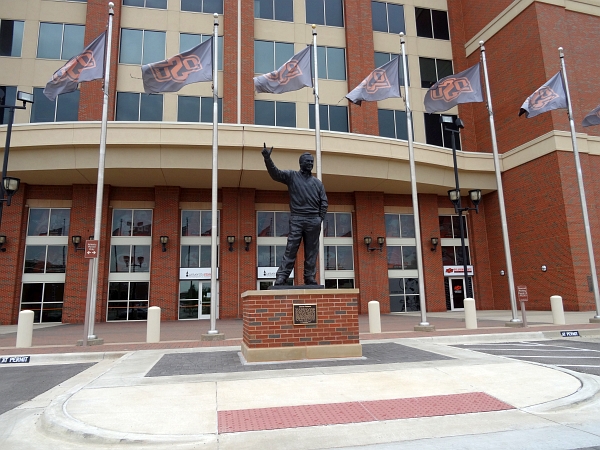
| Boone Pickens Stadium. OSU alum Thomas Boone Pickins, Jr. gave hundreds of millions of dollars to his alma mater. |
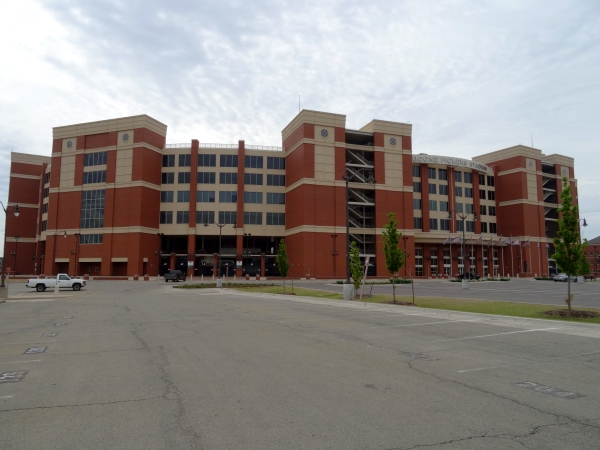 |
| When you give that kind of money, they name a stadium after you and put up a statue. |
 |
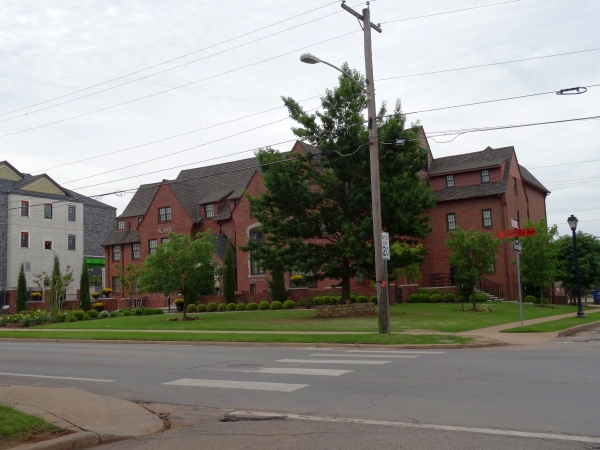
| I was impressed by the size and newness of the fraternity and sorority houses around campus. This is the Kappa Alpha Theta house. |
 |
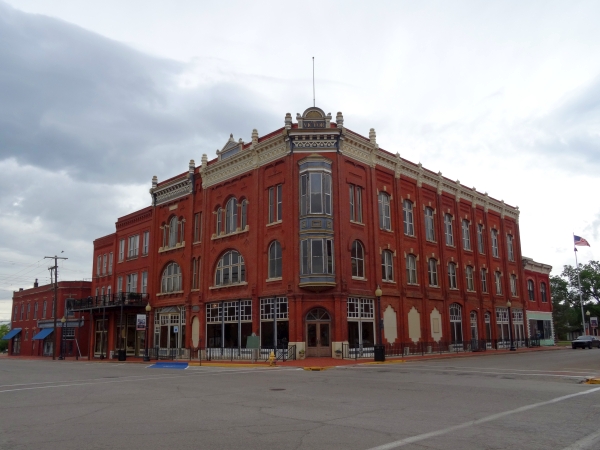
| From fancy new buildings to fancy old
ones. We are now in Guthrie, which was the territorial and first
state capital of Oklahoma. Built in 1893, besides Lillie's Drug Store the building also held a number of territorial offices, several saloons, a wholesale liquor business and a ballroom on the third floor. It was connected with other downtown buildings via underground tunnels. |
 |
| The whole downtown district is a
historic preservation area. Here we have the Eager and Hirzel building, a former bank and the Pollard Theatre next door, which is now shops on the ground floor and I don't know what upstairs. |
 |
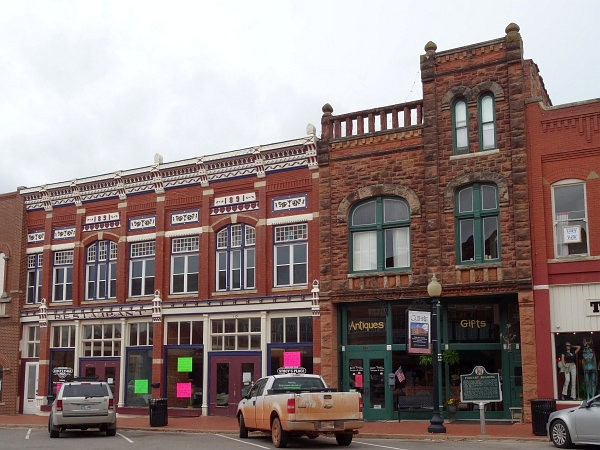
| Restored in 1980, the Foucart Building (the one with the sandstone facade) was built in 1891 to house the Boston Store, which sold dry goods. |
 |
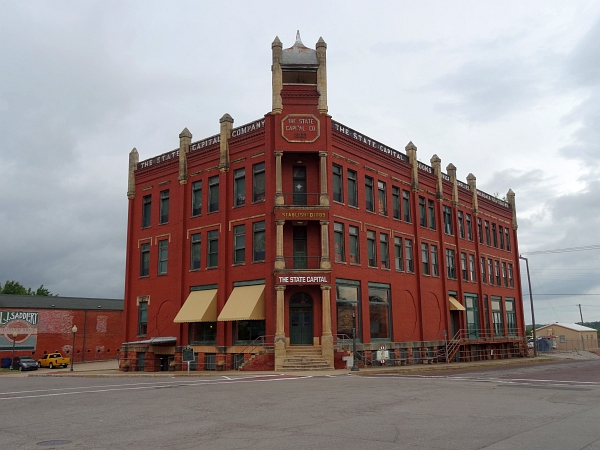
| Built in 1902, this building housed the Daily Oklahoma State Capital newspaper, which claimed to be the first newspaper in the Oklahoma Territory. We may discover later that this was not true. |
 |
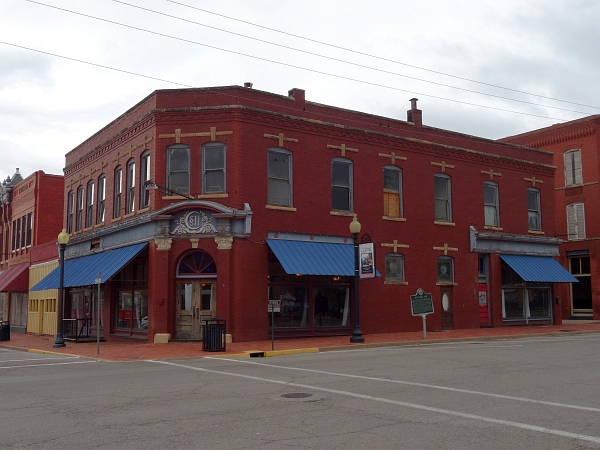
| One of the most popular of the numerous saloons in Guthrie during Territorial times was the Blue Bell. Originally built in 1889, the original frame structure was replaced by the current brick edifice in 1903. Famous cowboy actor Tom Mix worked here as a bartender before he went on to Hollywood fame. |
 |
| Medical marijuana is legal in Oklahoma and I saw a lot of dispensaries on the trip. Unsurprisingly, Tommy Chong has a line of cannabis products. |
 |
| Definitely more modern looking compared to the rest of the Territorial architecture is the Lintz Department Store. |
 |
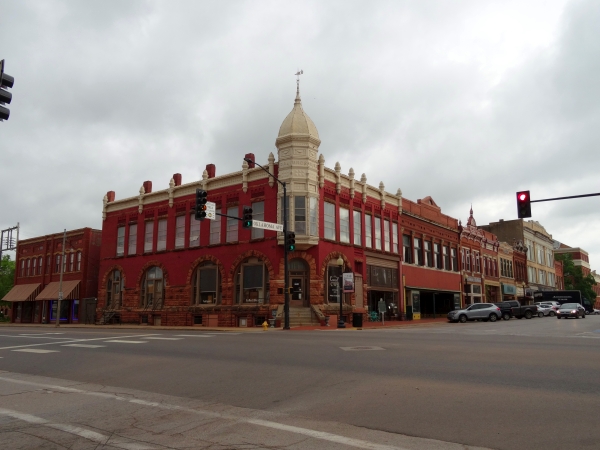
| The Gray Bros. Building from 1890. |
 |
| From nicely preserved or restored buildings in Guthrie to this old abandoned structure in Fallis. |
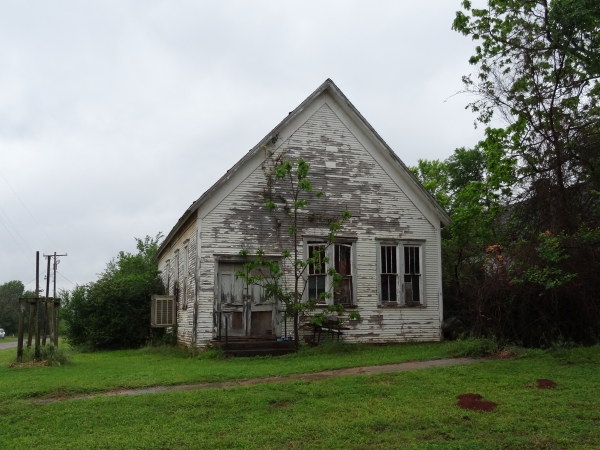 |
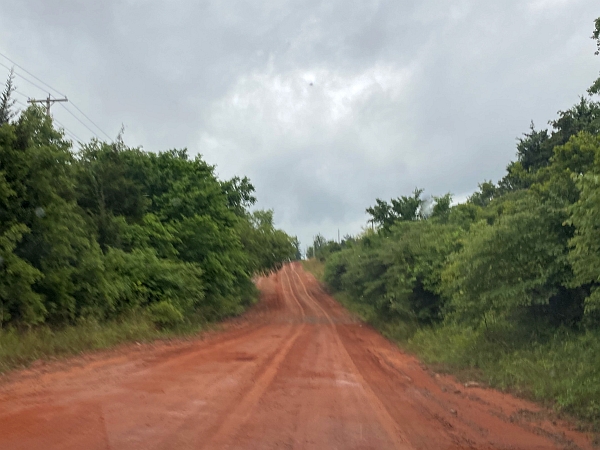
| Fallis was another supposed ghost town but I drove around these mud roads multiple times before giving up on seeing anything interesting. The only thing out there was a few run-down homes where a handful of people live out in the middle of nowhere. If there was something else out there, I missed it. |
 |
| Heading to Oklahoma City, found myself
back on Route 66. I stopped briefly at this old stone ruin. It was
raining, so I didn't get out of the car for longer than it took to
take a picture of the little sign put there by the owners of the
property that explained what this was. Apparently it is one of the last old Route 66 filling stations still standing in that part of the country, believed to have been built in the 1910's or early 1920's. At one point, someone came by the filling station and sold the owners a set of plates for counterfeiting $10 bills. Everything was fine until someone was caught passing a fake bill and it was traced to the station. Or it could all be made up. |
 |
| I noticed that on stretches of the old Mother Road that there were short parts that were previous configurations of Route 66. This is one of them. |
 |
| The historic Round Barn in Arcadia. Again, it was raining and I wanted to get to OKC so I did not stop by longer than to take a photo from my car. Built in 1898, it is on the National Register of Historic Places. |
 |