 THURSDAY
BRÚ NA BÓINNE
THURSDAY
BRÚ NA BÓINNE
|
Thursday was my first day on the road. I would get to Belfast by the
afternoon. On the way I stopped off at Brú na Bóinne. By the way, this is only a model. |
 |
|
The Brú na Bóinne is on the list of UNESCO World Heritage Sites.
It's a complex of 5000-year old Neolithic tombs and henges and the like. This is also a model. I suppose it is a representation of how the prehistoric people of the area lived. |
 |
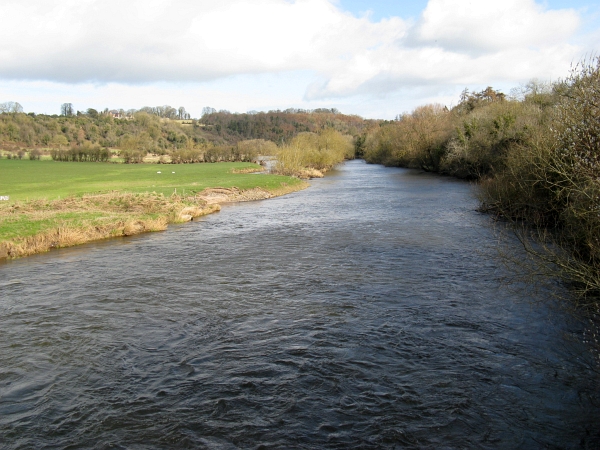
| Brú na Bóinne is Irish for Palace of the Boyne. This is the River Boyne. |
 |
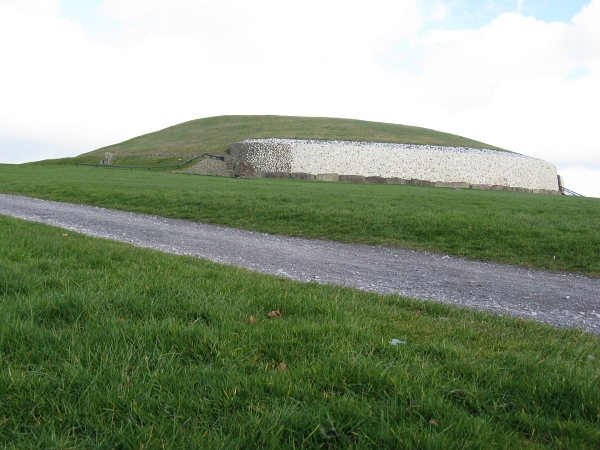
| This is Newgrange. It was the only one of the burial tombs open at this time of year. The other two well known sites close by are Knowth and Dowth. |
 |
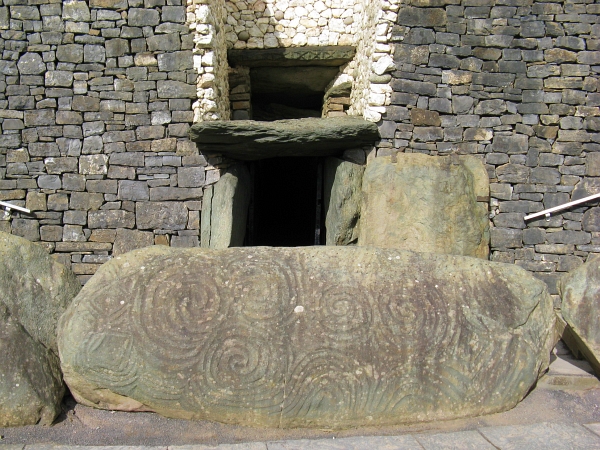
| This is the entrance to the passage tomb. Unfortunately they do not allow photos inside. But the passage is only about twenty yards long and quite narrow and low in places. Those people from way back then were big on the solstices and stuff. On the winter solstice, the sun rises through that passage above the entrance and a narrow beam of sunlight into the structure. Those few days around the solstice are the only days sun reaches inside the tomb. |
 |
| There are mounds all around the place. In fact, that one on the right is in the middle of someone's farm land. The government owns the mound and the landowner had the land around it. There's also a large standing stones in front of the hedge. It may have marked the edge of the river, which would have been higher at the time. |
 |
| I don't recall what these little posts are. I'm sure they are all terribly old and quite important. |
 |
| This is the kerbstone at the back of the mound. The large stones that ring the structure have those prehistoric carvings on them. Spirals, lozenges, chevrons, triangles and other shapes. You can really make out the spirals and chevrons on this one. |
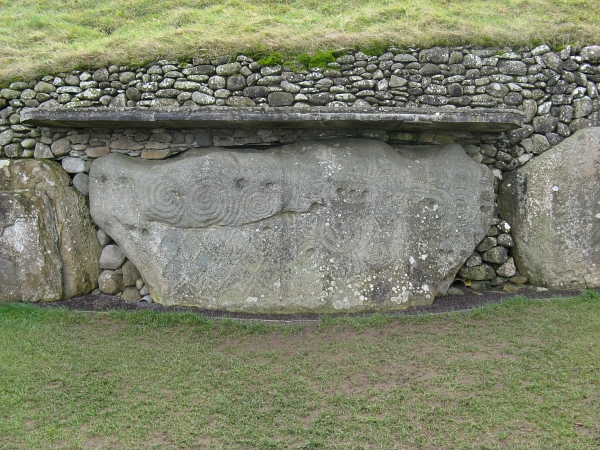 |
| Believe it or not, after five millennia this thing is still waterproof. No water seeps into the chamber inside. They sure knew how to build 'em back then. |
 |
|
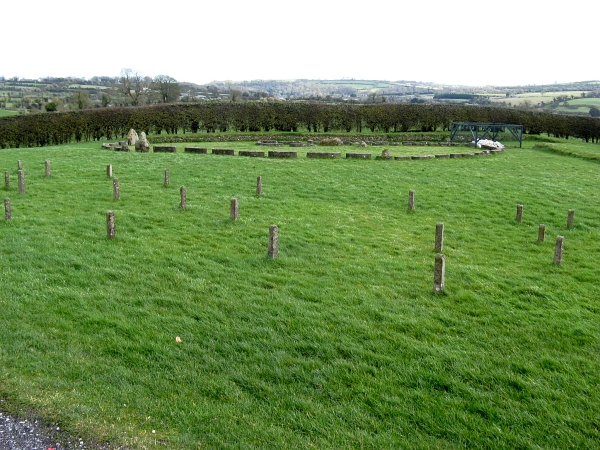
The Woodhenge or Pit Circle. From the nearby sign: Because the enclosure was made of wood, it hasn't survived above ground. However, evidence of it was found by archaeologists. They found postholes where the huge wooden stakes had been. They also found pits where small animals had been cremated and deep burial shafts where the burnt animal bones were buried. |
 |
| The bus trip back to the welcome center was slowed a bit by this man and his cows. |
 |
|
It was remarkably easy to drive on the left. I thought there would have to
be much more concentration involved, but it just kind of became second
nature. Unfortunately, there were not too many dual-carriage motorways over there. This would be the last one I was on for a few days. |
 |