 MONDAY
POMPEII
MONDAY
POMPEII
| The caldarium, or steam bath room, had heated floors. Of course when Vesuvius blew, the whole damned city was pretty heated. |
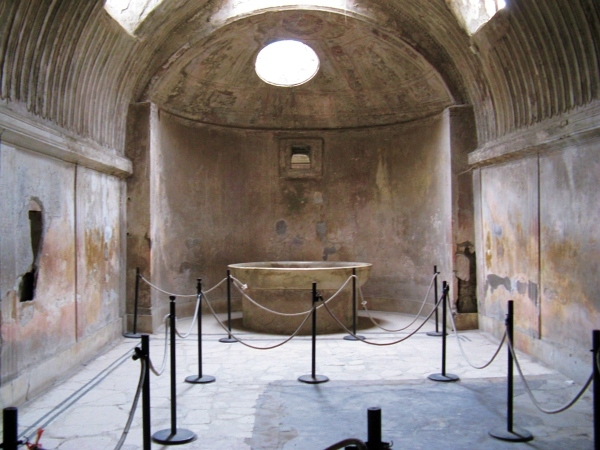 |
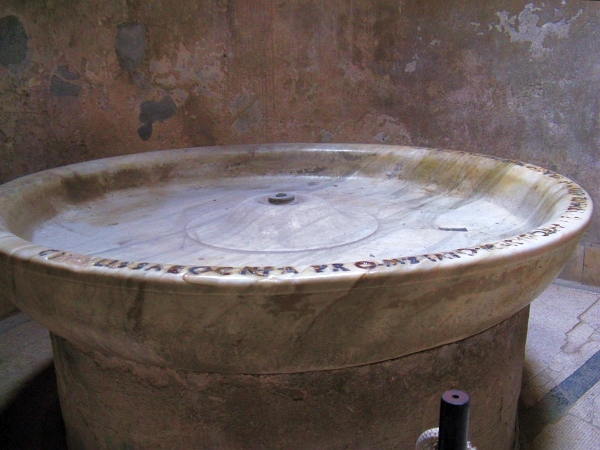
| This is a fountain in the steam room. The writing on the edge tells that it was paid for by two politicians and how much it cost. |
 |
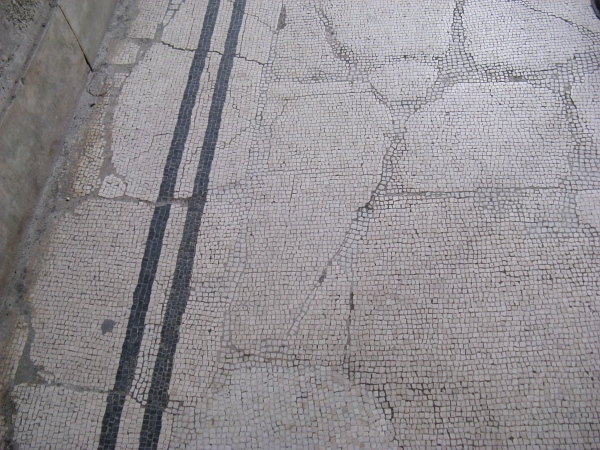
| Here's some of that no-slip tile floor. |
 |
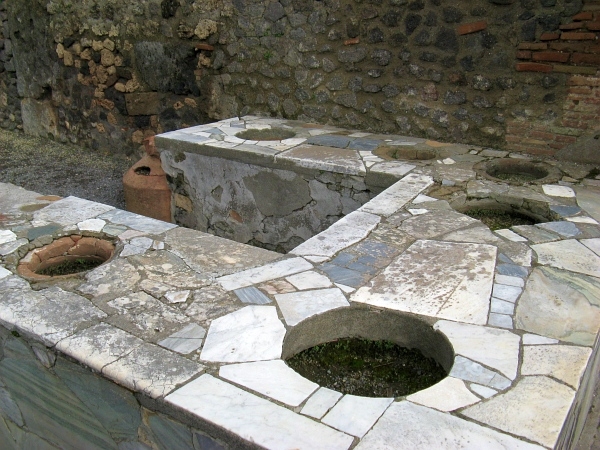
| They didn't really eat at the cafeteria we saw earlier, but they did get food here at the thermopolium. In current day terms it was fast food joint. |
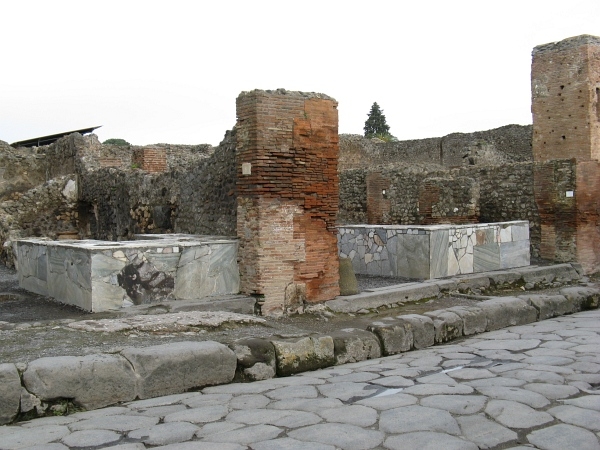 |
| Pots of food were held in these holes in the marble counters. |
 |
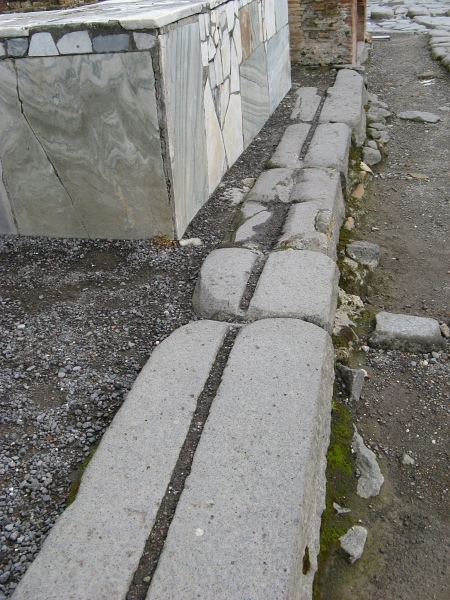
| The groove in the stone at the front is for the shop's accordion doors. |
 |
| I didn't get it in the photo, but below this mosaic of a dog are the words "CAVE CANUM", the Roman equivalent of "Beware of Dog". |
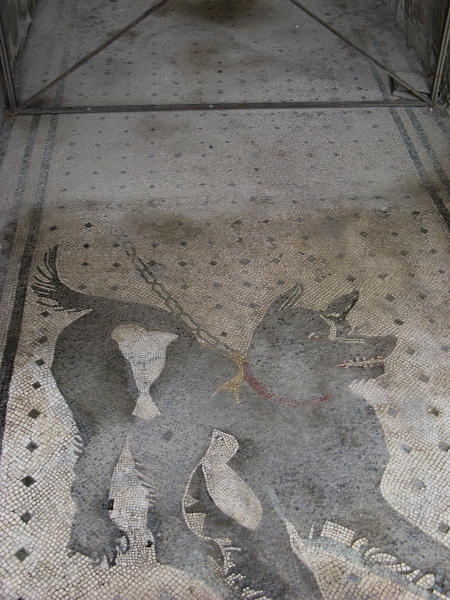 |
| It is at the entryway of the House of the Tragic Poet, which was a fairly typical Roman house. |
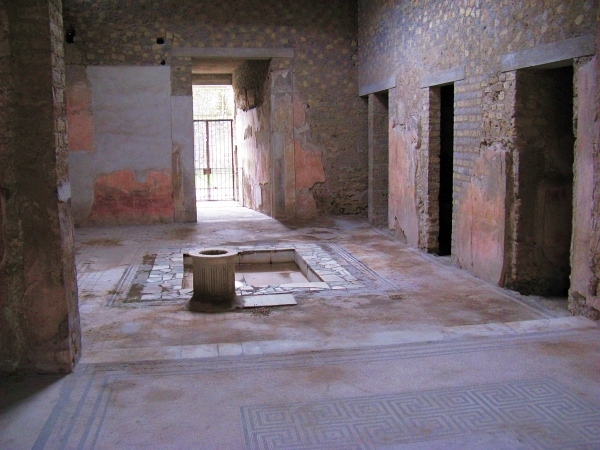 |
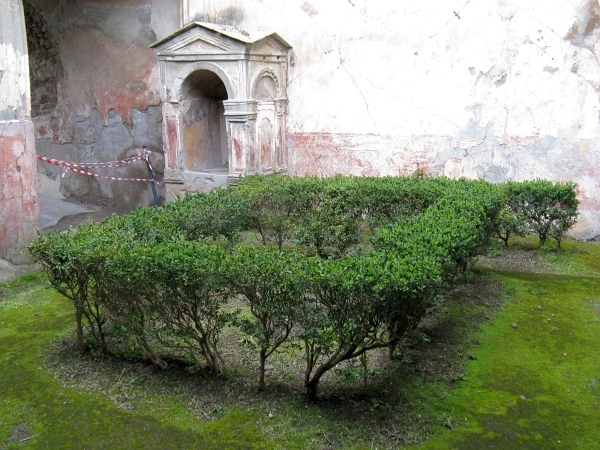
| A small garden in the house. |
 |
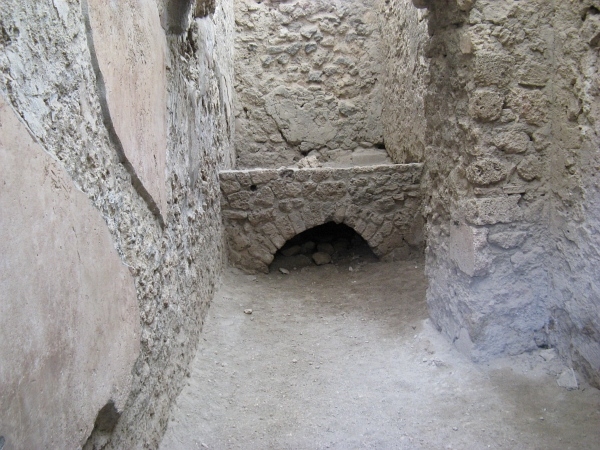
| A little kitchen. |
 |
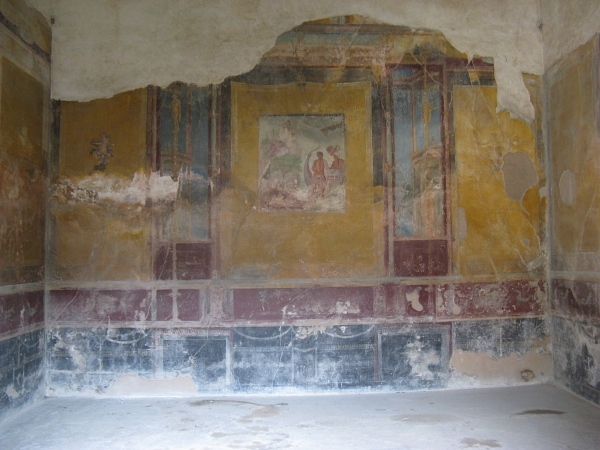
| Some of the frescos are pretty well preserved. |
 |
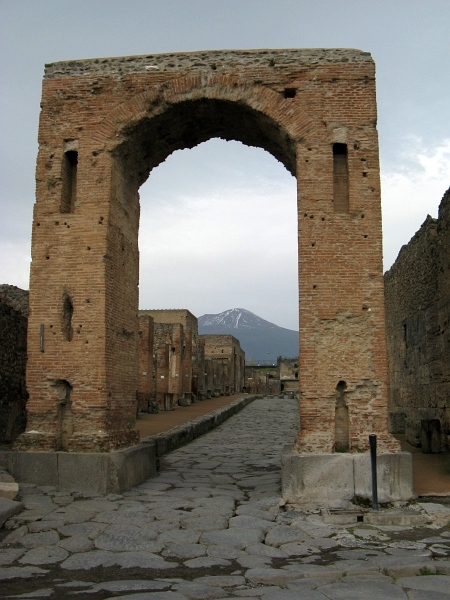
| This is an aqueduct arch across a street. |
 |
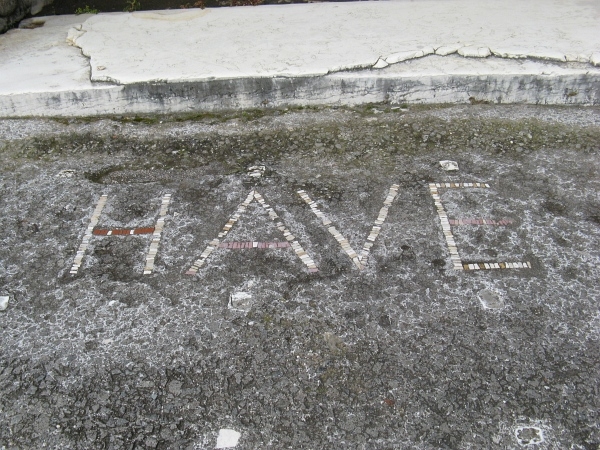
| At the entrance to the House of the Faun is this ancient Roman welcome mat. Alright, it's not really a mat, just some tiles in the ground. But it spells "HAVE", which means "Hail to you". So you see, welcome. |
 |
| Again, this is not the original Dancing Faun statue. The original is also in Naples. |
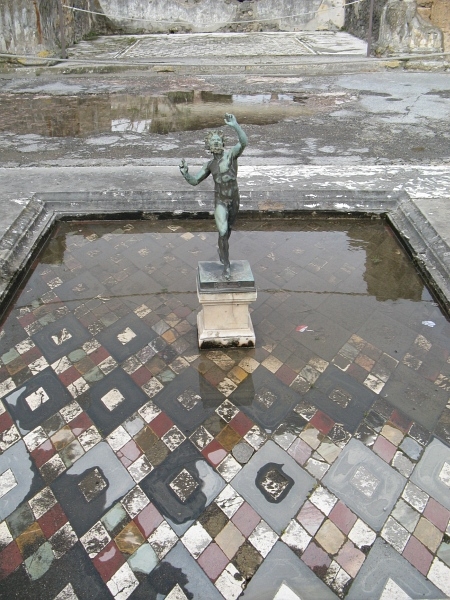 |
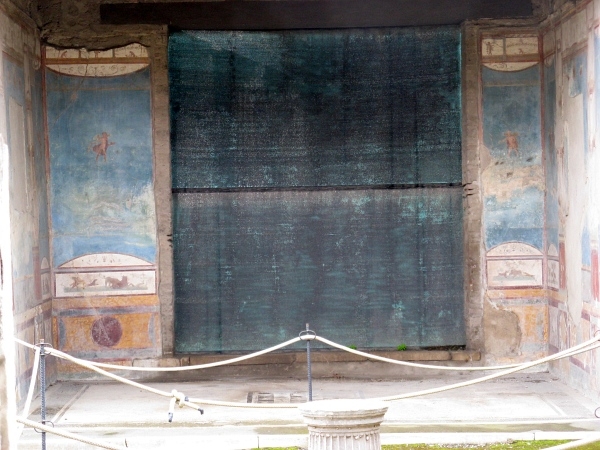
| This house is the largest in Pompeii. |
 |
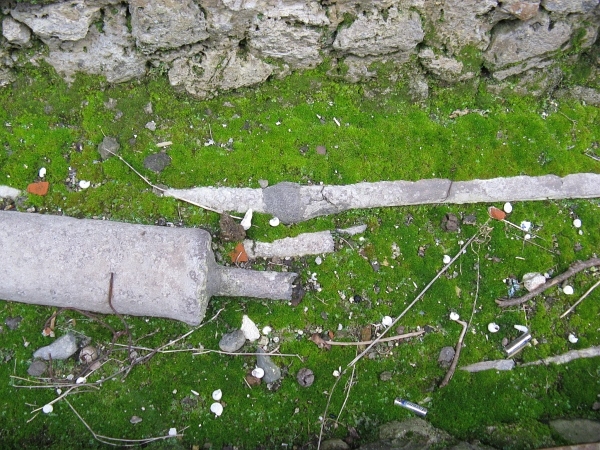
| These are remnants of pipes, specifically 2000 year-old lead pipes made of lead from Britannia. |
 |
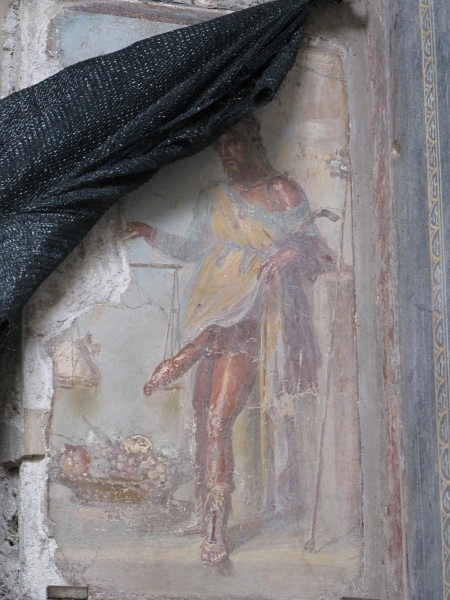
| This is a fresco in the House of the Vettii and yeah, that basically is what you think it is. It's a bowl of fruit. Oh, and a guy with a massive erection. He is Priapus, a minor fertility god. But it wasn't some kind of weird wall porn, according to the guide. As you can see the penis is balanced on a scale against a sack of money over the fruit, apparently meaning that only with a balance of fertility and money can you have abundance. |
 |
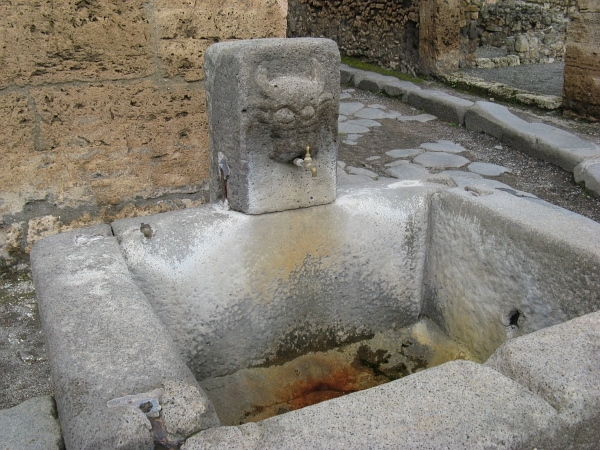
| Outside the house is one of the public stone fountains, although I don't think the tap is original. |
 |
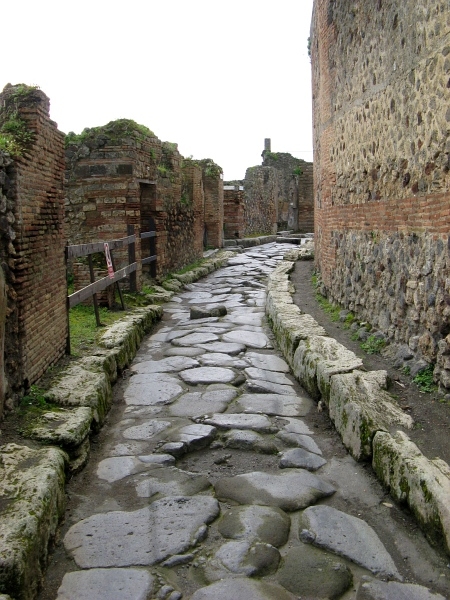
| The winding road that leads to... |
 |
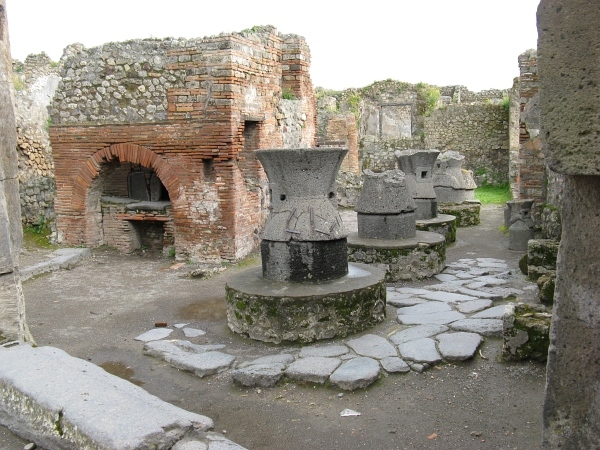
| ...the bakery and mill. There's an oven and flour grinders. There was a place like this in each neighborhood. |
 |
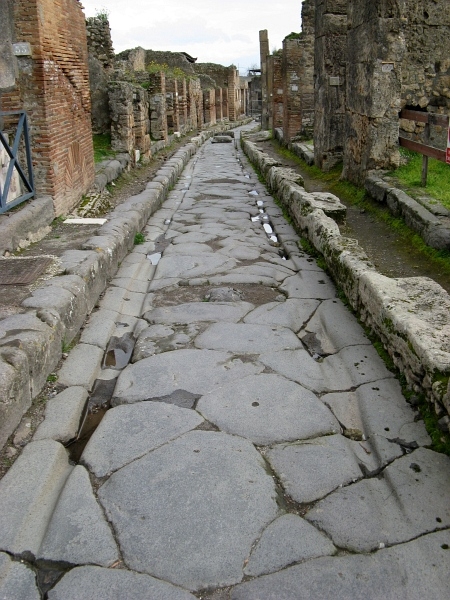
| The ruts are chariot grooves worn into the road. |
 |
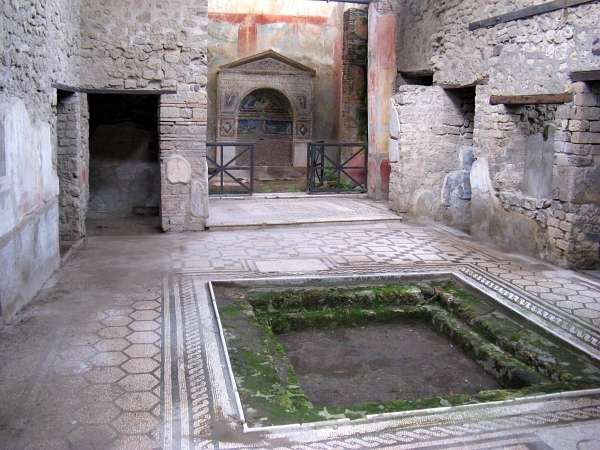
| I did not note what house this was. |
 |
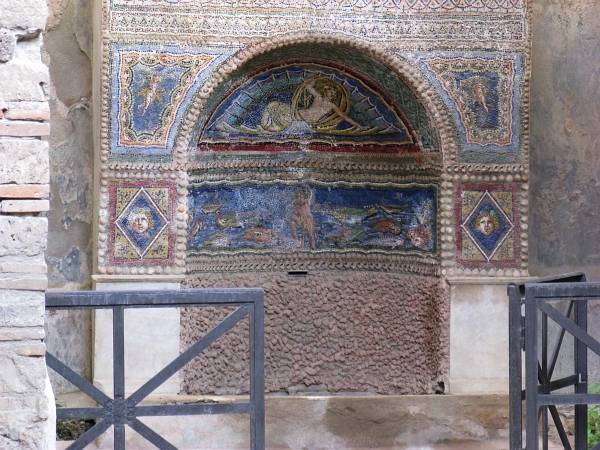
| Nice tile work on this what I assume is an altar. |
 |