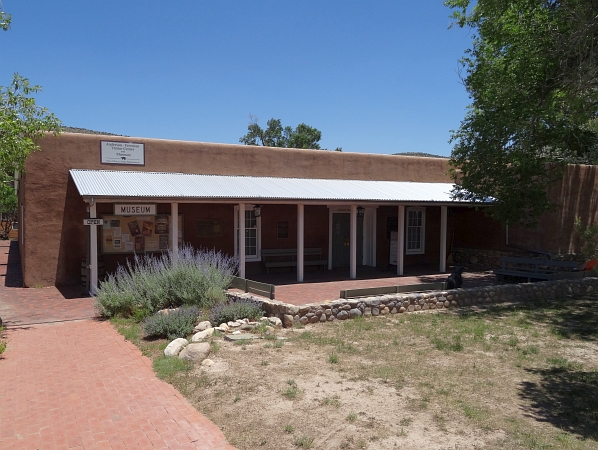
| Welcome to the town of Lincoln, New
Mexico. It was the historical home of a famous fella born Henry
McCarty. This is the Anderson-Freeman Visitor Center and Museum.
Inside is stuff about the history of the town, from the Native
Americans who originally lived in the area through the Lincoln
Country War of 1878. The town currently has around fifty residents. |
 |
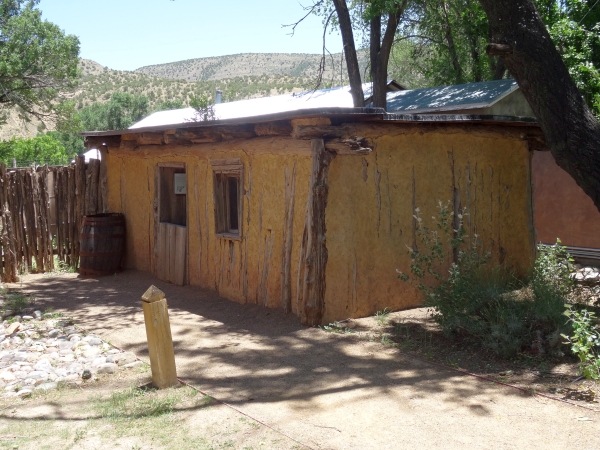
| This is an original section of the Luna-Chavez House. It was originally the home of Juan Lopez and his family in the 1870's and 1880's. Seems like his name ought to be on it, but he got screwed out of it somehow. |
 |
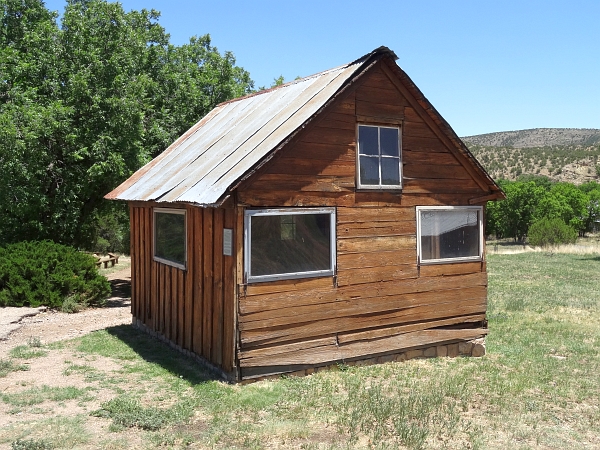
| At the end of the 19th century, many people with tuberculosis migrated to the high, dry climate of the Southwest in hopes of being cured. Dr. James W. Laws came to the area from Memphis in 1901. In 1905 he bought property and converted it to a TB sanatorium. When he needed more room for his patients he built these "TB huts". This is one of his original ten. |
 |
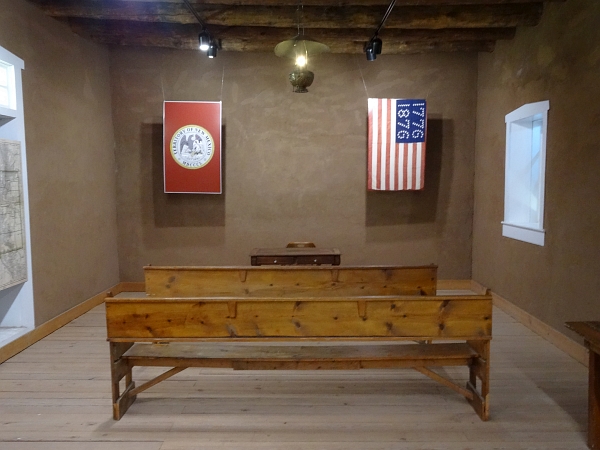
| This three-room adobe was the seat of law and justice when Lincoln County was established in 1869. |
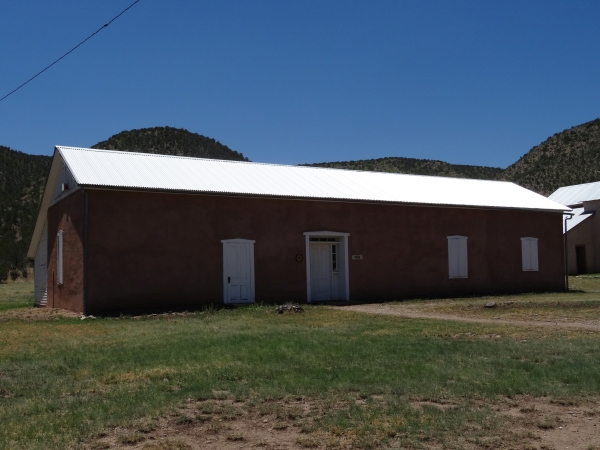 |
| They issued routine warrants and records, as well as holding trials large and small. Given the size of this re-creation, it doesn't seem like there was enough room for a big trial. |
 |
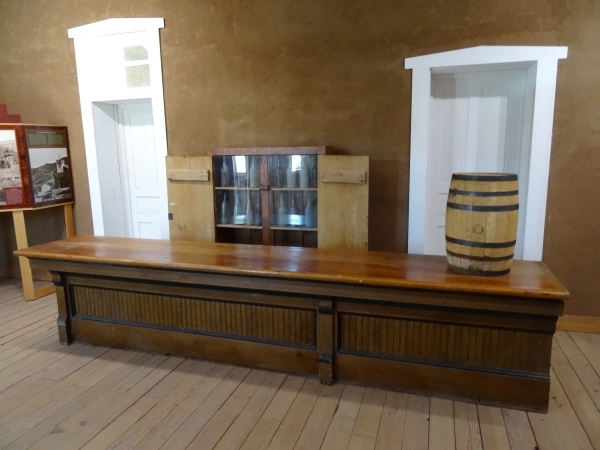
| The building was later used as a saloon. |
 |
| Next door is La Iglesia de San Juan-Bautista, established 1887. |
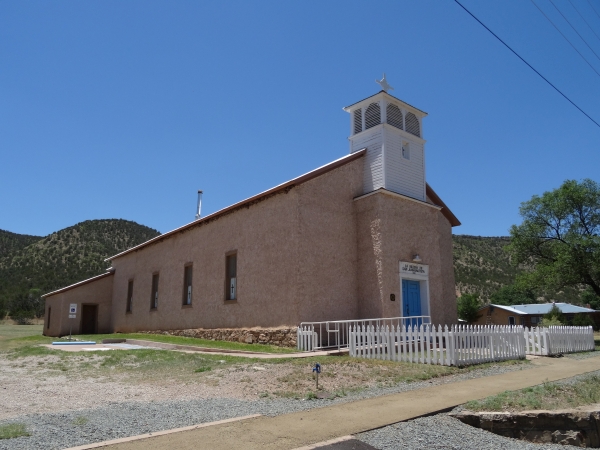 |
| It is still in use. |
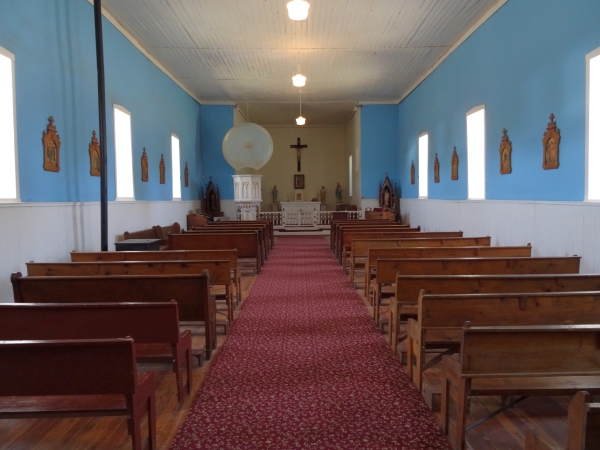 |
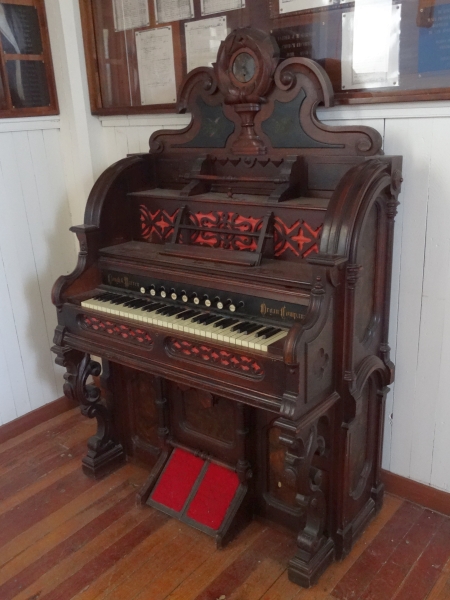
| In this small church was this great old Clough & Warren pump organ. I don't know how old it is, but the company ceased production in 1916. |
 |
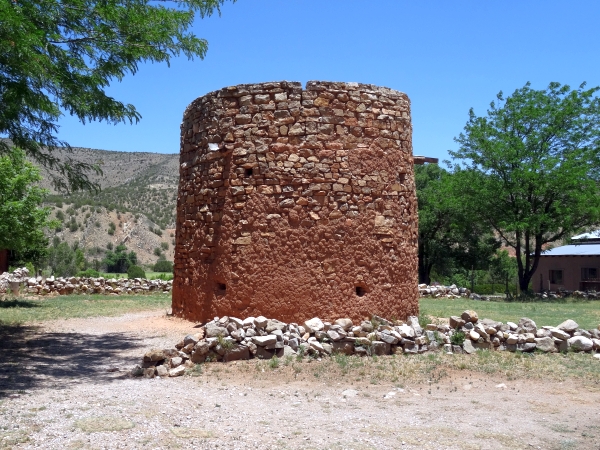
| The Torreon is a circular stone fortification erected by the area's earliest Hispanic settlers in the 1840's or 1850's. It was used as a defensive structure against raiding Apaches. It was also used by one of the sides in the Battle of Lincoln, July 15-19, 1878. |
 |
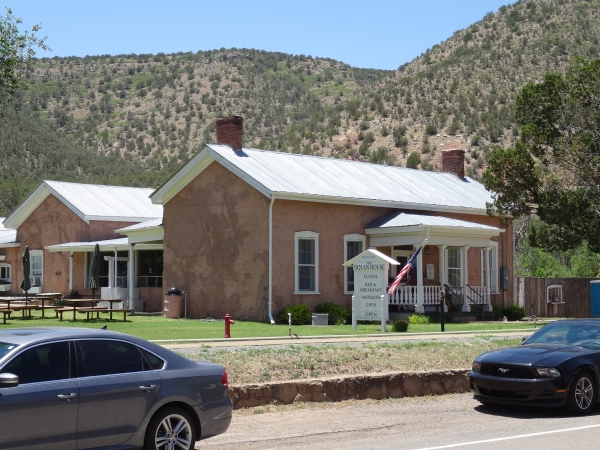
| I suppose I should explain what the
Lincoln County War was about. Well there was a group of men,
L.G. Murphy, Emil Fritz, James Dolan and John Riley, who created an
economic empire in the county. Their firm controlled both the
coveted beef contracts at nearby Fort Stanton and the Mescalero
Agency. Much of the county's population owed debts to their store in
Lincoln. This was the house of James Dolan. |
 |
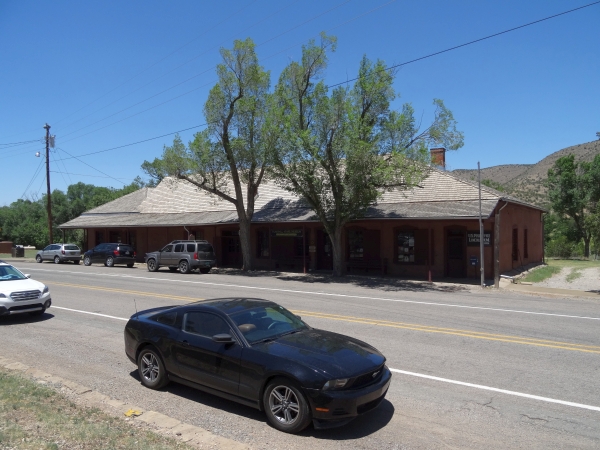
| There was another group of businessmen,
Alexander McSween, John Tunstall and John Chisum, who wanted to rid
Lincoln County of the unpopular overlords while working to establish
their own empire. The power struggle between the groups led
directly to the Lincoln County War, which left dozens of people dead
and led to major changes in how the federal government administered
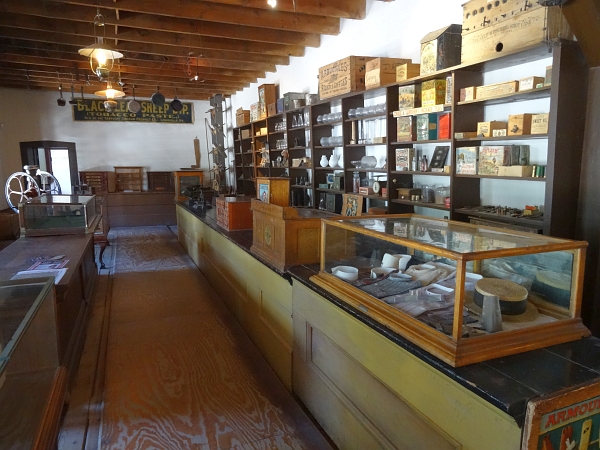
the Territory of New Mexico. This was the store built by John Tunstall in 1877. |
 |
| In addition to the store, the building also housed the new Lincoln County Bank and Alexander McSween's law offices. |
 |
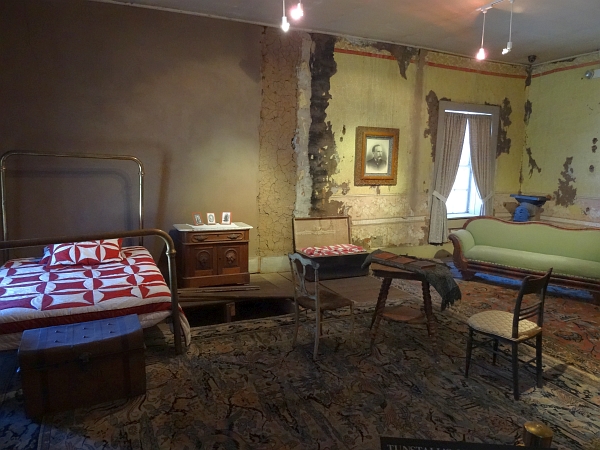
| This was John Tunstall's living
quarters in the store. Both sides in the conflict hired outlaw gangs in addition to New Mexico lawmen. On February 18, 1878, a posse deputized by Sheriff William Brady went to Tunstall's ranch to attach his cattle to a warrant issued against his partner McSween. One thing led to another and in the end Tunstall was killed. The killing was a flashpoint in the Lincoln County War. On April 1, Sheriff Brady was killed in front of Tunstall's store in retaliation for the his murder. During the shootout, that Henry McCarty fellow I mentioned earlier was shot through the leg. He was allegedly hidden by one of the shopkeepers under a bed in one of Tunstall's rooms. |
 |
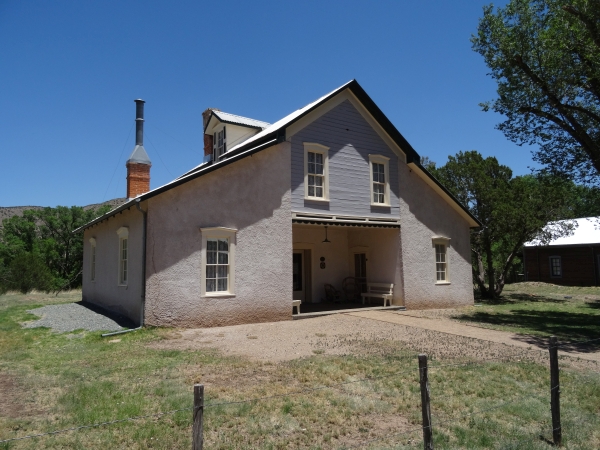
| Dr. Woods House, built in 1883. Don't know much about Woods except that he bought the house in 1925. |
 |
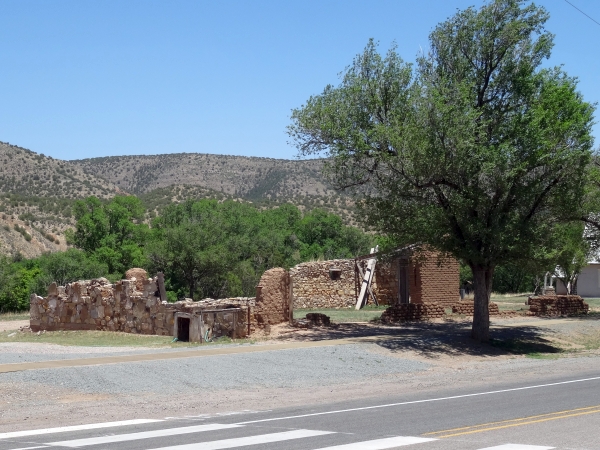
| Ruins of the Aragon Store. A store owned by a man called Aragon maybe? |
 |
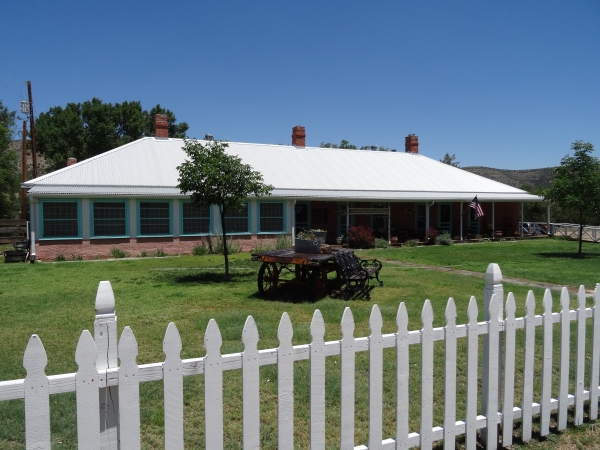
| Here was the site of the old Wortley Hotel. On April 28, 1881, Robert Ollinger, who was a deputy for Sheriff Pat Garrett, was having lunch at the hotel when he heard gunfire from the courthouse. He headed across the street and was killed by that bastard Henry McCarty before he escaped. |
 |
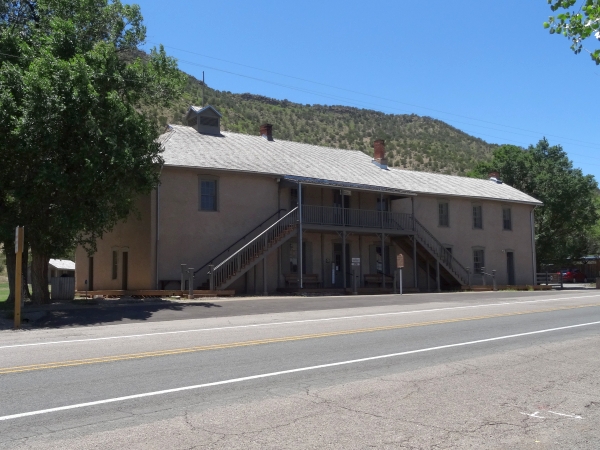
| This is that courthouse. |
 |
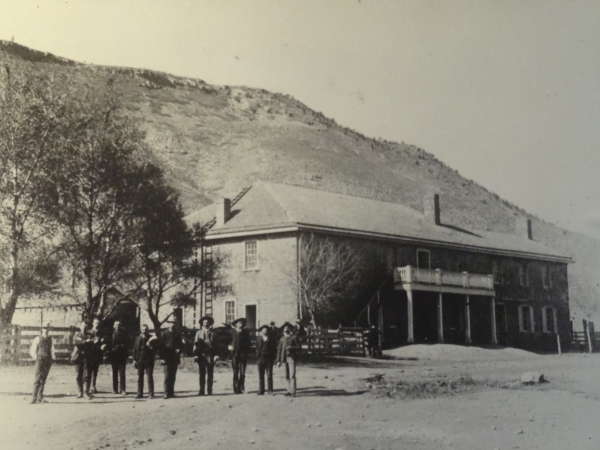
| It used to look like this back in the day. |
 |
| Oh, I suppose I should mention that the guy who was born Henry McCarty went by a few other names in his life. Henry Antrim, Kid Antrim, William Bonney and, oh yeah, Billy the Kid. |
 |
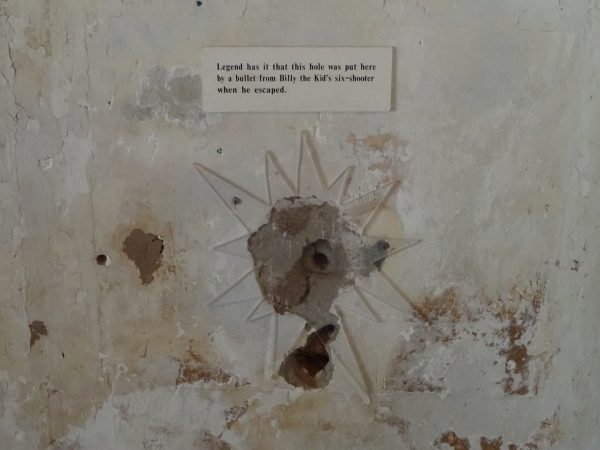
| If you can't read the little sign, legend has it that this hole was put here by a bullet from Billy the Kid's six-shooter when he escaped. He killed deputy James Bell at the courthouse and Ollinger as he was crossing the street before eventually freeing himself from his shackles, obtaining a horse and fleeing Lincoln. |
 |
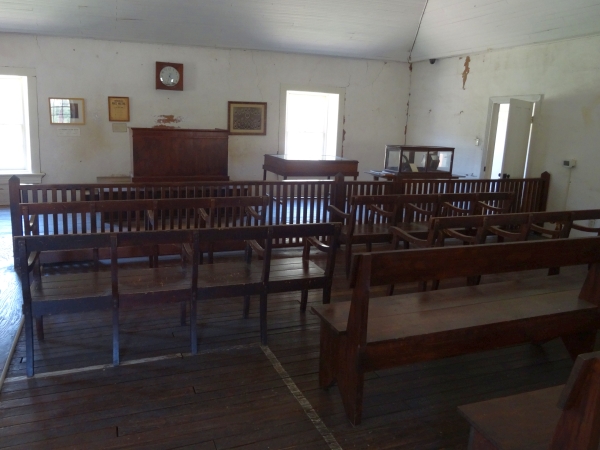
| The courtroom upstairs as it might have looked in the 1880's. The judge's bench and jury box are replicas but the benches and clock are original. |
 |
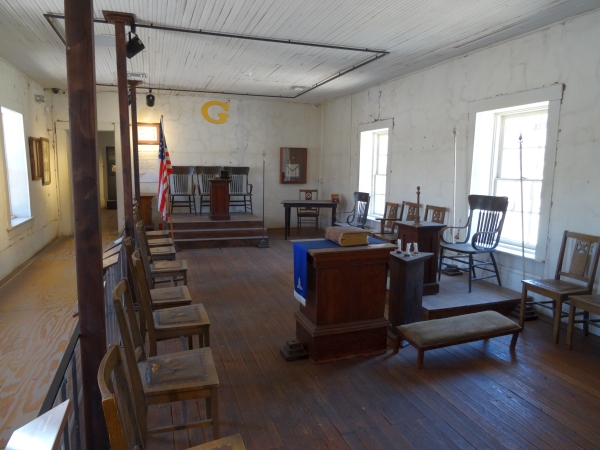
| L.G. Murphy was a Mason and he established a Masonic Lodge in this room when the building was his general store. |
 |
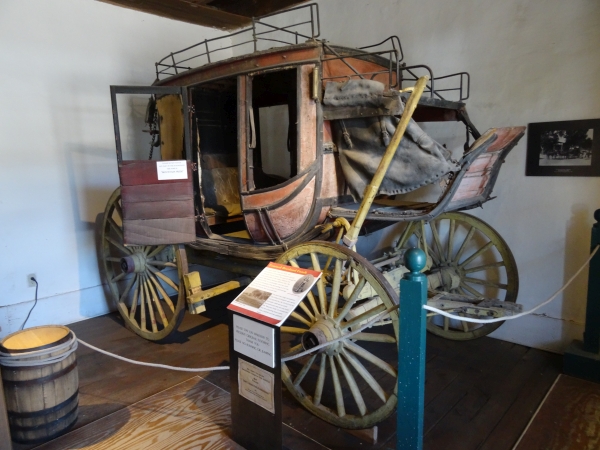
| An old Concord stagecoach. So, to wrap up this whole Lincoln County War thing, There was a lot of killing in the lead-up to the Battle of Lincoln, July 15-19, 1878. For five days the two sides fired at each other from positions up and down the street. Townspeople pleaded to Colonel Nathan Dudley at Fort Stanton to intervene and end the fighting. He refused, citing the recently enacted Posse Comitatus Law of 1878 as the reason he was under orders not to intervene in any way. James Dolan had better luck convincing Colonel Dudley to intervene. On the night of July 18, the colonel ordered the fort's blacksmith to repair the garrison's mountain howitzer and Gatling Gun in preparation for a march on Lincoln. The advance turned the tide against the Tunstall-McSween-Chisum faction and the battle was ended. In the end, 22 were killed and another 23 wounded in the "war". |
 |