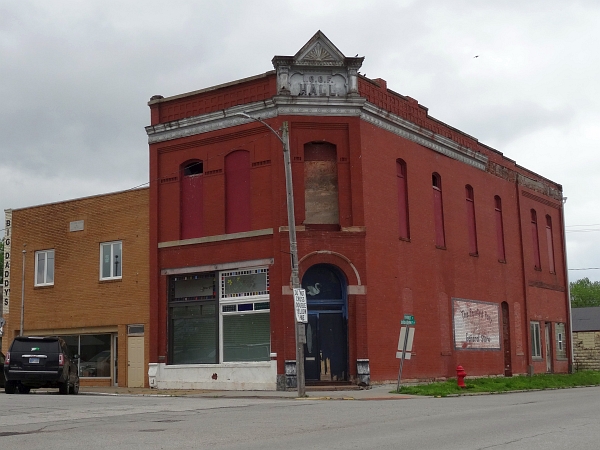
| It's another old Oddfellows Hall, this time in La Cygne. The town was named after the Marais des Cygnes River. That's French for "Marsh of The Swans". In fact, if you look closely you can see a picture of a swan over the door. |
 |
| Another added stop was the Marais des Cygnes Massacre State Historic Site. It took a little while to get there on stone roads and I took a wrong turn at one point because there was not sufficient signage. |
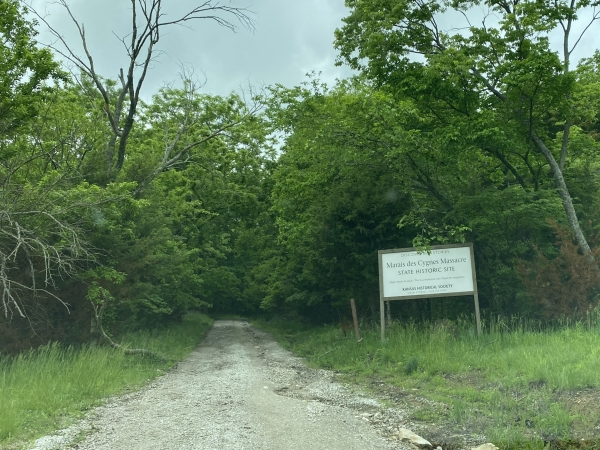 |
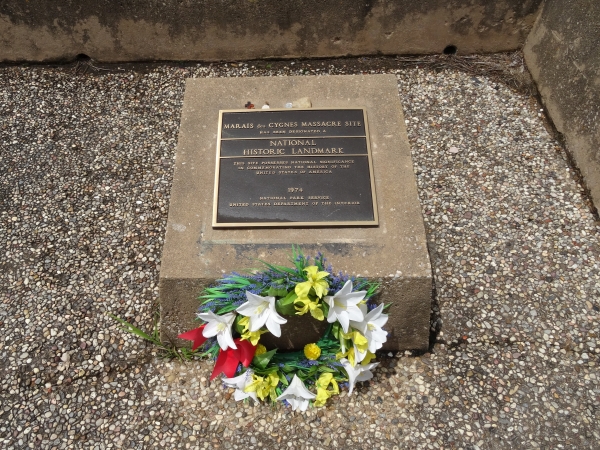
| There is not much there. So here's the
story. On May 19, 1858, about thirty pro-slavery Missourians seized eleven Kansas free-state men near the town of Trading Post and marched them into a ravine. Lining them up, they shot them down, killing five and wounding five others. The other escaped injury by feigning death. This did not sit well with ol' John Brown, who arrived a few weeks later to build and occupy a log fort through the summer. In December, he made a raid into Missouri, which was about a half mile to the east, and liberated eleven slaves |
 |
| Trading Post was a town. It no longer is. There is a museum there, but it is little more than a big room with miscellaneous old stuff. Once again, I was the only visitor there. |
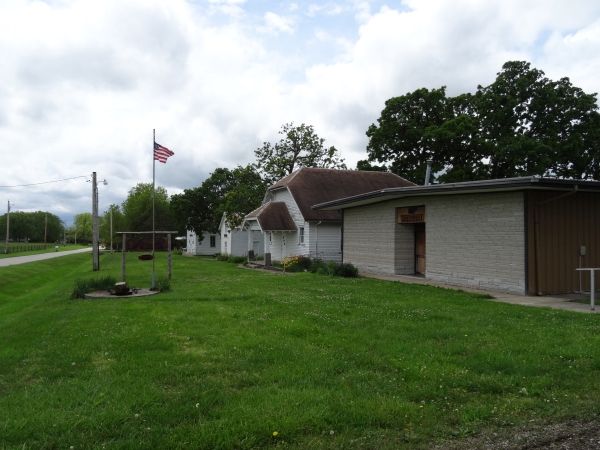 |
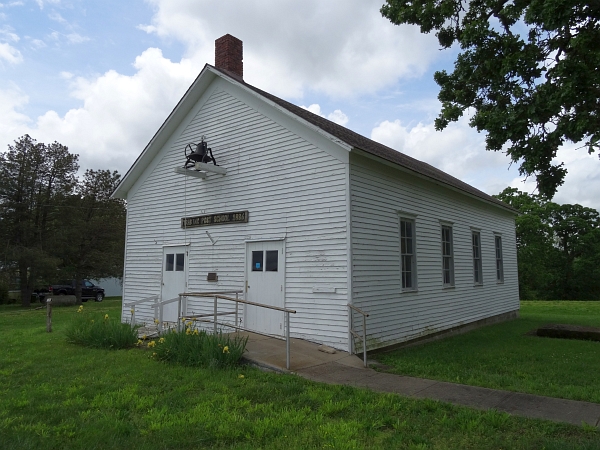
| The Trading Post School. |
 |
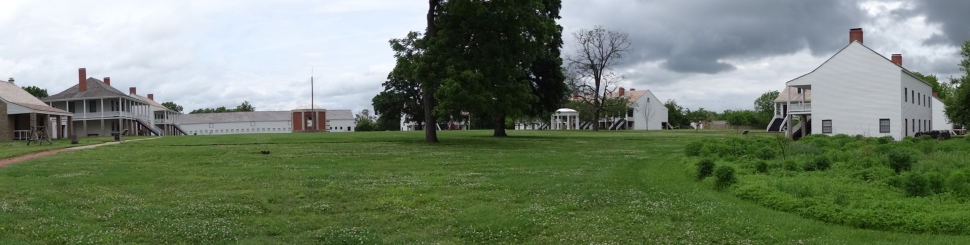 From a town that no longer exists to a fort that no longer exists. Well, the buildings still do. This is the Fort Scott National Historic Site. |
|
| Fort Scott, the fort, not the town, was active off and on from 1842 to 1873. The town still exists. We'll see some of that later. |
 |
| From the left to right, these were the hospital (restored) and infantry barracks (reconstructed). After the Army sold the fort in 1855, the barracks was turned into the pro-slavery Western Hotel. |
 |
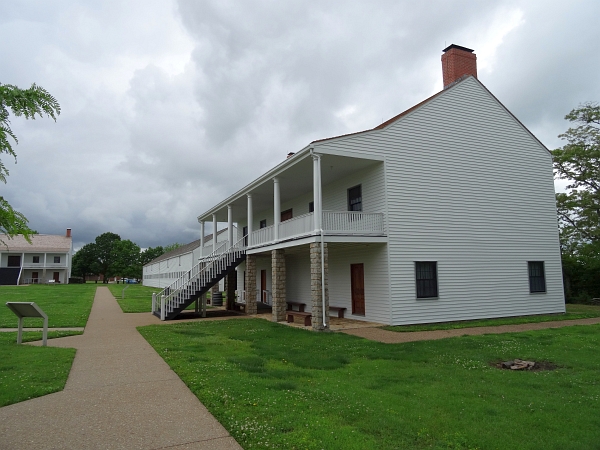
| Dragoon barracks with stables next door. |
 |
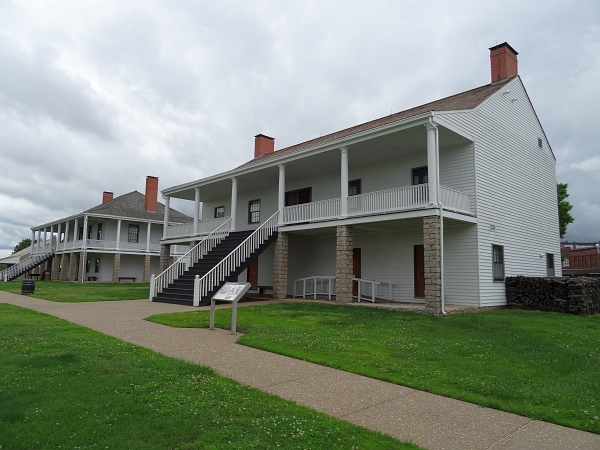
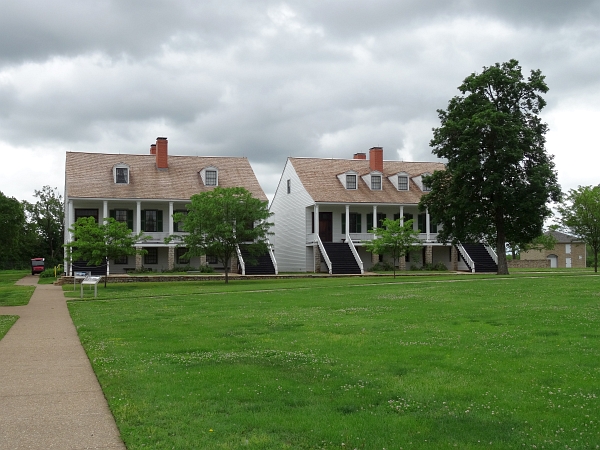
| Officer's quarters, both restored. In the 1850's, the one on the left became an anti-slavery hotel either named the Fort Scott Hotel (according to the brochure) or Free State Hotel (according to a sign). It was located just across the parade green from the pro-slavery hotel. That must have made things interesting. |
 |
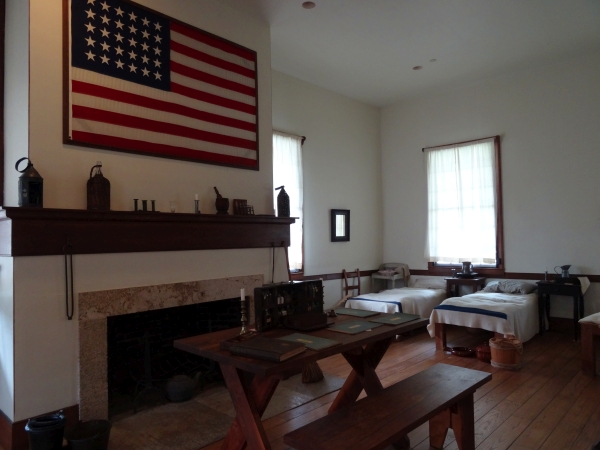
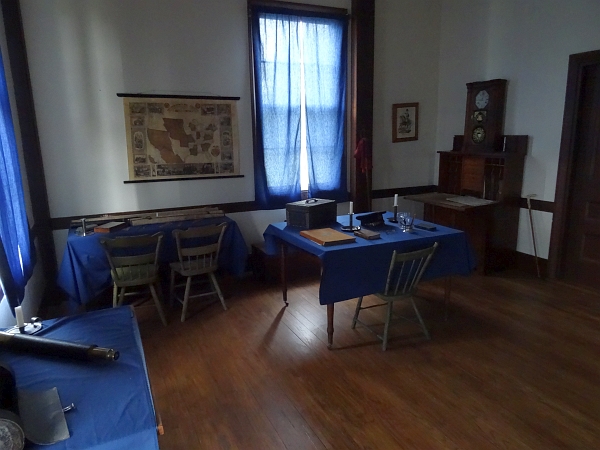
| The office of the Post Commandant was furnished in the style of a military office from the 1840's. |
 |
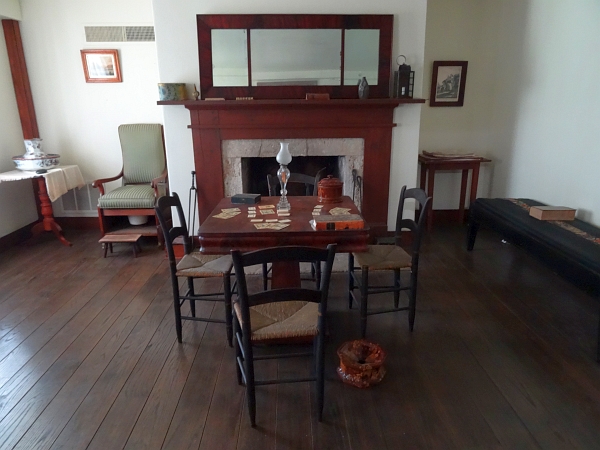
| How about a game of Uno? Old Maid? Well, whatever they played back then. |
 |
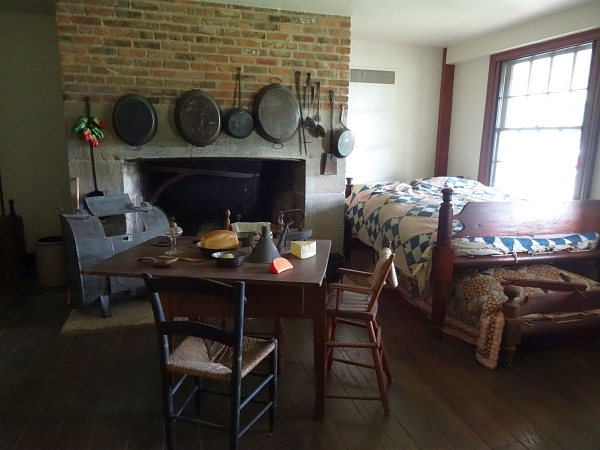
| Was someone sleeping in the kitchen? |
 |
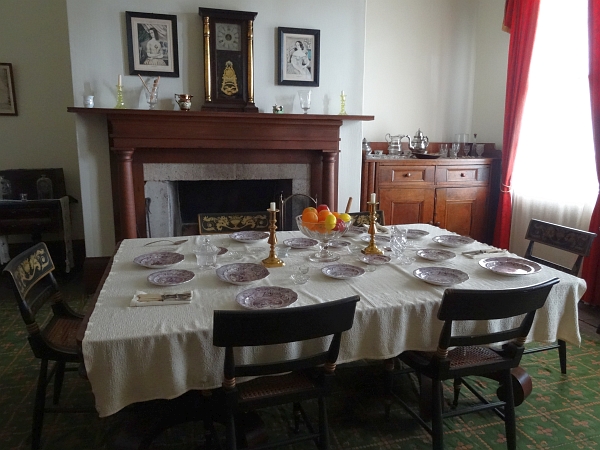
| Have a seat at the table and enjoy a nice piece of plastic fruit. |
 |
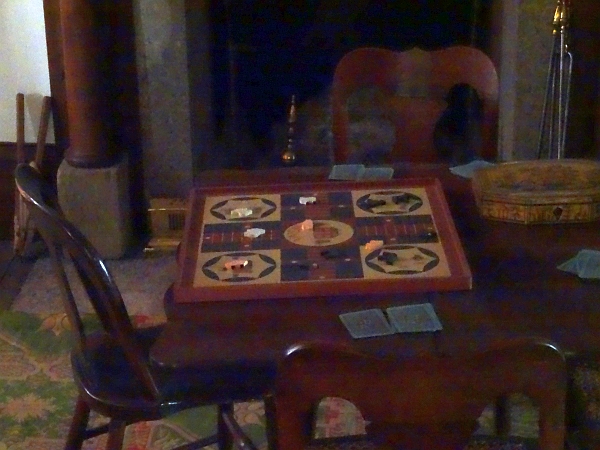
| Now this looks like a nice game of Parcheesi. |
 |
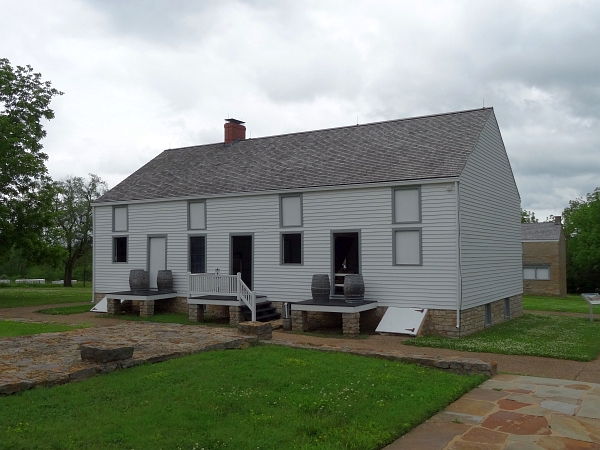
| The Quartermaster storehouse. |
 |
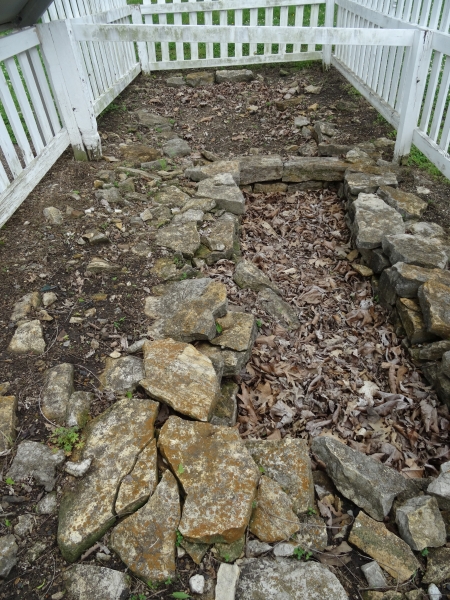
| I think this was a latrine. |
 |
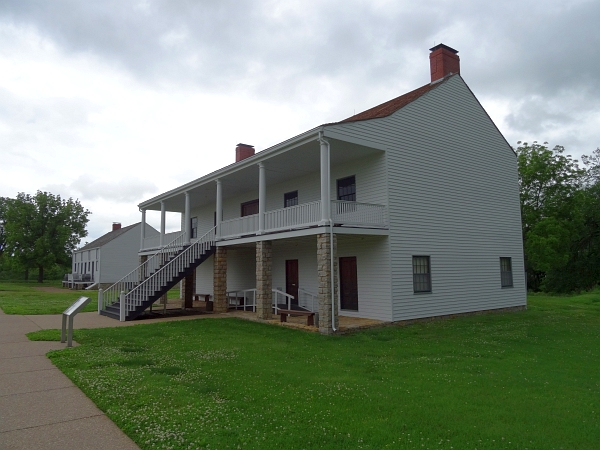
| The brochure showed this as restrooms. Maybe there are modern restrooms inside but the building was closed. It was probably another barracks building. |
 |
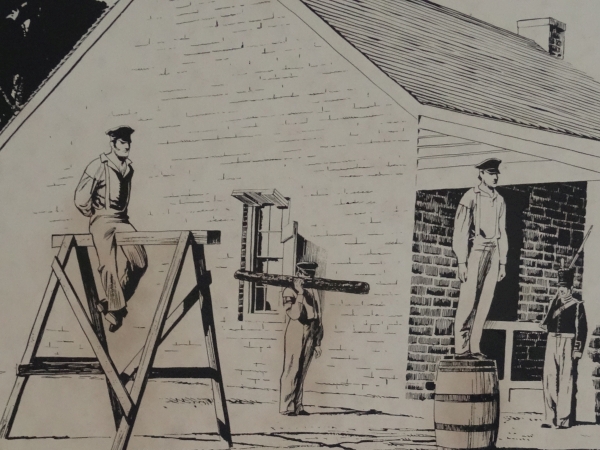
| The guardhouse. Notice that barrel and wooden horse. |
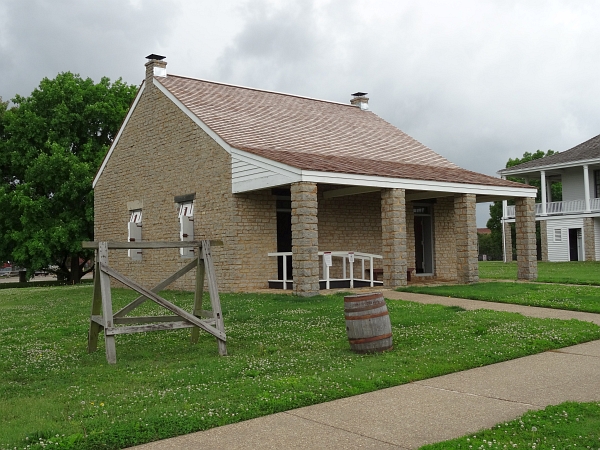 |
| Apparently they were forms of punishment. Standing on the barrel doesn't seem as bad as sitting on the sawbuck. That could not have been good for the testicles. |
 |
| Not far from the fort site is the old part of the town of Fort Scott, |
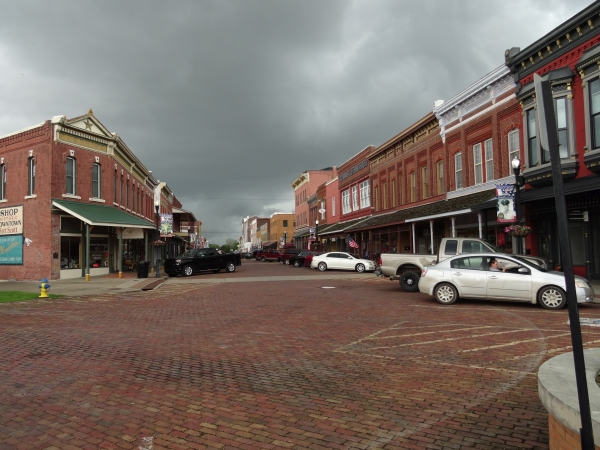 |
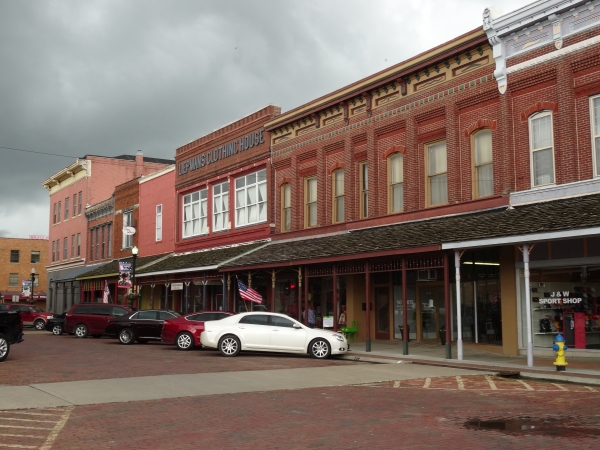
| One could imagine horses being ridden up and down the dirt streets. |
 |
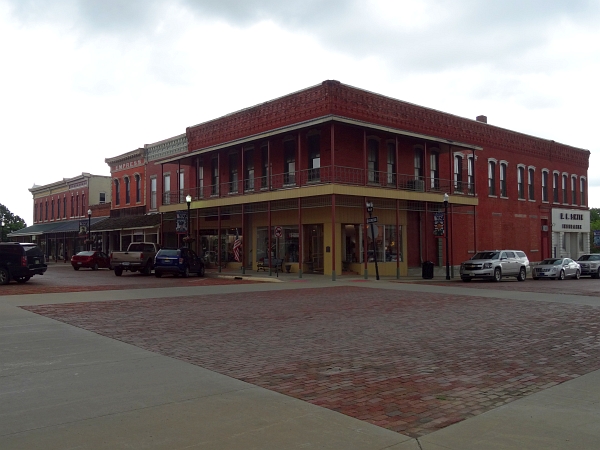
| I did not look to see if there were signs on many of the buildings telling what they were. However, the internet exists. This was the Louderback Building. Like many of these old structures, there were lots of different businesses located here over the years. |
 |
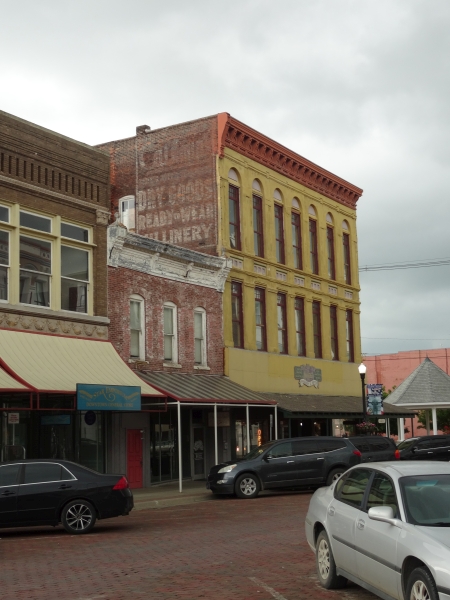
| The Fort Scott Downtown Historic
District is about ten blocks of old buildings. I love a good ghost sign. |
 |
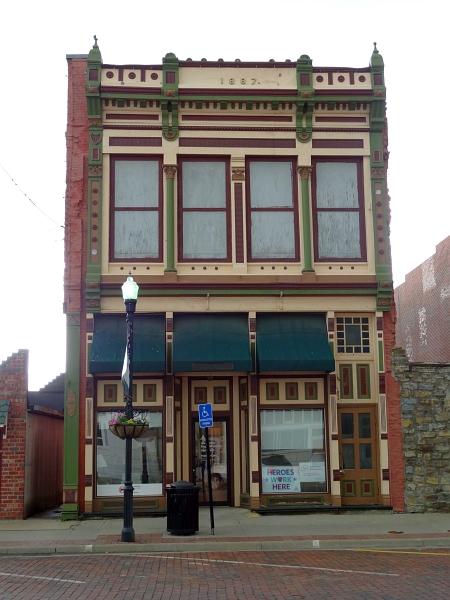
| The Alexander Building, built 1887, housed a jewelry store on the first floor and the YMCA on the second. |
 |
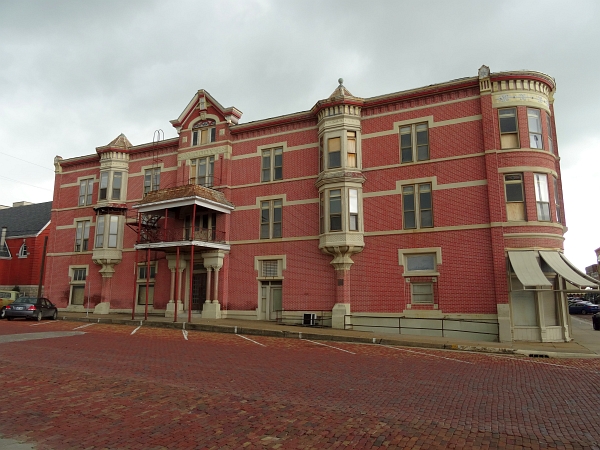
| I did sign a sign plate on this one. The Moody Building, built in the classic revival style in 1889 for $20,000 as a residential and retail building for I.W. Moody, the owner of the Fort Scott Granite and Marble Works. |
 |