 MONDAY
POMPEII
MONDAY
POMPEII
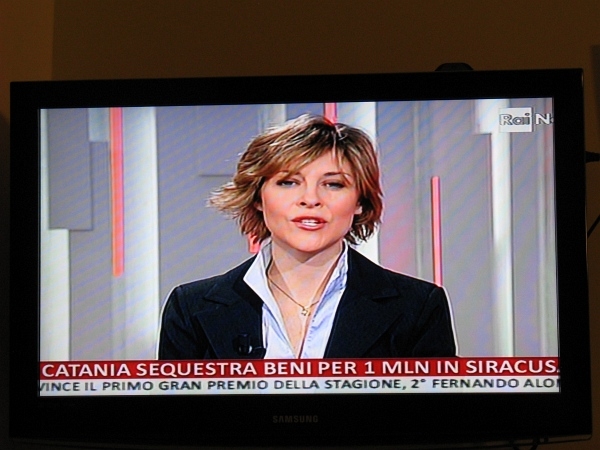
| Apparently RAI has hired a young Meg Ryan to read the morning news. |
 |
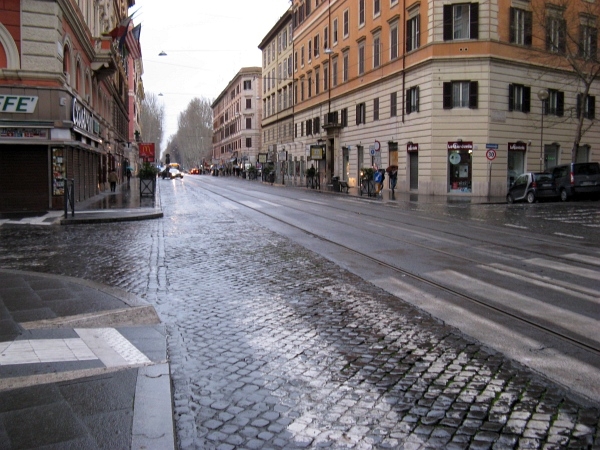
| It was still a bit wet in Rome early Monday morning. |
 |
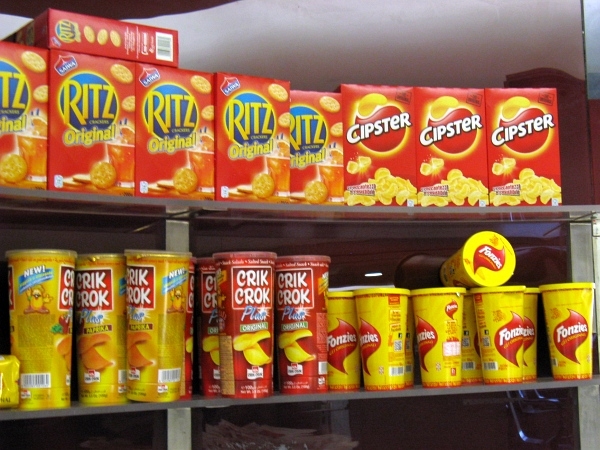
| An assortment of crackers for sale at a shop in the Termini Station. They have Ritz, Cipster, Crik Crok and Fonzies. Aaaay! |
 |
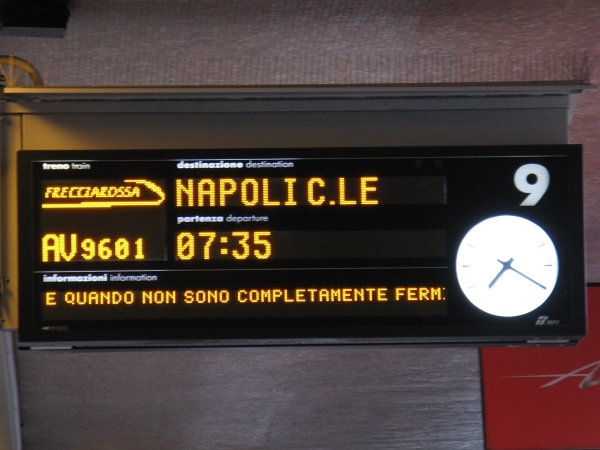
| It's an early train to Naples. |
 |
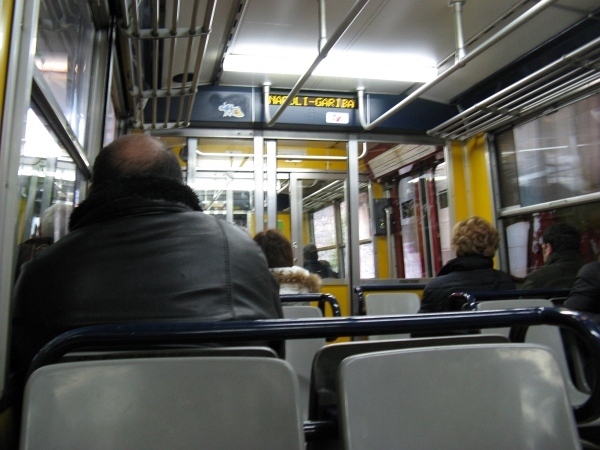
| Once in Naples I bought my Artecard, which covers admission to the Pompeii and Herculaneum sites as well as the National Archeological Museum in Naples and all transportation. This is the Circumvesuviana from Naples to Pompeii. |
 |
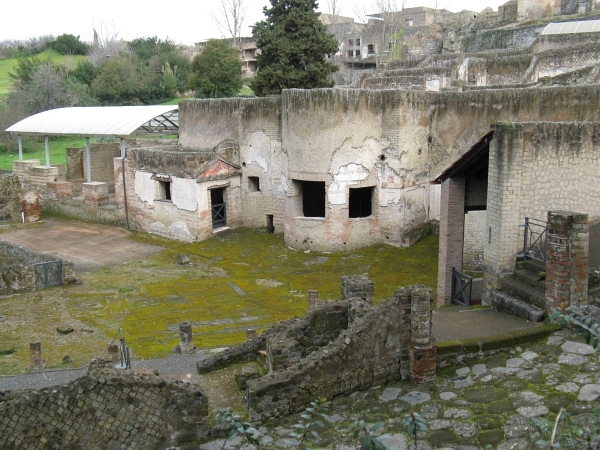
| Even though it is now inland a bit, Pompeii used to be a coastal town. |
 |
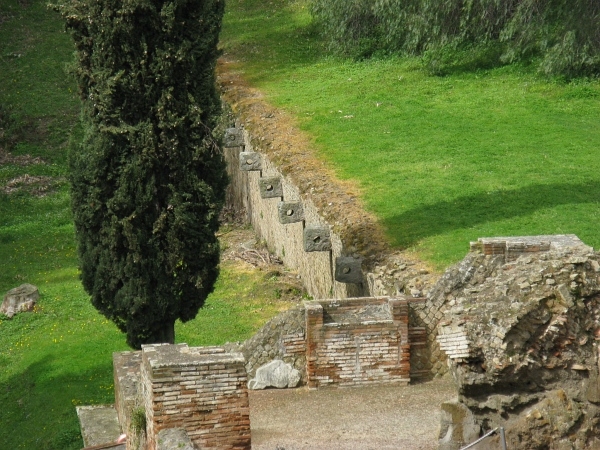
| These old stone rings are where ships would have been tied to the docks. |
 |
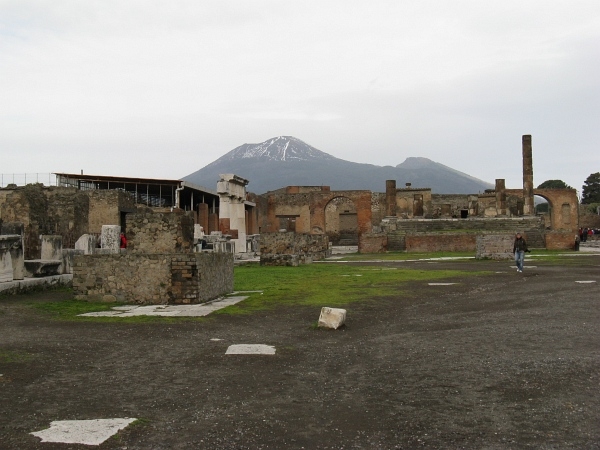
| Climbing up hill from the entrance to the city you arrive at the Forum. In the background is Vesuvius, the famous volcano that caused all the trouble in 79 C.E. |
 |
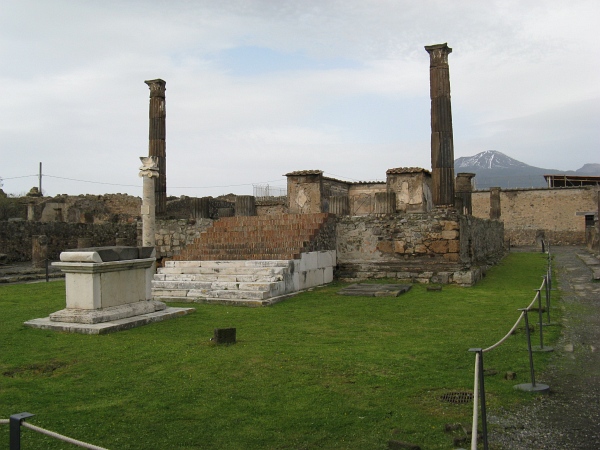
| At the far end of the Forum is the Temple of Jupiter. |
 |
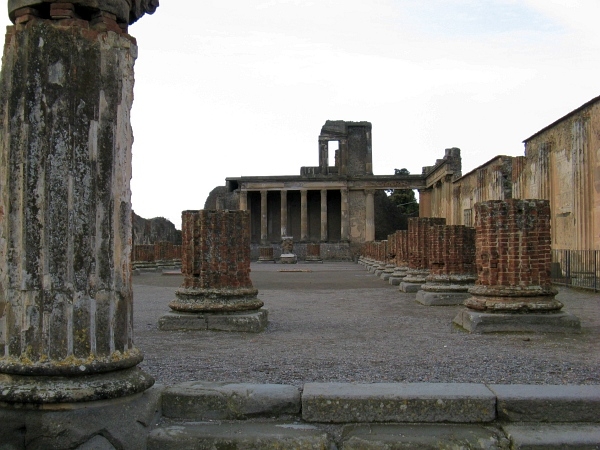
| The Basilica was a first-century palace of justice. |
 |
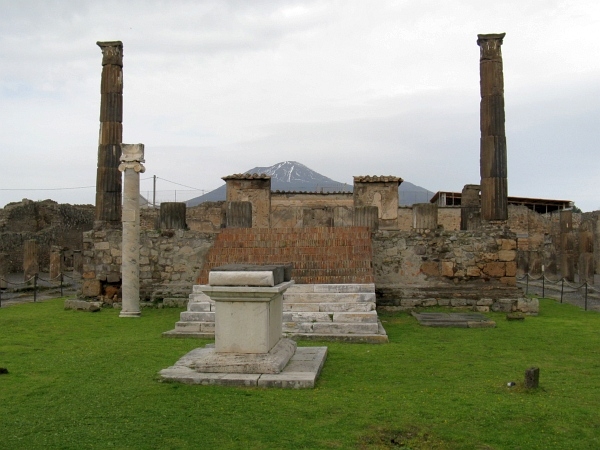
| The Temple of Apollo. |
 |
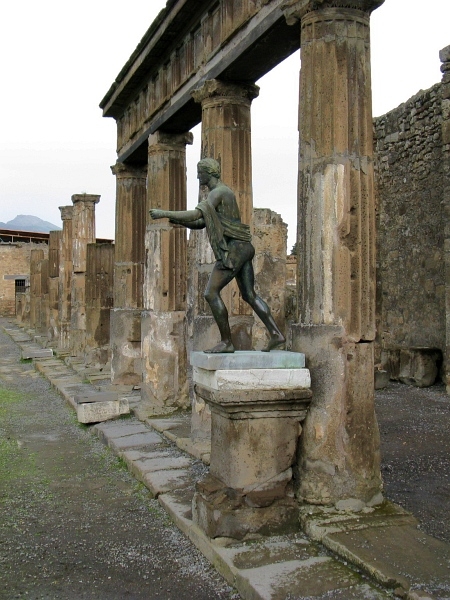
| This is a copy of a statue of Apollo. The original is now in the National Archeological Museum in Naples along with lots of other stuff from Pompeii and Herculaneum. |
 |
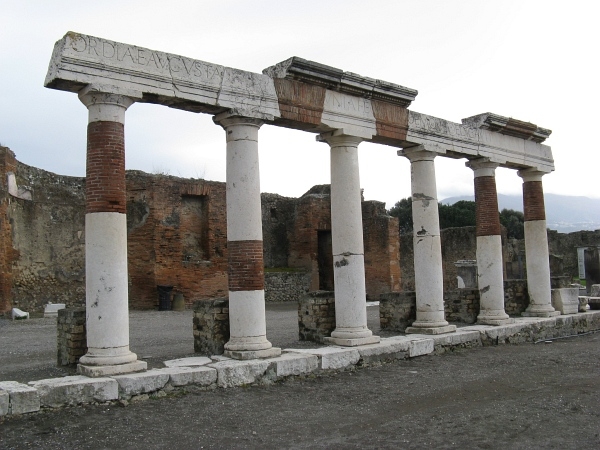
| Some rebuilt columns with Latin written on the top. It was somewhere along here that I lost my map. But then I remember I had downloaded some Rick Steves audio tour podcasts on my phone, so I would then follow that tour. |
 |
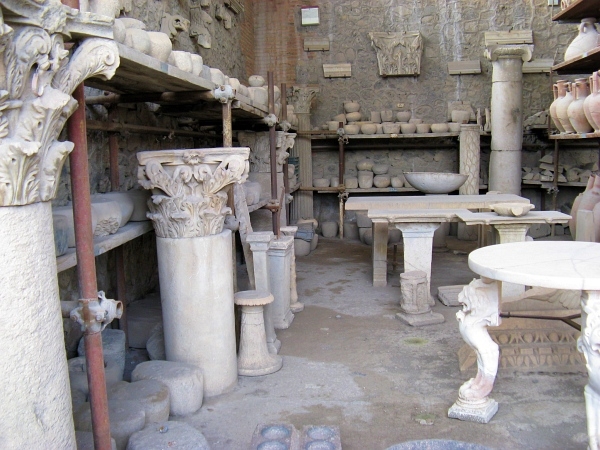
| There are loads of pottery and such on shelves. |
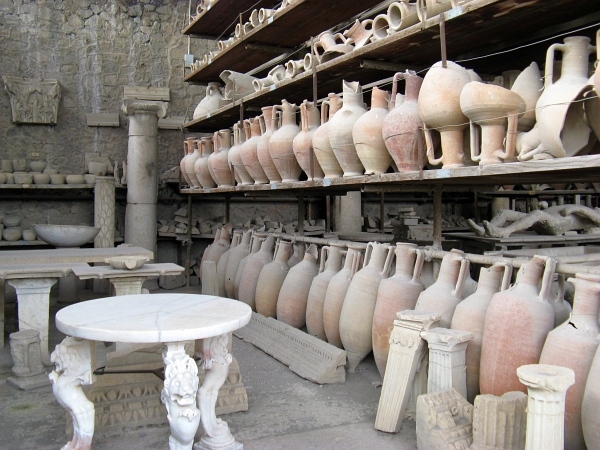 |
| Looks a bit like a section at a home improvement center. |
 |
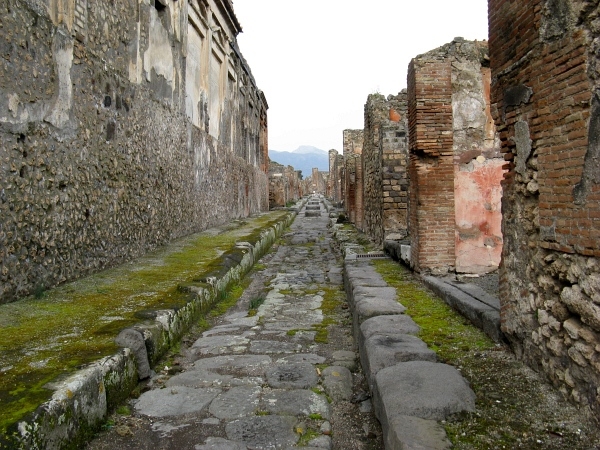
| A narrow street in Pompeii. Those stones in the road in the distance are usually at intersections and allowed pedestrians to cross the streets which were often flooded with rushing water to clean them. This was a one-way street, hence the single stone. Chariots wheels could straddle the stones going over. |
 |
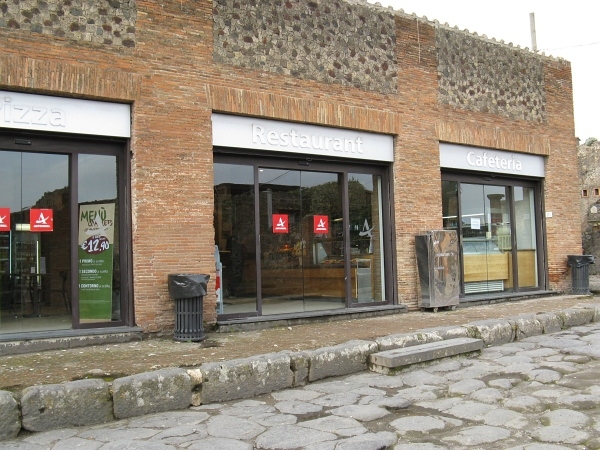
| It's amazing that given the mass destruction of the city, the ancient cafeteria restaurant still stands. The citizens of Pompeii used to be able to get a bite to eat here. |
 |
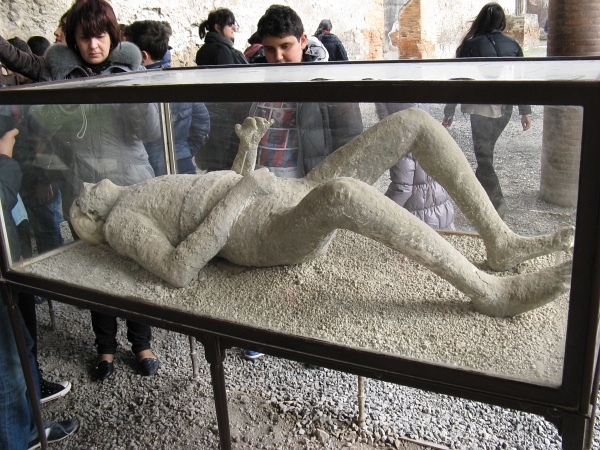
| This is not a dead Pompeiian (Pompeiite?). It is in fact a plaster cast of a victim that was made by filling the empty space in the ground left by the decomposed body. |
 |
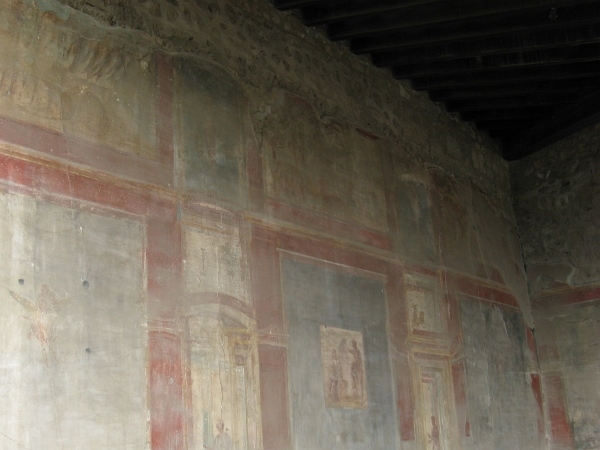
| Frescoed walls of the market. You can't really tell in this picture, but they do portray the kinds of things bought in the market. I think in the panel in the upper left there is a loaf of bread at the bottom and fish in the upper right above it. |
 |
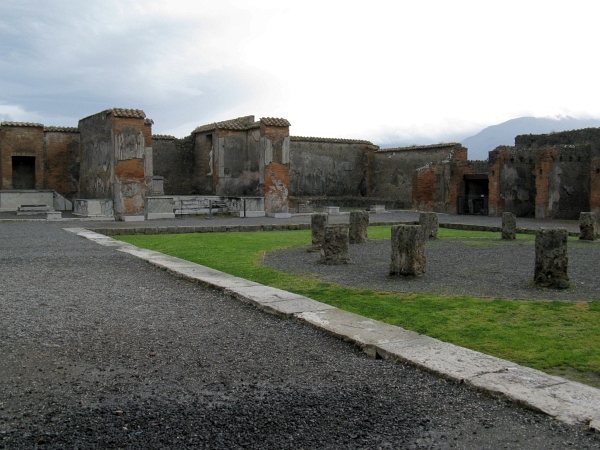
| The rest of the open-air market. |
 |
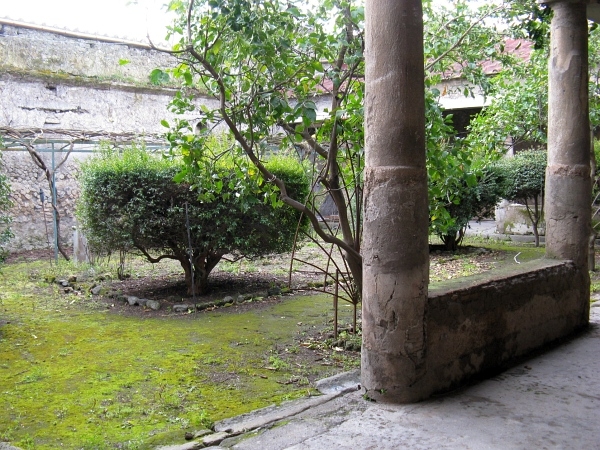
| There were six public baths in Pompeii. This is the Forum Baths. |
 |
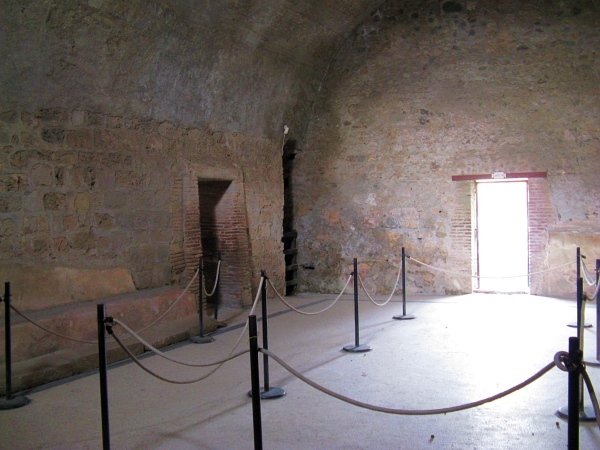
| Baths had sections for men and women. This is the men's section. |
 |
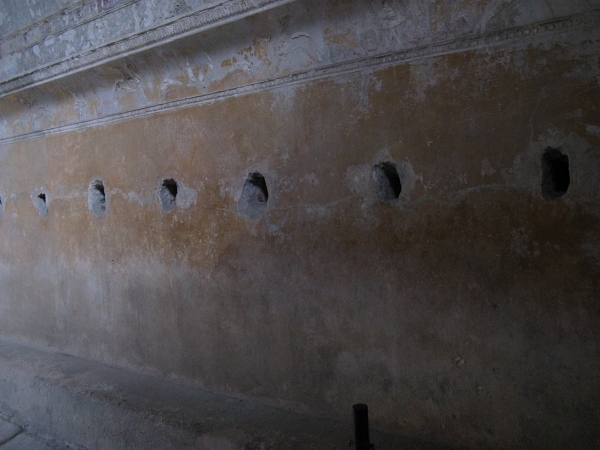
| The Rick Steves guidebook says that in the dressing room had holes in the walls for pegs to hang clothing, but these holes look a little big for clothes pegs. |
 |
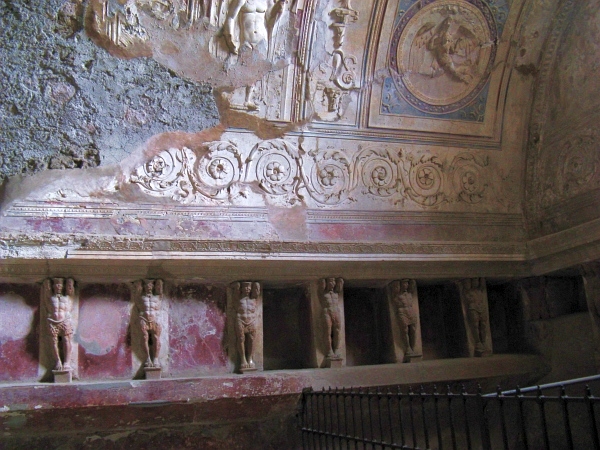
| The tempidarium has these little statues that would separate lockers. Except I don't know if they actually had lockers back then, so let's just call them Roman cubby holes. |
 |