 MONDAY
NAPOLI
MONDAY
NAPOLI
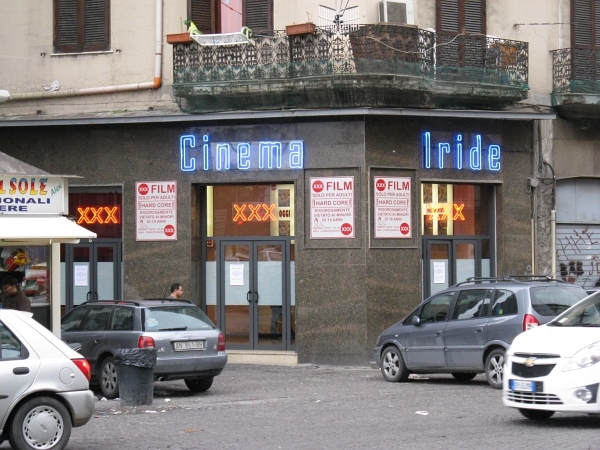
| Back to Naples. I wasn't all that impressed with what I saw of Naples, which to be fair was not much. It seems kind of dirty and run down. Oh, and here's an adult theatre. |
 |
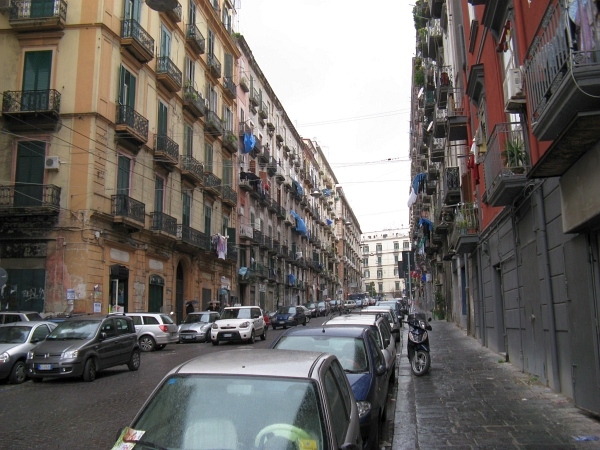
| Walking down Via Carbonara from the train station toward the Museo Archeologico Nazionale di Napoli. |
 |
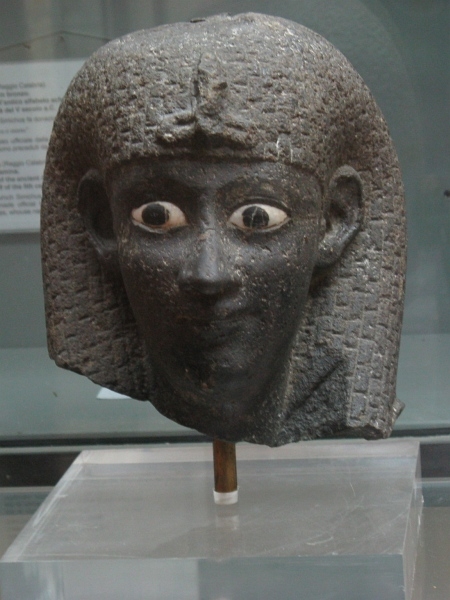
| Feets don't fail me now! This looks like those stupid caricatures that black actors used to have to portray in movies back in the 30's and 40's. He sho nuff looks scared! |
 |
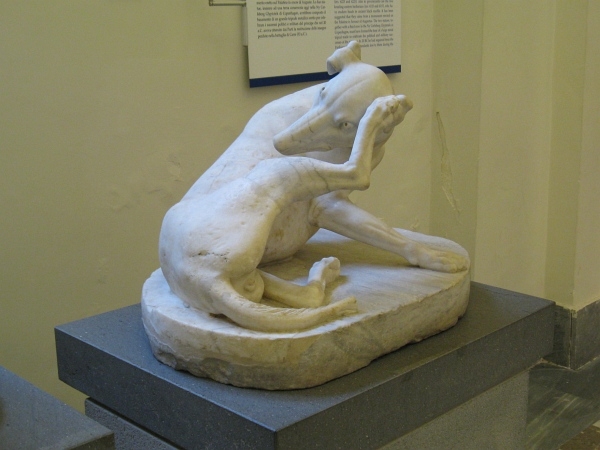
| A statue of a dog scratching or biting fleas. |
 |
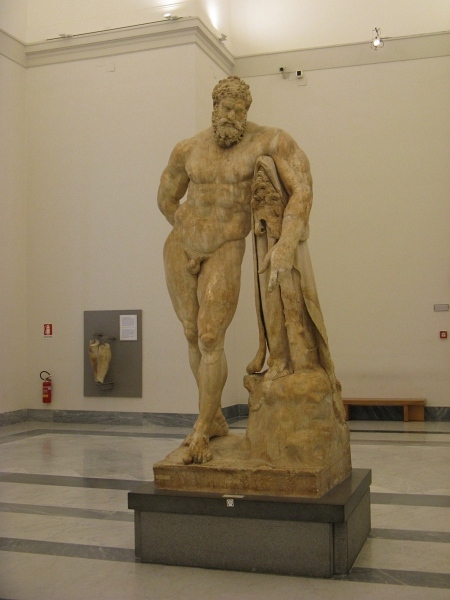
| The Farnese Hercules. This statue, a 3rd century copy of a Greek work, once stood at the Baths of Caracalla. You remember, that was that large bath complex I went to on Friday. |
 |
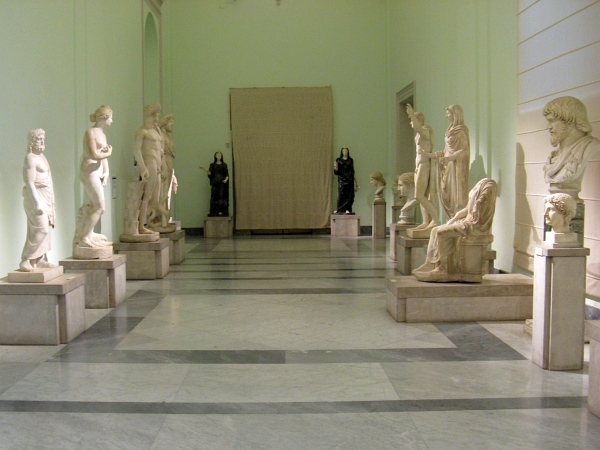
| Many statues, several heads without bodies and one body without a head. |
 |
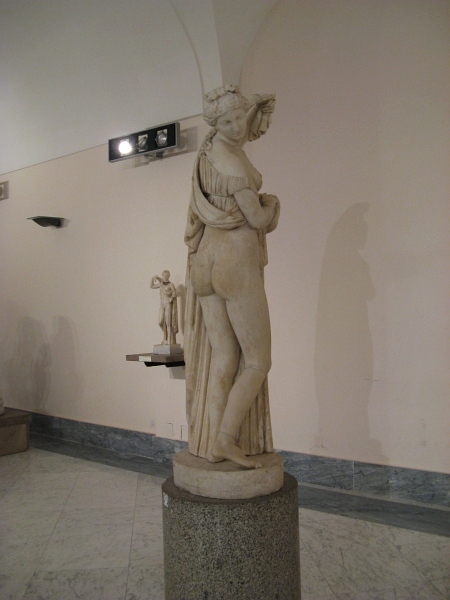
| Venus Kallipygos. Oh yeah, she's got it goin' on and she's workin' it. |
 |
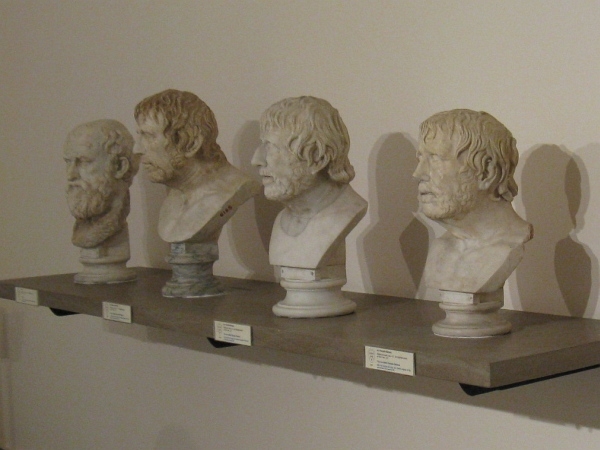
| I waited and waited but these guys never broke into "Grim Grinning Ghosts." |
 |
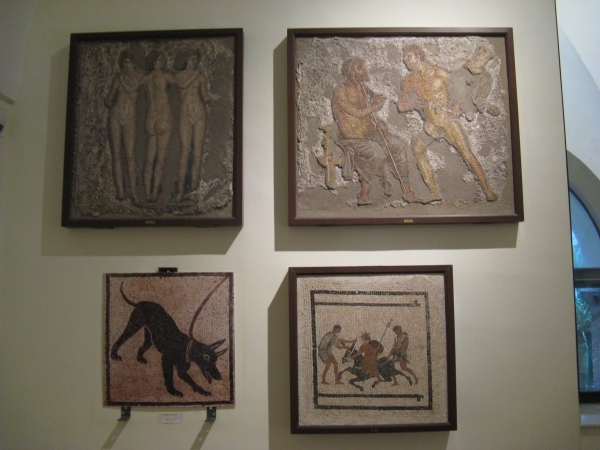
| Some tile mosaics from Pompeii. |
 |
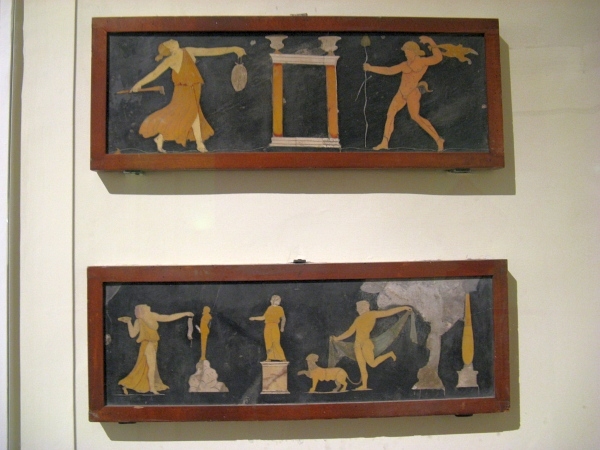
| A couple of frescos from the Casa dei Capitelli Colorati in Pompeii. |
 |
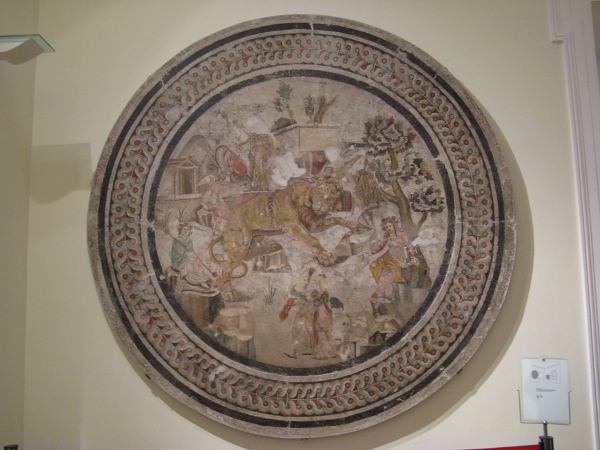
| Leone e Amorini tra Dionisio e Manadi, also from Pompeii. |
 |
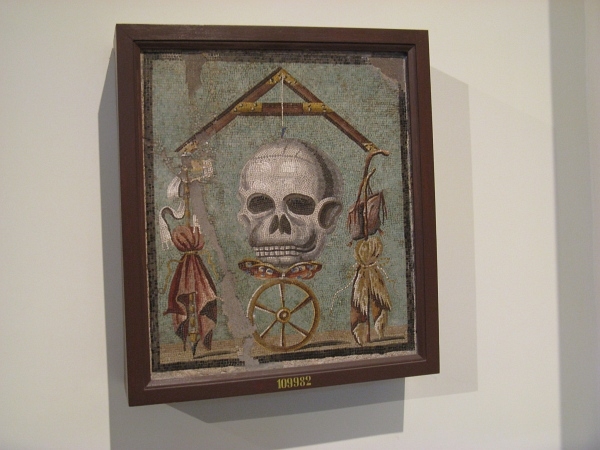
| This sign says "Memento mori", which is Latin for "Remember you will die", which a lot of people did in Pompeii in 79 C.E. |
 |
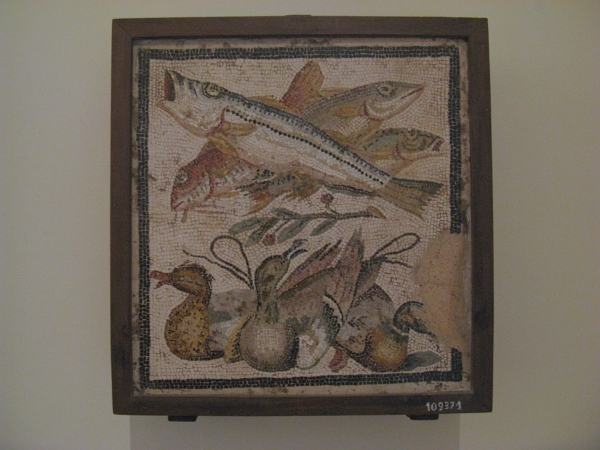
| Pesci ed anatre, or fish and ducks. |
 |
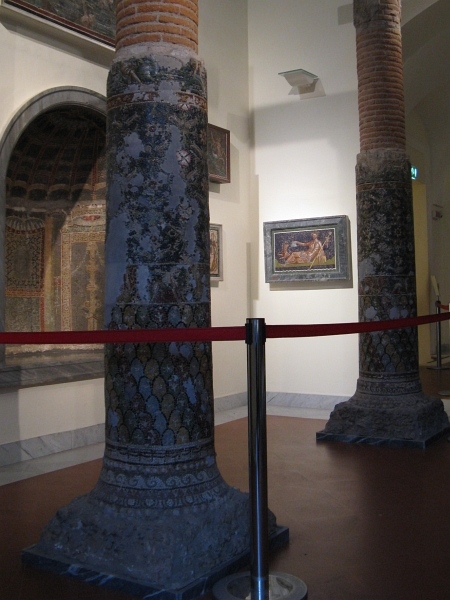
| These columns with mosaics were from the Casa delle Colonne in Pompeii. |
 |
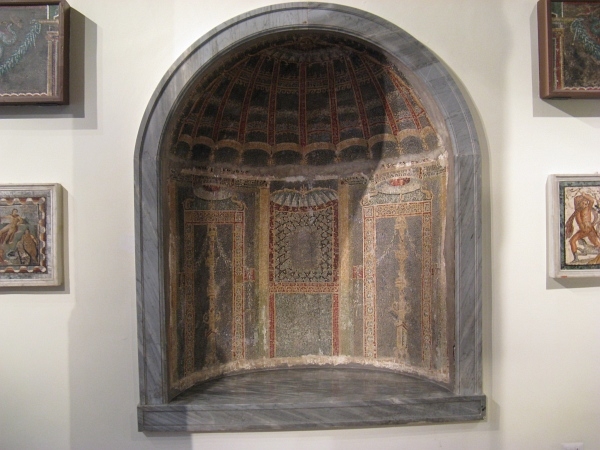
| From the Casa dello Scheletro in Herculaneum. |
 |
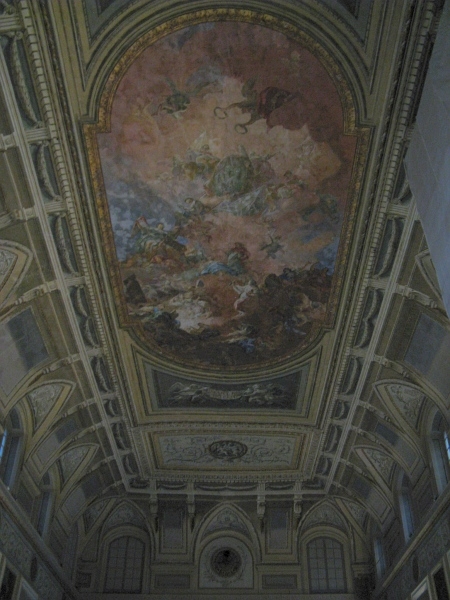
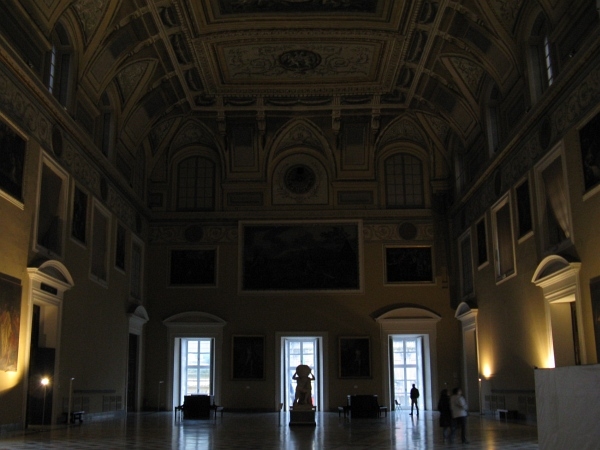
| The building used to be the home of the University of Naples in the 17th and 18th centuries. This is the ceiling of the great hall from that era. |
 |
| Mostly the hall is a dark empty space. |
 |
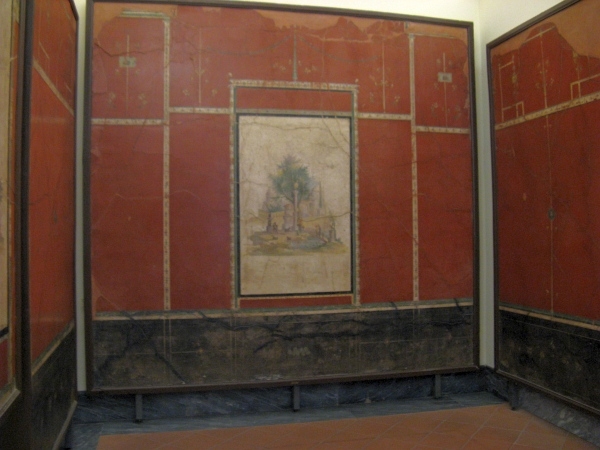
| Some walls from a house in Pompeii. The red found on the walls became known as "Pompeiian red" and was a popular color after the town was rediscovered. But in fact lots of the red walls found were actually yellow that turned red when reacting with the volcanic gases. |
 |
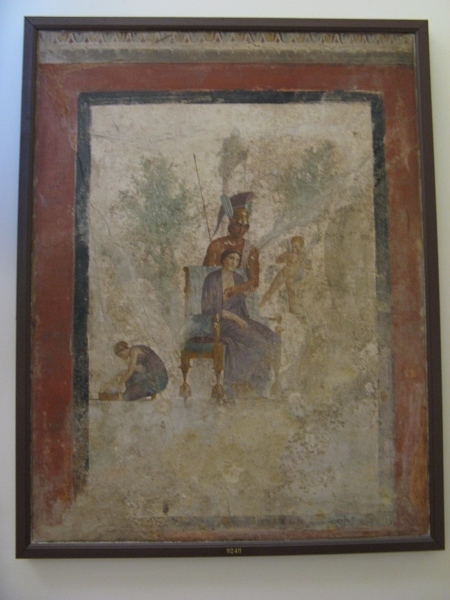
| This is Mars feeling up Venus. |
 |
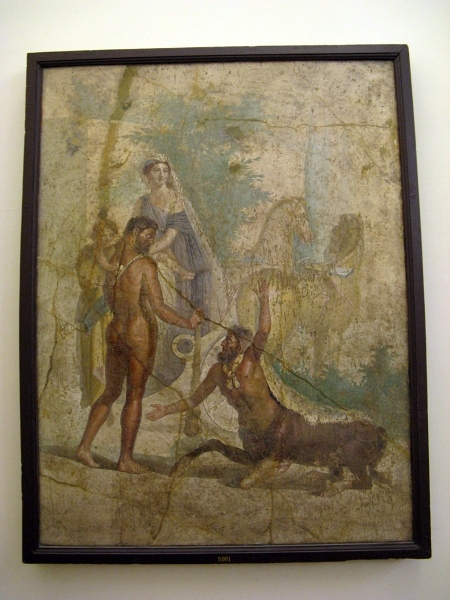
| "Aw, come on. Can't you help out a half-man, half-horse creature down on his luck?" |
 |
|
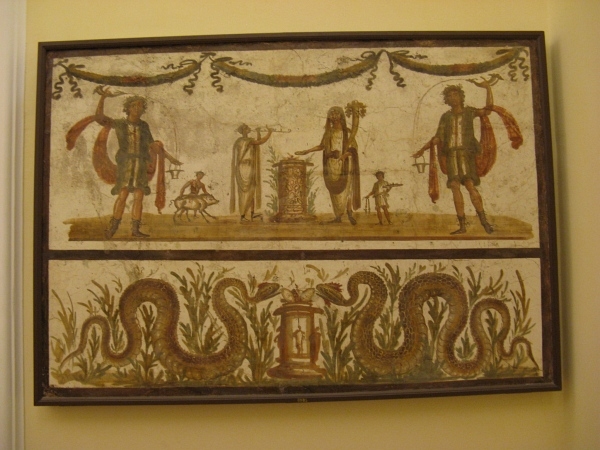
I'll just type what the sign says this is. Two lares, in their characteristic clothing and poses, pour wine from a drinking horn (rhyton) into a bucket (situla). They stand to either side of a scene of sacrifice, carried out by the genius assisted by servants and a musician with a double-flute. Beneath the scene a pair of serpents, bringers of prosperity and abundance, have reached the offering of eggs placed on an alter. |
 |
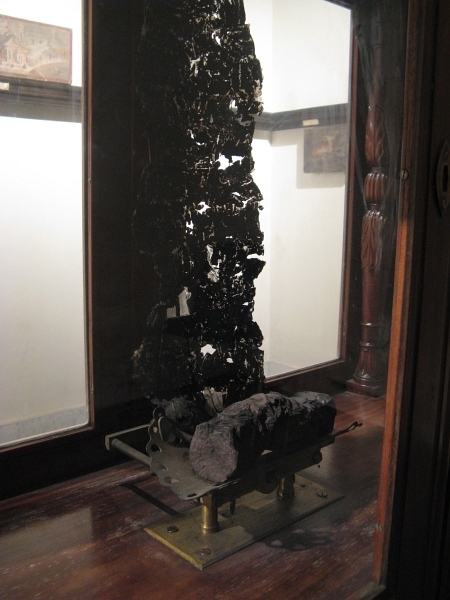
| This is a scroll of papyrus found in Herculaneum. There were scrolls found in the so-called Villa of the Papyri. Some were unrolled by using a machine invented by Father Antoino Piaggio in 1756. Just think, scrolls of paper surviving a volcanic eruption. |
 |
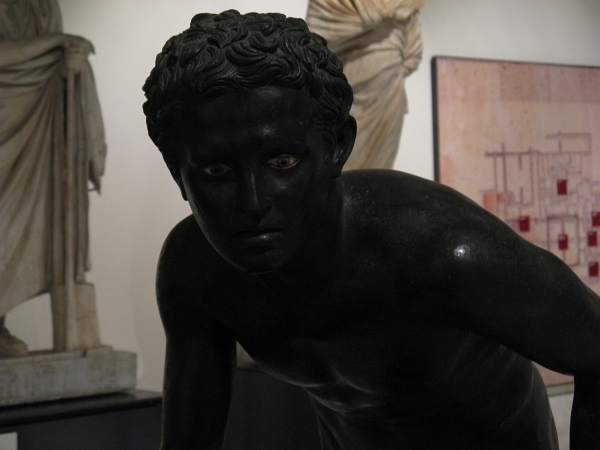
| I think the ivory eyes they put in these statues are just creepy. |
 |
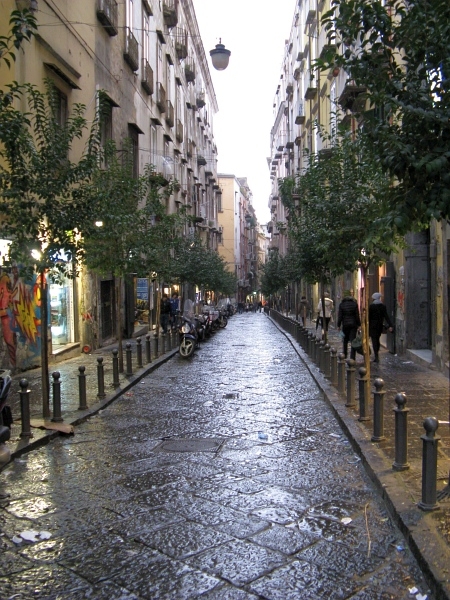
| Not all the streets in Naples are run-down looking. A majority of shops along this stretch of street are music stores. |
 |
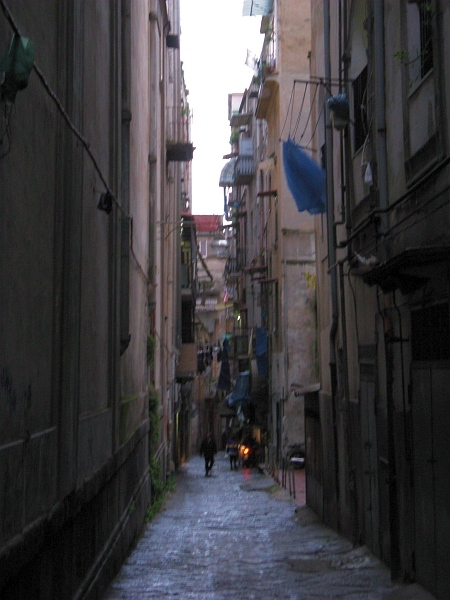
| Then there are dangerous looking alleys like this. |
 |
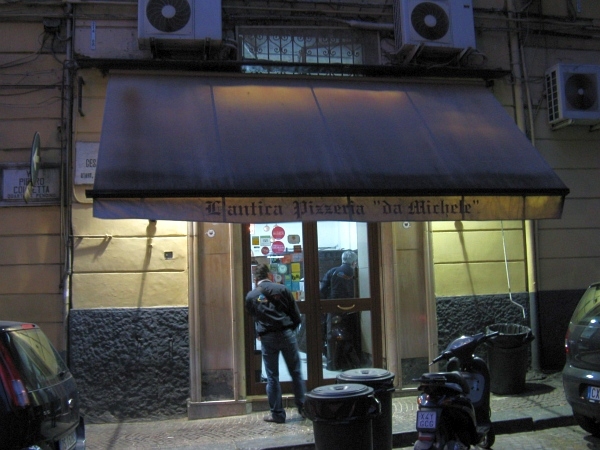
| Modern pizza was invented in Naples, so that's what I had to have for dinner. My guidebook recommended the Antica Pizzeria da Michele. Apparently it is quite popular, but since I was eating before most people seem to it was a little crowded but not too much. |
 |
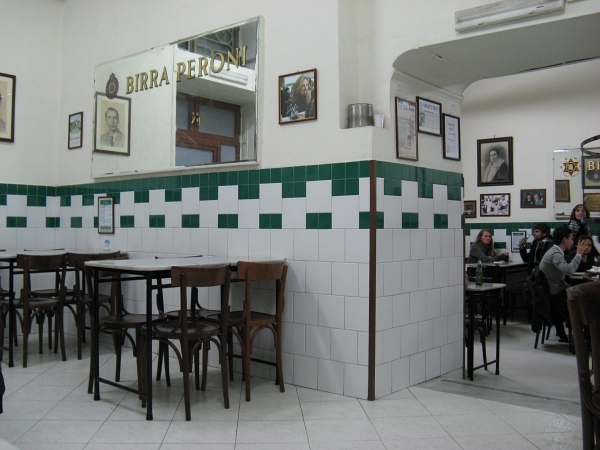
| It wasn't until I sat down that I noticed a newspaper clipping on the wall near my table. There was a scene in the movie Eat, Pray, Love filmed here. Actually to the right of the mirror is a photo of Julia Roberts. |
 |
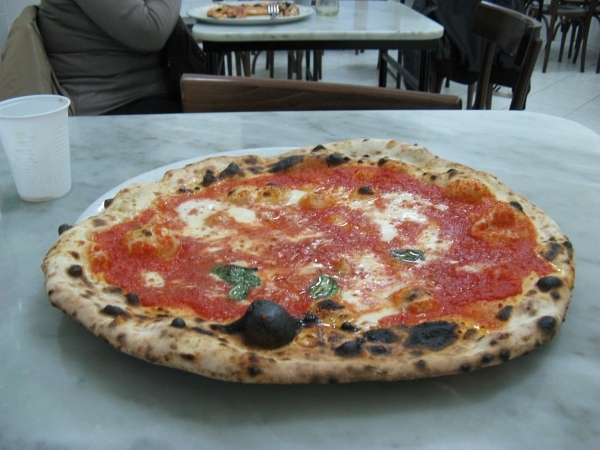
| And there's dinner, a big pizza margherita. It was very good and not a bad deal for €4. |
 |