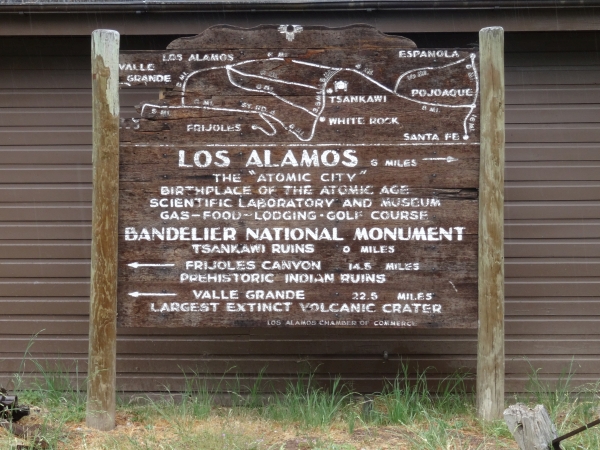
| After leaving Bandelier I went to a nearby community that for a period didn't officially exist. |
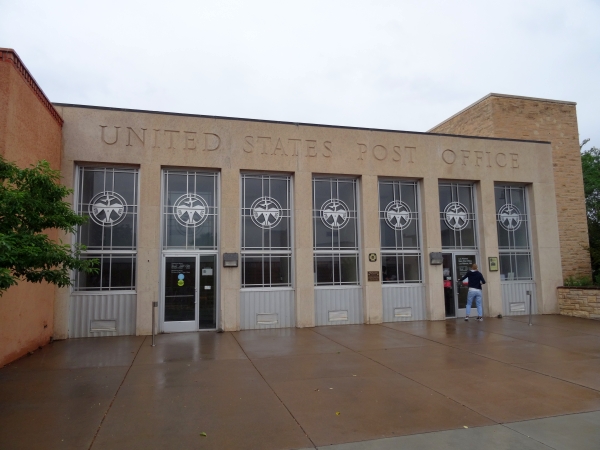 |
| Yes, Los Alamos, home of the Manhattan Project and birthplace of the atomic bomb. |
 |
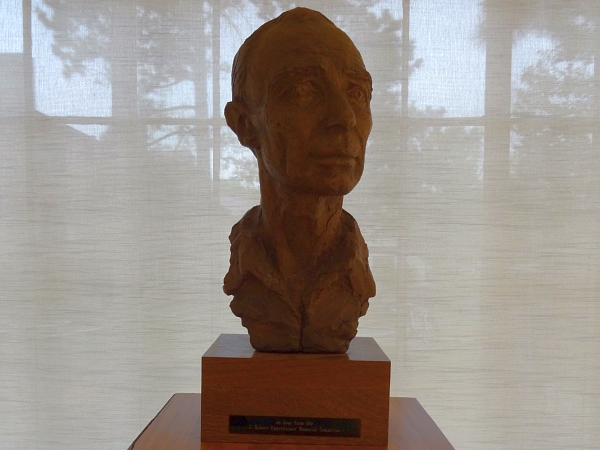
| There is a small museum in the Guest Cottage that has a room dedicated to this fellow, J. Robert Oppenheimer, as well as other Manhattan Project stuff. |
 |
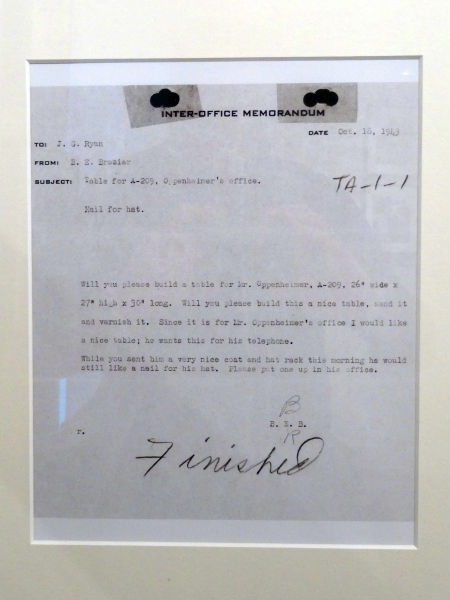
| It's small, so I'll reproduce the text
of this inter-office memo dated October 18, 1943. Subject: Table for A-209, Oppenheimer's office. Nail for hat. Will you please build a table for Mr. Oppenheimer, A-209, 26" wide x 27" high x 30" long. Will you please build this a nice table, sand it and varnish it. Since it is for Mr. Oppenheimer's office I would like a nice table: he wants this for his telephone. While you sent him a very nice coat and hat rack this morning he would still like a nail for his hat. Please put one up in his office. |
 |
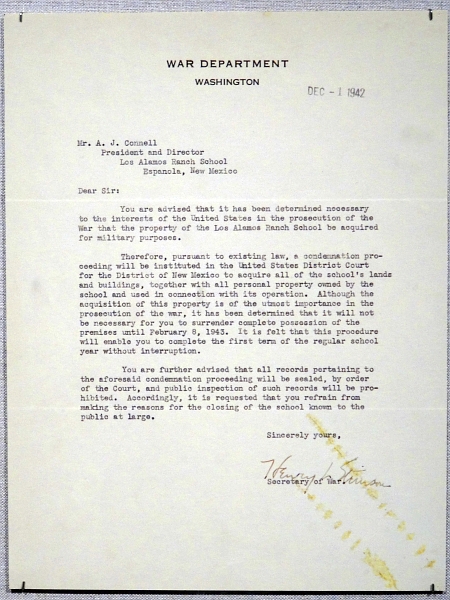
| I'm not typing out this whole letter from the War Department to the President of the Los Alamos Ranch School. To cut to the chase, it basically says that the U.S. government was acquiring all of the school's lands and buildings through eminent domain. Basically get the hell out. Oh, and don't tell anyone why. |
 |
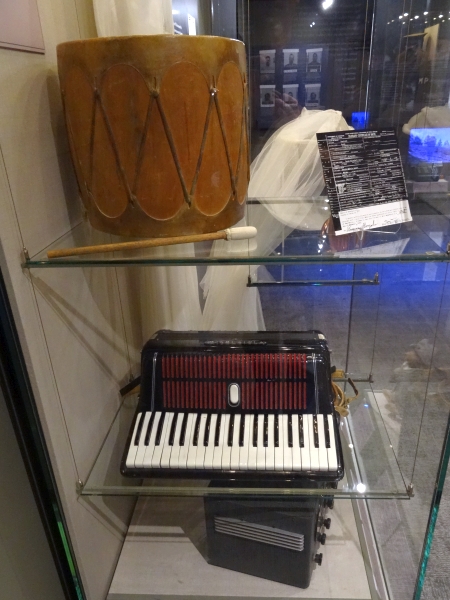
| Most of what I have heard about
physicist Richard Feynman is from The Big Bang Theory television
show. The drum belonged to him. He would beat this drum at 2:00
a.m. in the dorm while working on ideas about physics. The accordion was owned and played by military photographer John Michnovicz. There was no word as to whether Feynman and Michnovicz ever jammed together. |
 |
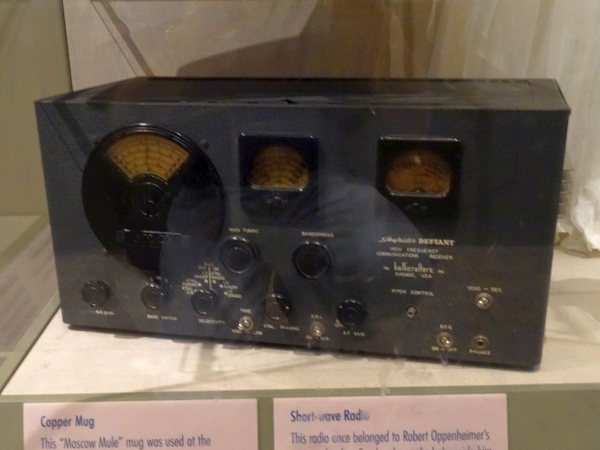
| This short-wave radio belonged to J. Robert Oppenheimer's brother, Frank, who worked alongside him toward the end of the Manhattan Project. |
 |
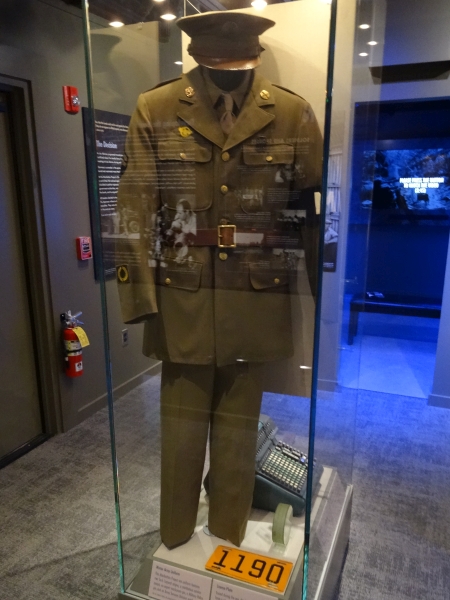
| A winter army uniform and a license plate. As Los Alamos didn't officially exist, the plate has no city or state on it. |
 |
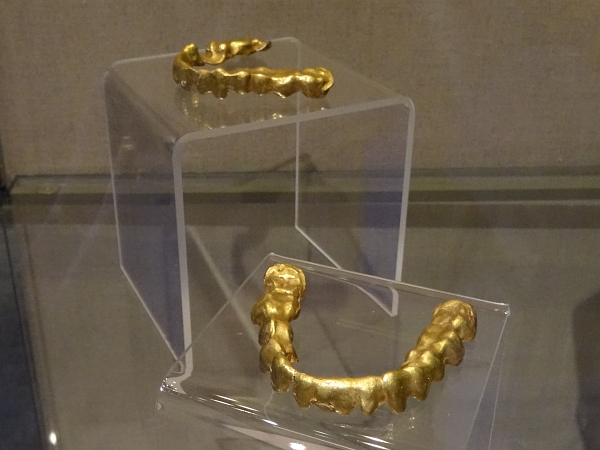
| Throw out your gold teeth and see how they roll. (Obscure Steely Dan reference) Actually they are gold teeth caps. They were made for nuclear physicist Al Graves to protect his mouth from radiation from his own fillings after exposure during the criticality accident that killed fellow scientist Louis Slotin. |
 |
| Hans Bethe was a German-American nuclear physicist who was the head of the Theoretical Division of the Los Alamos Laboratory. This is the Hans Bethe House. |
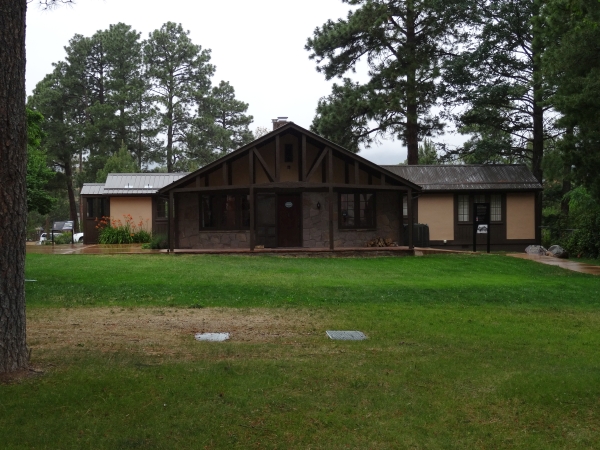 |
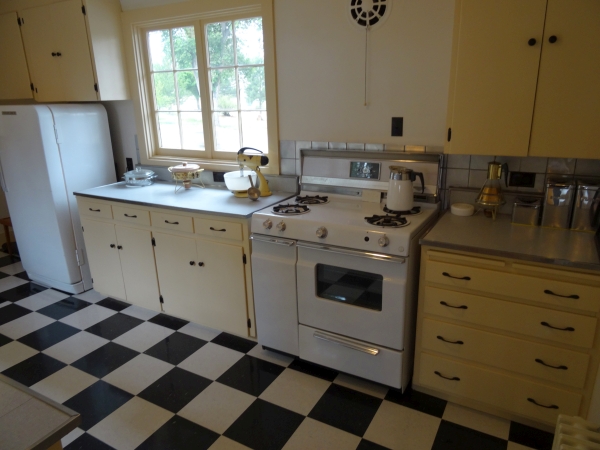
| It has been restored to look like it might have back in the 1950's or 1960's. |
 |
| A kitchen with all the modern appliances. |
 |
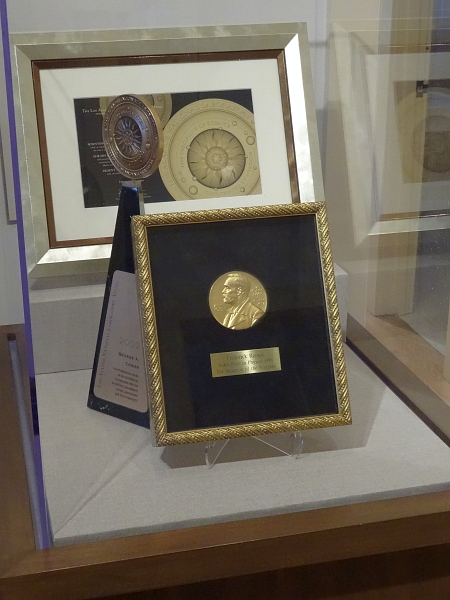
| It's not every day you get to see a real Nobel Prize. This isn't the one given to Bethe, but one awarded to Frederick Reines in 1995 for his co-detection of the neutrino. He was also part of Richard Feynman's group in the Theoretical Division at Los Alamos. |
 |
| So, I had been nearby where they tested Trinity and I have seen where the first atomic bomb in Hiroshima. These seedlings, planted in June 2017, grew from seeds that came from trees that survived the bombing of Hiroshima. They are a gift from the Green Legacy Hiroshima and the Hiroshima Botanical Garden. |
 |
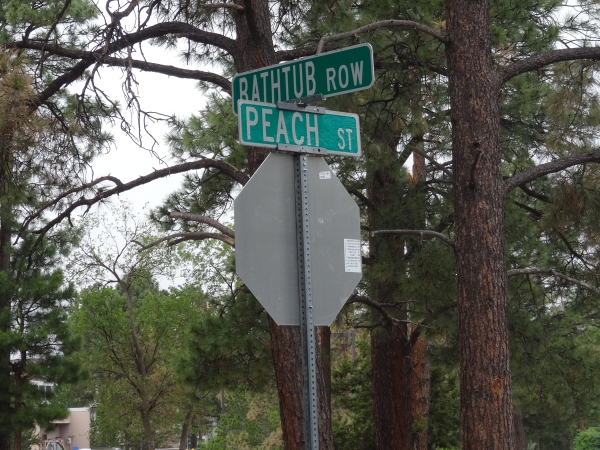
| Right next door is the house where Oppenheimer lived at Los Alamos. These are in a group of homes built for the Los Alamos Ranch School to house faculty and some classes. Manhattan Project buildings were only meant to last the duration of the war and made the homes on this street seem luxurious in comparison. Other than one women's dormitory, they had the only bathtubs in town, thus the homes along this street were named... |
 |
| ...Peach Street. No, wait. I mean Bathtub Row, |
 |
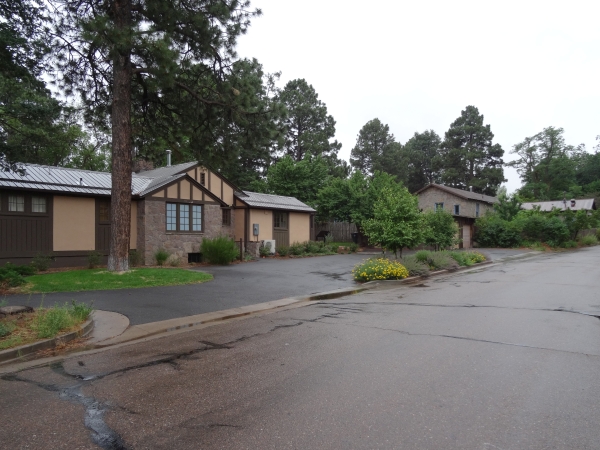
| The ones not owned by the Los Alamos History Museum are all private residences now. |
 |
| This one sure does have a ranch school look to it and is fairly big. Maybe it was one where they taught classes. |
 |
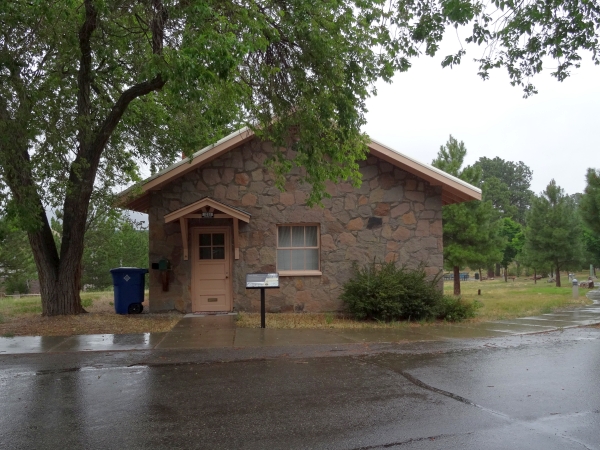
| This small building housed the Los Alamos Ranch School's power generators in the early 1930's. During the Manhattan Project, housing was so scarce that explosives expert and E Division Group Leader George Kistiakowsky moved into it. |
 |
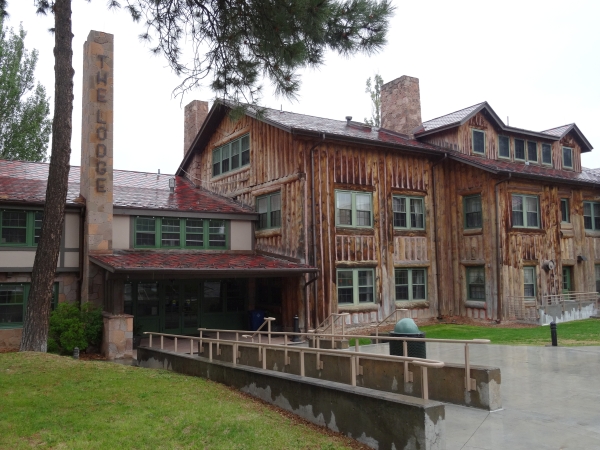
| Fuller Lodge was the main building for the Ranch School. It's now the Fuller Lodge Art Center. |
 |
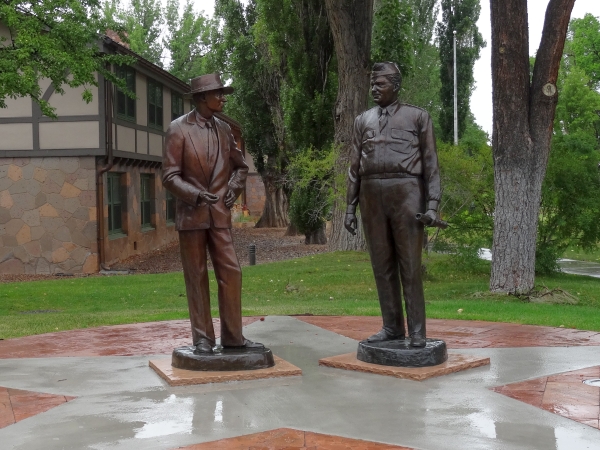
| Statues of J. Robert Oppenheimer, or J-Dog as I call him, on the left and General Leslie R. Groves, Commanding General of the Manhattan Engineer District on the right. Since I think it was Pride Week or Month or whatever, someone had stuck heart-shaped rainbow stickers on their lapels when I first saw the statues, but by the time I was leaving someone else had removed them. I don't really know what either of their stances on homosexuality were, so it's probably for the best. |
 |
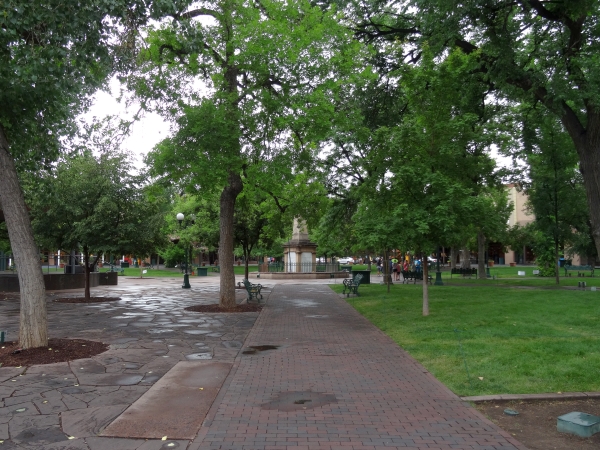
| Heading south I stopped back in Santa Fe, this time visiting the historic plaza. Seems like a lot of these old New Mexican towns had plazas. |
 |
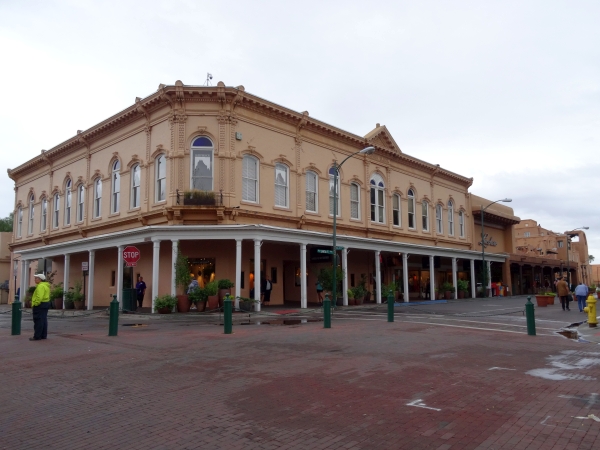
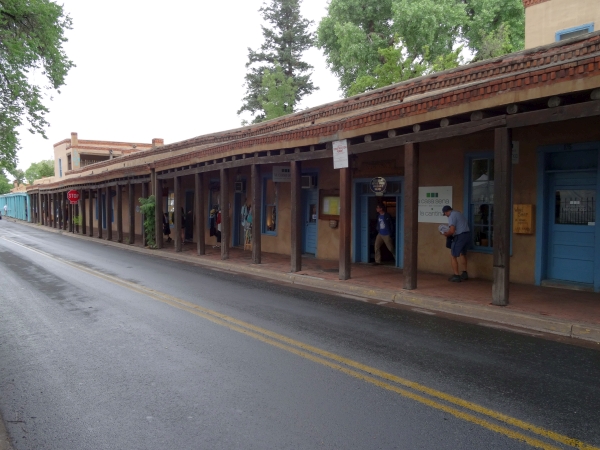
| According to Wikipedia, the original plaza was a presidio surrounded by a defensive wall and that today the plaza is ringed by structures in the Pueblo, Spanish and Territorial styles. I'm going to peg this one as Territorial. |
 |
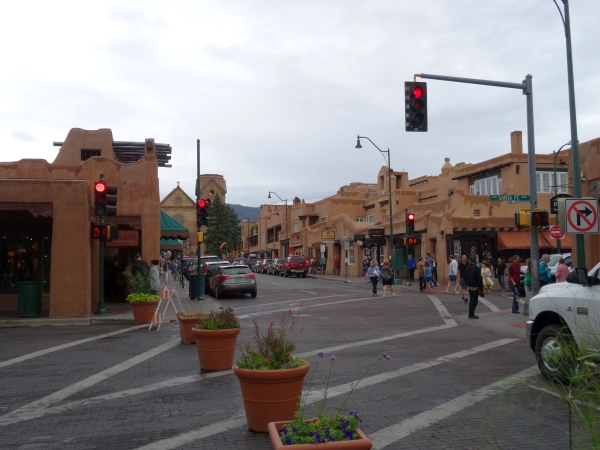
| And here are some in the Pueblo style, although they seem to be more modern buildings constructed in the old style. |
 |
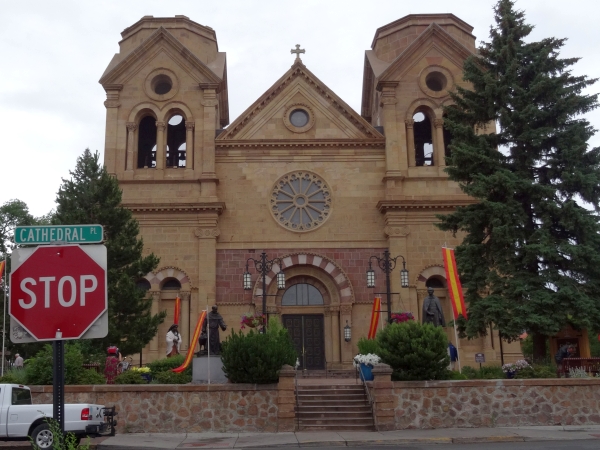
| Stop! Cathedral! This is the Cathedral Basilica of St. Francis of Assisi, completed in 1866. There was a mass going on when I went inside, so I just walked around the shop a bit and listened. |
 |
| And I would say that this falls under the Spanish architectural style. |
 |
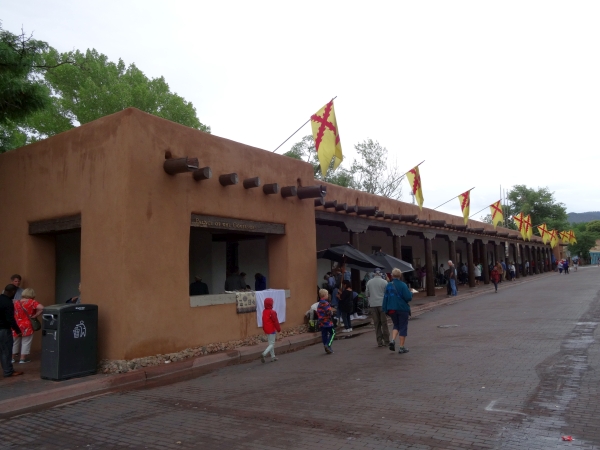
| The New Mexico History Museum is next to and partially in the Palace of the Governors seen here. There were many Native Americans selling their wares, art and jewelry all along the covered walkway. |
 |