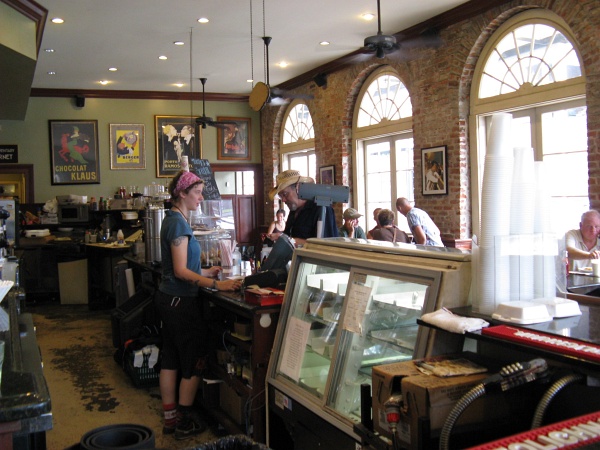
| I guess Pierre is sleeping in (wherever he actually lives), so I'm on my own this morning. It seems to be easier to give Pierre the slip than Pablo and his goofy girlfriend in California. This is Cafe Envie. It's right behind Le Richelieu on Decatur Street. |
 |
| I had a croissant and a café au lait. |
 |
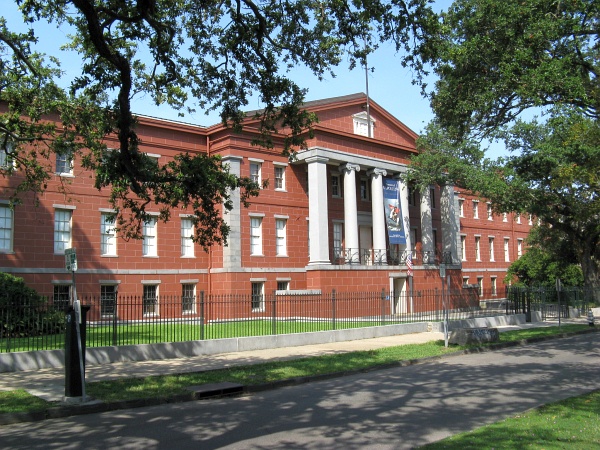
| The Old U.S. Mint is now a Louisiana State Museum. It was actually the only building in the country to serve as both a U.S. and Confederate mint. |
 |
| I decided to take a walking tour of the Garden District. There is a trolley that runs up and down St. Charles Street. |
 |
| I'm going to cheat and give you the descriptions of these
houses from the AAA Tourbook for the walking tour. Otherwise it would just
be "There's a nice house." and "There's another one." This is the Bradish Johnson House, a Second Empire-style mansion erected in 1872 by New Orleans architect James Freret for a wealthy sugar planter. |
 |
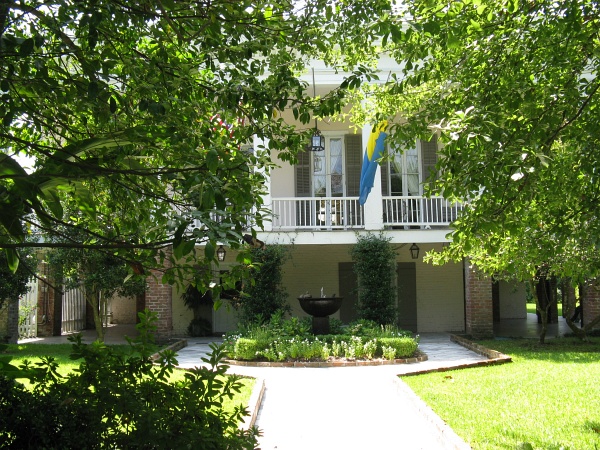
| This is Toby's Corner. This house is the oldest in the District, built in 1838. Getting a good picture was difficult due to the wall around the property and all the trees. |
 |
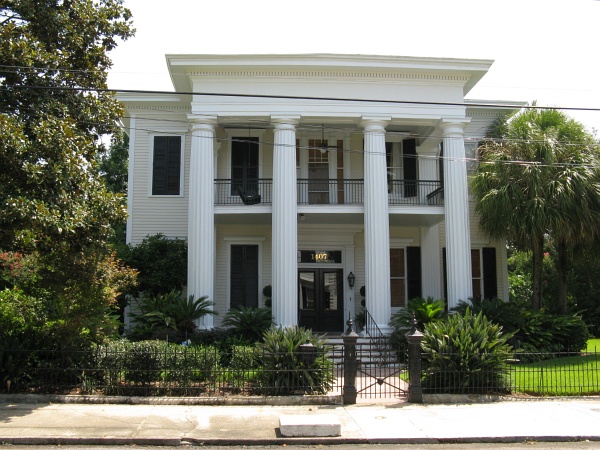
| The two-story Greek facade supported by four massive columns forms the imposing veranda on a frame house that probably dates from the 1840's. |
 |
| This is the Morris House. It and... |
 |
| ...the Carroll House down the block were built simultaneously by architect Samuel Jamison in 1869. The ironwork on each is identical. |
 |
| This was originally known as the Brevard House, but locals know it as Rosegate, the former home of author Anne Rice. |
 |
| This is the Payne House. It is notable as the home where CSA president Jefferson Davis died in 1889. |
 |
| This home was owned by sugar broker Samuel Delgado and occupied at one time by his nephew Isaac, who amassed an art collection that he donated to the city in 1911. Okay, that's not all that interesting, but it is all the TourBook says about this mansion. |
 |
| This single town house dates back to 1853. The use of Doric columns on the lower veranda and composite ones on the upper balcony is characteristic of the period. I'm sure that makes sense to people who know something about architecture. |
 |
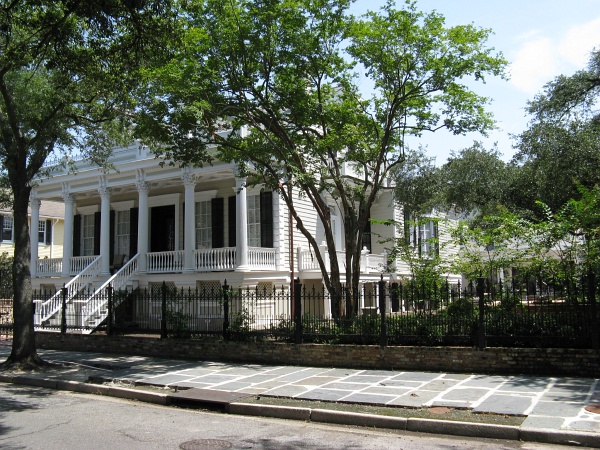
| The book says this is a quaint raised American cottage. |
 |
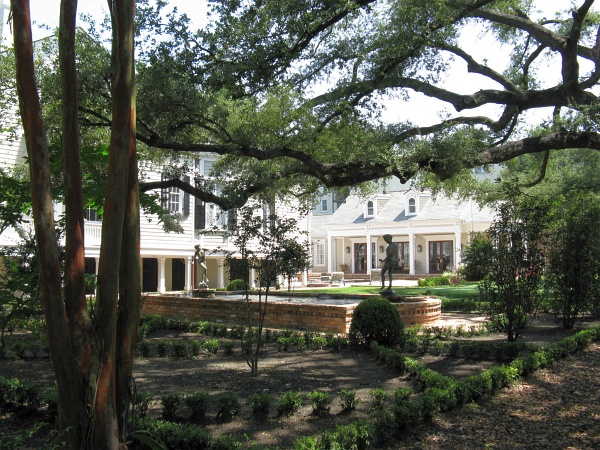
| It has a right nice little garden on the side. |
 |
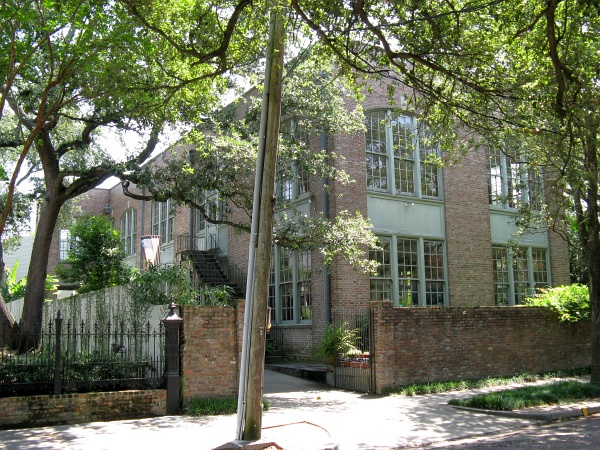
| This building wasn't in the book. I don't exactly know what it was originally. It's not like the other stately homes in the neighborhood. It looks rather industrial in nature. |
 |
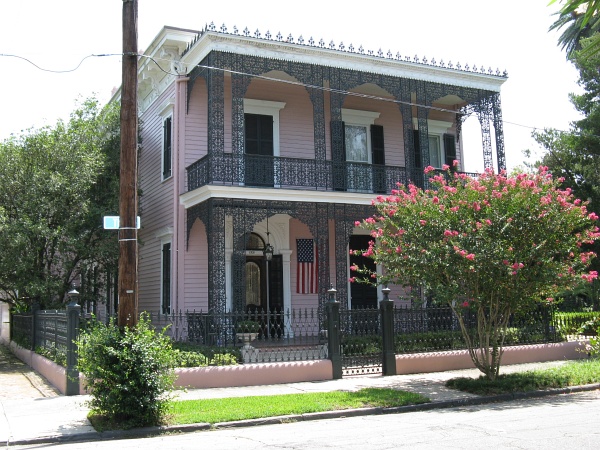
| The Musson House, built around 1853, was the home of Creole cotton factor Michael Musson. He was the uncle of Edgar Degas. |
 |
| This is the Robinson House, one of the area's largest residences. |
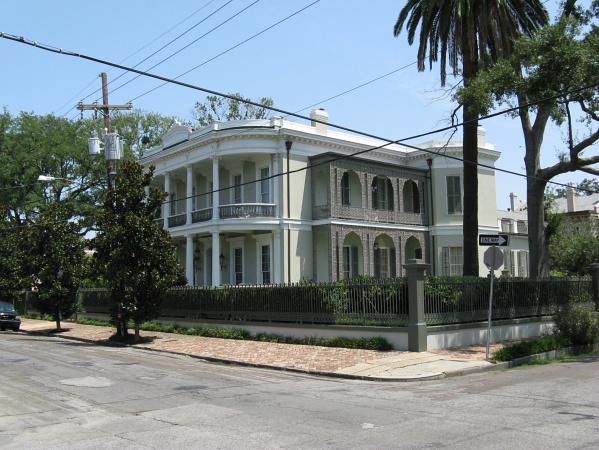 |
| The book doesn't say anything particular about this one, other than that it is 1840's Greek Revival style. |
 |
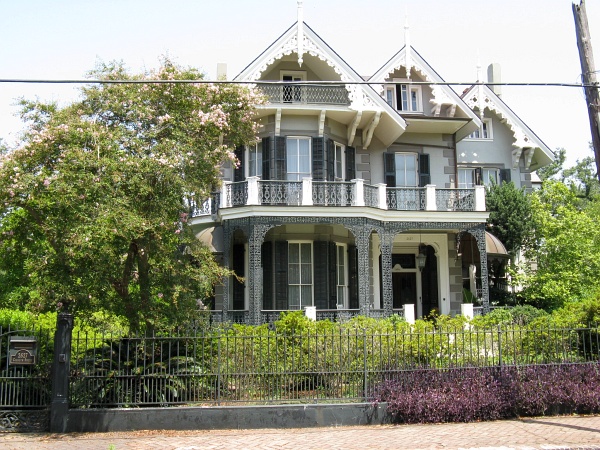
| The gables, ironwork and gingerbread trim on this chalet-style Koch mansion make for an interesting architectural contrast to the otherwise classic Garden District fare. |
 |
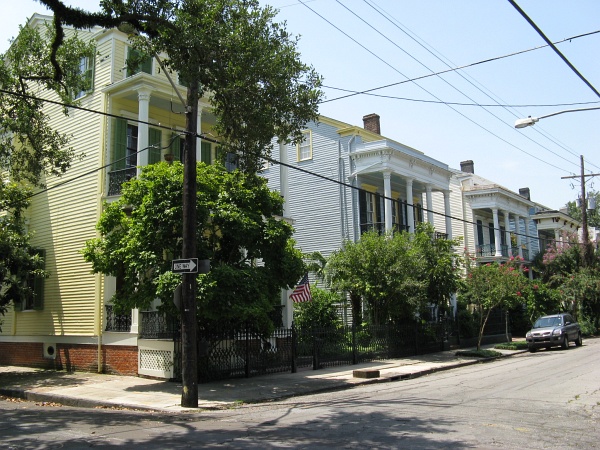
| The five double-galleried town houses are known as Freret's Folly, after William Freret (I'm guessing he was kin to James Freret from the first house on this tour). Apparently his venture wasn't as successful as he would have hoped. |
 |
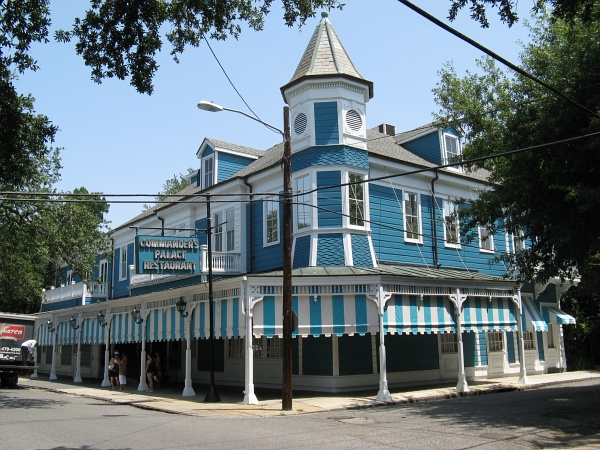
| The Commander's Palace Restaurant, one of New Orleans' finest dining destinations, was the catalyst for the careers of popular chefs Paul Prudhomme and Emeril Lagasse. It is now owned by the Brennan family. |
 |
| In the middle of the District is the Lafayette Cemetery #1. It was established in 1833 when the Garden District was within the city of Lafayette. It is featured in many of Anne Rice's books. Several movies have shot here. St. Louis #1 is more famous, but after the trouble with Easy Rider filmmakers are no longer allowed to shoot there. |
 |
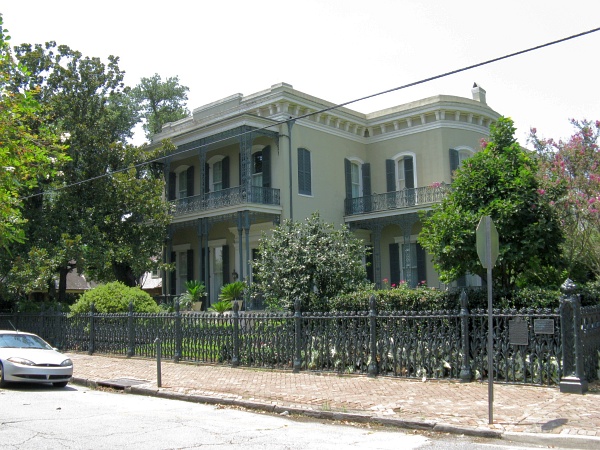
| Colonel Short's Villa. The iron fence has a cornstalk motif. |
 |
| The Briggs-Staub House is the only Gothic Revival house in the Garden District. And if not for the trees, you could see what that looks like. |
 |
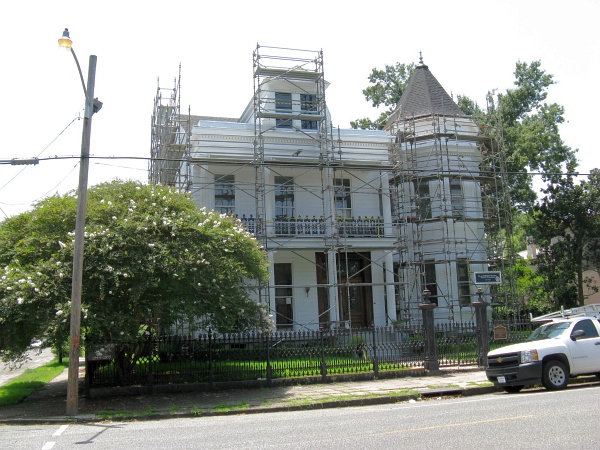
| At 2504 Prytania Street is the current home of the Women's Opera Guild. It was designed by our good friend William Freret of Freret's Folly. The roundish bit on the right was a later addition. Looks like there having a little work done on the place. |
 |
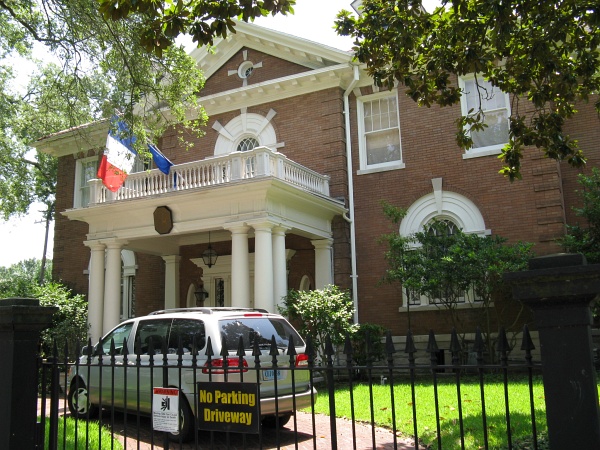
| This was not on the tour. It is just the house I parked in front of. |
 |